
Magazine
MAGAZINE •
Terrorists: the forbidden term. This is how evil becomes a side effect of history
From television to newspapers, the media whitewash them with euphemisms. The result is a story rewritten in reverse. No longer is it the action that leads to tragedy, but rather the tragedy that, retrospectively, gives rise to a noble cause

(Photo: Getty)
“So what happened, then?”, asks the Goncourt Prize-winning Algerian novelist Kamel Daoud in the weekly magazine Le Point. “A tragedy: a stroke of fate, disembodied, abstract, with no culprits.” This is how the mayor of New York, Zohran Mamdani, described 11 September. “He describes it not as a terrorist attack, but as a ‘tragedy’, a ‘dark day’, a wound inflicted on the city, a trial overcome by heroism and resilience,” continues Daoud. “But 11 September is not an earthquake or a flood: it is a mass terrorist attack claimed by al-Qa’ida. Just as 7 October is recodified, in the reverse of this rhetorical process, as a ‘decolonial’ gesture. Ultimately, whilst not all Muslims are Islamists, not all Islamists are terrorists, and Islamist terrorists are no longer truly Islamists. Evil ceases to be named.” Evil becomes a side effect of history, like natural fluctuations in mortality.
In the film September 5, which focuses on the live TV coverage following the hostage-taking and killing of Israeli athletes in Munich in 1972, the ABC team debates whether to describe the Palestinian hostage-takers as ‘terrorists’. More than half a century has passed and, following hundreds of massacres and waves of terror, we have reverted to calling them by another name. Twenty-five years after 11 September, an internal directive from the Canadian Broadcasting Corporation addressed to journalists at Canadian public television urged them not to describe the 2001 attacks as ‘terrorist attacks’. The document is signed by Basem Boshra, director of journalistic standards at the CBC: ‘Do not refer to 11 September as terrorist attacks’. The text suggests stating that “the hijackings led to the crash of passenger aircraft”. Language is no longer a tool for understanding, but a cleaning agent: pour it over the words and the stains disappear.
“The hijackers become members of Hamas on a mission to decolonise the skies. 9/11 is relegated to the status of a news item” (Kamel Daoud)
It is true that, with almost tearful gratitude, many bewildered Western minds immediately embraced the argument put forward by the Indian writer Arundhati Roy, according to which Osama Bin Laden was Wall Street’s ‘brutal twin’, ‘forged from the rib of a world devastated by American foreign policy’. Now, this is the headline with which the UN commemorated the attacks on the Twin Towers: ‘Anniversary of 11 September: a quarter of a century of the global war on terror has put human rights at risk’.
“If I were an alien who’d landed on Earth this morning and read the top headlines on the New York Times website, I’d immediately think that 9/11 was an attack on Muslims,” wrote conservative columnist Ben Shapiro in a post on X that racked up half a million views. However, the liberal host Bill Maher on HBO stated: “There was a war on terror and we won it. Yet a lot has changed since 11 September. For example, back then we were against terrorists. Now many publications don’t even want the word with the ‘t’ to be uttered. So what should we call them? Unruly passengers?”
Following the FBI’s description of an attack in New Orleans that claimed ten lives as an ‘act of terrorism’, the Poynter Institute summarised the various approaches to the use of this term. The Associated Press, for example, states that “the AP avoids labelling anyone a ‘terrorist’, preferring to quote relevant law enforcement officials or other credible authorities. We describe the specific actions we are reporting on and what we know about the perpetrators’ motives”. The BBC has also been criticised for its coverage of 11 September for focusing on “Islamophobia” rather than terrorism. In a report entitled “What we are still learning from 11 September”, the phrase “terrorist attack” appears only once: “attacks against the United States” is preferred. In a podcast dedicated to 9/11, the BBC presenter described the events as if recounting an accidental tragedy: “Almost three thousand people lost their lives when several aeroplanes crashed into the Twin Towers of the World Trade Centre and the Pentagon. A fourth aeroplane crashed in Pennsylvania.” A source in Westminster said it was “like beginning the D-Day commemorations by recalling the suffering of the Nazis”. Catherine Leng, a former journalist with the BBC, wrote: “The words I heard on the BBC: Islamophobia, disproportionate, Muslim communities. The words I didn’t hear: Islamist terrorists”.
“A lot has changed since 9/11. We used to be against terrorists. Now the media don’t want the word ‘t’ to be uttered” (Bill Maher)
Grammar now bends like a label peeling off a jar: the content remains, whilst the name is replaced with one more suited to Western audiences. And whilst it took a quarter of a century to arrive at these ridiculous euphemisms for 11 September, for 7 October and Israel, a quarter of an hour was enough. “The Israelis continue to regard themselves largely as the victims of 7 October,” the New York Times wrote just a short while ago, only to be forced to delete the sentence.
In the BBC’s reports on Hezbollah, the terrorists are referred to as a ‘militia’. The BBC favours less ‘emotionally charged’ terms, such as ‘gunmen’ and ‘militants’. After all, for the UN, 7 October had to be placed in a ‘context’. And context is broader than the knife itself. Context explains, context mitigates, context exonerates.
The same BBC that agreed to broadcast a documentary on the massacre of 364 young Israelis at the Nova Festival did so on the condition that the Hamas terrorists would not be referred to as ‘terrorists’. ‘Militants’ will have to do. As if they were animal rights activists.
Much like the New York Times and Le Monde described Yahya Sinwar as a ‘militant leader’. ‘Who was Sinwar, the hardline Hamas leader killed by Israeli troops?’, asked the Globe and Mail. A faction within the party? After all, the obituary for Amin al-Husseini published in the New York Times in 1974 described the Nazi-collaborating mufti as a “handsome Muslim gentleman with a calm demeanour”, endowed with “sharp, often smiling blue eyes”.
On the day of the Charlie Hebdo massacre, the BBC, through Tarik Kafala, head of the British broadcaster’s Arabic service, had decided that terrorists should no longer be referred to as ‘terrorists’. “Here we try to avoid portraying anyone as a terrorist or any action as inherently terrorist,” said Kafala. “What we try to do is say that ‘two men killed twelve people in the attack on the offices of a satirical magazine’. That’s enough.” Not quite.
Tom Fletcher, UN Under-Secretary-General for Humanitarian Affairs: “Just to clarify, Hamas is not on the list of groups designated as terrorist organisations by the United Nations Security Council. This does not make their acts of terror on 7 October any less horrific and reprehensible.” Any report on the massacres of Christians in Africa refers to “clashes between farmers and herders”, “banditry” and “climate pressures”.
NGOs are no different. Jean-Claude Samouiller, president of Amnesty France, says he does not feel comfortable using the term "terrorist" to refer to Hamas, preferring "Palestinian armed group". “Because the term ‘terrorist’ is not recognised under international law.” Benjamin Griveaux, spokesperson for the French government from 2017 to 2019, reacted on X to the comments made by the Amnesty chief: “Samouiller is drowning in nauseating language.”
The result is a story rewritten in reverse. No longer is it the action that leads to tragedy, but the tragedy that, in retrospect, gives rise to a noble cause. And so Marwan Barghouti, the organiser of the Second Intifada sentenced to five life sentences, is now known to everyone as ‘the Palestinian Mandela’. Ismail Haniyeh, the Hamas leader, is described in La Repubblica as the ‘literature professor and political leader of Hamas’. According to Reuters, ‘Haniyeh was the most moderate face of Hamas’. A ‘moderate’ on 7 October. Following criticism, Reuters amended the headline to: ‘Who was Haniyeh and why is his assassination a severe blow to Hamas’. Le Monde also described him as ‘a moderate within the Palestinian movement’. Journalist Frédéric Haziza asked “in what depraved world Le Monde lives”, emphasising that Haniyeh was the “mastermind behind the pogrom of 7 October”. “That so-called ‘moderate’ Haniyeh declared on Lebanese television: ‘We need the blood of the women, children and elderly people of Gaza to reawaken in us the spirit of determination and resistance’”.
When Israel killed Hassan Nasrallah, The Guardian described him as “a learned Islamic scholar, an effective orator and a capable organiser”. Almost an official from Al-Azhar. In the AP article, one had to get through twelve paragraphs before coming across the word ‘terrorist’ in connection with Nasrallah. For the Associated Press, Nasrallah was ‘a fiery orator viewed as an extremist’. Perceived, much like one’s gender.
The descriptions of the ISIS leader read like a comedy sketch: “austere religious leader”, “drama teacher”, “promising young footballer”.
The Washington Post described the leader of ISIS, Abu Bakr al-Baghdadi, as an “austere religious scholar”. The newspaper was inundated with criticism and had to change the headline to “extremist leader” – which, for someone who had four wives and four female slaves and had organised the genocide of the Yazidis and sexual slavery, was still far too laughable. The Times highlighted al-Baghdadi’s sporting talents and dedication to his studies, describing him as a “promising young footballer and scholar of the Qur’an”. Bloomberg told the story of a “teacher of Qur’anic recitation”. Indeed, Avvenire, writing about Mohammed Deif, the military leader of Hamas, spoke of his “passion for theatrical performance”. Not content with that, a year later the Washington Post described Qasem Soleimani as Iran’s “most revered military leader”. Indeed, Soleimani, as commander of the Quds Force, was revered as the mastermind behind terrorist activities (including the killing of hundreds of American soldiers in Iraq).
An evil that is not named does not disappear: it takes root, with elegance, in the vocabulary of those who claim to represent the best of humanity. Following the Bataclan massacre, France decided that even the term ‘Islamic State’ should not be used. “It creates confusion between Islam, Muslims and Islamists,” stated Foreign Minister Laurent Fabius. Better to use “Daesh”, the derogatory term used by the enemies of ISIS. As for the Taliban, who, according to Giuseppe Conte, “have shown themselves to be conciliatory”, they remain, nonetheless, very “inclusive”.
An investigation by the New York Post last week reported how 11 September has been manipulated in the United States. “Teaching Beyond September 11th”, a curriculum adopted by several schools in the United States, “is a radical reinterpretation of 11 September that does not refer to Islamic extremists as terrorists” but simply as hijackers. The course focuses its lessons on ‘Islamophobia’ and ‘racism against Muslims’. According to the Post, propaganda surrounding 11 September is rife. There are, for example, those who teach that ‘11 September served as a catalyst for more overt discrimination’ and those who go so far as to accuse the United States of ‘state-sponsored Islamophobia’.
Daoud concludes: “They were no longer Islamists on a suicide mission with their verses, but Muslims in protest mode. It was no longer a murderous hijacking, but redress for an injustice. Then, in a hijacking of hijackings, came ‘Palestinianism’, a theory of total chaos: everything can be destroyed; America deserves every punishment for its pro-Jewish and anti-Muslim stances. The 11 September hijackers became members of Hamas, on a mission of decolonisation by air. 11 September has now been erased, relegated to the status of a news item.”
Worse still. At this rate, the 9/11 attacks will be remembered in the same way as the most famous of German intellectuals, the controversial Peter Sloterdijk, described them when he told Welt am Sonntag that they were “problems with skyscrapers” which form part of history’s “minor events”. “Two or three thousand deaths in a single day fall within the natural range of variation”.
Moreover, they are not exactly emulating the ‘Naza’ tactics of those Israeli state terrorists.
More on these topics
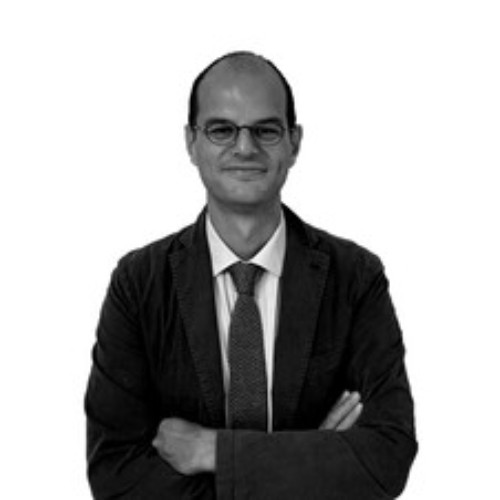
Giulio Meotti è giornalista de «Il Foglio» dal 2003. È autore di numerosi libri, fra cui Non smetteremo di danzare. Le storie mai raccontate dei martiri di Israele (Premio Capalbio); Hanno ucciso Charlie Hebdo; La fine dell’Europa (Premio Capri); Israele. L’ultimo Stato europeo; Il suicidio della cultura occidentale; La tomba di Dio; Notre Dame brucia; L’Ultimo Papa d’Occidente? e L’Europa senza ebrei.