
Magazine
MAGAZINE •
Anatomy of the perfect ‘Naza’ operation. Israel’s area of interest
Once immortalised on the big screen, a myth is much harder to dispel. All the more so when it is underpinned by an entire cultural and economic ecosystem. Venice was the perfect setting

Rachel Szor and Yuval Abraham, directors of “Naza”, posing with the Special Jury Prize at the recent Venice Film Festival (Getty Images)
The New York Times, which apologised and was forced to remove an ill-advised sentence from an article on ‘Naza’ (‘the Israelis largely continue to regard themselves as victims of 7 October’) after publication, is the only misstep in an operation executed to perfection, with the pro-Palestinian communications machine running at full speed.
Produce the documentary film by Yuval Abraham and Rachel Szor, in which anonymous voices accuse Israel of genocide – a sort of “The Merchant of Venice” with the IDF in the role of Shylock. The creditor who becomes the executioner. It is scheduled to premiere at one of the world’s most prestigious festivals and will be screened for a select group of journalists, film critics and celebrities already aligned with political correctness. Late entry into the competition: ‘Naza’ was announced in Venice on 24 August.
“Not to bring it would have been cowardly,” says the director of the Venice Film Festival, Alberto Barbera. To win an award. To break the record for applause. Spark a chorus of enthusiastic reviews denouncing “Israel’s genocidal policy”. Ensure that Israeli politicians and military figures condemn it, with some ministers even suggesting the two directors should be stripped of their citizenship. Present that condemnation as further proof of the film’s courage. Hamas’s enthusiasm for the film was ignored, while the camera focused on Greta Scarano as she entered the festival carrying a large fan shaped like a slice of watermelon—green, white, red, and black, the colors of the Palestinian flag. The terrorists’ enthusiasm was dismissed as an embarrassing detail, whereas the Israeli condemnation was paraded as further proof of the film’s truth.
Thus, once captured on the big screen, a myth is much harder to debunk. Venice was the perfect setting. Last year, it was The Voice of Hind Rajab that received a standing ovation lasting 23 minutes and 50 seconds, which was subsequently sold to the press as “the longest in the history of film festivals”. The film does not take viewers to Gaza, but to Ramallah, in the West Bank. The story unfolds in the offices of the Palestinian Red Crescent. We do not see the neighbourhood in Gaza from which Hind’s family was fleeing. We do not see the Israeli forces, the Hamas terrorists, the tunnels, the evacuations or the warnings. The tragedy is severed from the events that precipitated it. War becomes an abstraction. The blame lies solely with the Israelis, who are never named. The Jewish state exists only as a faceless, voiceless presence: an invisible force, pure evil.
Once immortalised on the big screen, a myth is much harder to debunk. Venice was the perfect setting
Meanwhile, Gal Gadot and Gerald Butler had to pull out of appearing in Venice. The former because she is Israeli, the latter because he has raised funds for the Israeli army. It so happened that around a hundred pro-Palestinian Italian actors and directors – Marco Bellocchio, Jasmine Trinca, Toni and Beppe Servillo, Claudio Santamaria, Gabriele Muccino, Serena Dandini, Valeria Golino, Fiorella Mannoia and the sisters Alice and Alba Rohrwacher – in short, the entire politically correct elite (a pity about the absence of Alessandro Gassman and Edoardo Leo) – did not want to see them in Venice and called for Gadot and Butler to be boycotted. No scandal. Here comes ‘Naza’.
Twenty-four and a half minutes of applause – just enough time to get past “The Voice of Hind Rajab”, with editor Barbera glancing at his watch as he waited for “Naza” to cross the new finish line. Meanwhile, at the age of 79, Susan Sarandon was playing the victim (“I’m excluded from Hollywood because I’m pro-Palestinian”). The Guardian, a British newspaper with a glorious past and an ideological present, is the film’s main producer and will now stream it for free. The very same Guardian that publishes articles by Marwan Barghouti: serving five life sentences in an Israeli prison not because he dreams of ‘peace’, but because he ordered the killing of many Israelis during the Second Intifada. Since 2 January 2001, the day it published an article by Faisal Bodi entitled “Israel has no right to exist”, The Guardian has made anti-Israel sentiment a point of editorial pride. On 24 October 2023, two weeks after the Hamas massacre, The Guardian published an article by the Swedish academic Raz Segal. The text framed Hamas’s terrorist attacks within the “historical context of Israeli colonialism dating back to the Nakba of 1948”, before suggesting that the positions of Israeli leaders on Gaza were inspired by Nazi logic.
On 25 June 2024, an article in The Guardian by the New York-based writer John Oakes compares the situation in Gaza to the Nazi strategy of starving the Jews in the Warsaw Ghetto. Meanwhile, a Jewish journalist at the publication reveals: “I’m looking at the morning newsletter from the newspaper I work for. It analyses the number of Palestinian children who have died. It makes no mention of the Israeli children who have died.” The journalist meets a colleague “who had posted about ‘decolonisation’ on social media over the weekend. They’re laughing with the rest of the editorial team. They’re having a lovely day.” This led to his resignation. On 7 May 2025, Guardian contributor Ahmed Moor published an article in which he compared the actions of Israeli leaders to those of Rudolf Höss, the Nazi commander in charge of the Auschwitz camp, who is the subject of another film, The Zone of Interest.
The film is being distributed by the British newspaper The Guardian, which has made anti-Israel sentiment a hallmark of its editorial line since 2001.
This is where the producers of “Naza” enter the picture. They are Jonathan Glazer, director of the multi-award-winning “Zone of Interest”, and his producer, James Wilson. On Oscar night, Glazer caused a stir by stating that he did not want his Jewish identity and the Holocaust to be used to justify Israel’s war against Hamas. In “Naza”, coinciding with Israel’s commemoration of the anniversary of the Holocaust, we see the façade of the Tel Aviv Film Archive and its programme, which includes “Shoah”, Claude Lanzmann’s masterpiece. Shortly afterwards, one of the military figures who appears in shadow in the film recalls a trip to Poland with his family to honour the memory of his exterminated ancestors, and then asks: “The Nazis were the devil, but what am I?”
It is a subtle move. The Holocaust is not being denied: it is being used as a mirror for Israel. There is no need to erase Auschwitz. It is enough to reflect it onto Israel. Yet Lanzmann, who passed away in Paris in 2018, was one of the filmmakers most committed to defending Israel and also made a five-hour documentary entitled “Tsahal” about the Israeli army. The analogy with “The Zone of Interest” was taken up by Guardian columnist Arwa Mahdawi in an article published on 12 June this year, in reference to an advert featuring actress Gwyneth Paltrow for a residential complex in Herzliya. The argument is that Israeli civilians living eighty kilometres from Gaza are complicit in Nazi-style evil.
Also involved in “Naza” is +972 Magazine, a far-left Israeli publication that supports the boycott of Israel and for which the director, Yuval Abraham, works. In November 2024, the editor, Haggai Matar, wrote that “supporting the Palestinians’ right to resist their oppression, including through armed struggle, is not the same as justifying the horrors of 7 October”. On the day of the massacres, while denying that he was justifying the killing of civilians, he wrote that “this is not a ‘unilateral’ or ‘unjustified’ attack”. +972 Magazine received grants from the Open Society Foundations every year from 2018 to 2024, totalling $562,900. George Soros’s Open Society has consistently opposed Israel. This is not a conspiracy; it is an ecosystem. This does not prove that Soros and the Open Society funded “Naza”. However, the funding and the context are not irrelevant. Apart from reader donations, over the years the magazine that produced ‘Naza’ has also received funding from foreign foundations linked to progressive causes (the ‘How we are funded’ section on their website is very transparent), such as the Rosa Luxemburg Foundation and the Heinrich Böll Foundation. The latter is linked to the Green Party in Germany.
Then there is the Israeli newspaper +972, which receives funding from European foundations that take a very hard line on the Jewish state
László Nemes, the director of Son of Saul – one of the greatest films ever made about the Holocaust, which won the Oscar for Best International Feature Film – was asked how Son of Saul would be received if it were released today. He replied: “I don’t even think it would make the Oscar shortlist. Nobody would touch it with a three-metre pole. There is an orgy of anti-Semitism, an absolute and brazen orgy of anti-Semitism that is sweeping across the West.” This is a description of a climate in which a Jew has become acceptable only if he accuses himself, only if he plays the ‘Nazi’.
It is not a conspiracy, it is an ecosystem. This year, a film funded by Qatar (a financier of Hamas) through the Doha Film Institute, La Maison du Vent by La Maison du Vent, won the Lion of the Future at Venice. Of the more than eighty films in competition this year at the Lido, eight were projects supported by the Doha Film Institute. And this brings us back to Naza. This is because James Wilson, one of the producers of “Naza”, and Jonathan Glazer, its executive producer, are also the producers of “The Voice of Hind Rajab”, funded by the Doha Film Institute. This connection does not constitute proof that Qatar also funded “Naza”. What is clear, however, is that Al Jazeera, the Qatari broadcaster, has enthusiastically promoted “Naza”.
However, no one has read in the Wall Street Journal what another Israeli hostage, Omer Shem Tov, writes: “I know what it means to be collateral damage: for 505 days, this was my fate. One of my captors told me that his mother had received a phone call warning her to leave her home because an Israeli attack might put her in danger. The call had come from the Israel Defence Forces. If Israel had attached less importance to ‘Naza’ (collateral victims), perhaps I would have returned home sooner. Perhaps fewer Israeli soldiers would have died. Perhaps fewer hostages would have died. But more Palestinians would have died. That is why ‘Naza’ troubles me. In Venice, the film received a standing ovation lasting more than 24 minutes. As a former hostage, those minutes felt like a hail of knives to me. Not because the film depicts Palestinian suffering, which is real and deserves to be seen. What hurts is that the film seems not to see me. It sees the suffering in Gaza, but not what led to the war: Hamas’s planning, the killing of families on 7 October, people dragged from their homes and from a music festival. None of this seems to present a major moral dilemma for the film’s makers. In that narrative, perhaps I, too, am ‘Naza’. Collateral damage. A Jewish hostage who could have been left to rot in a Hamas tunnel, or killed alongside my friends in Nova, because fighting to free me and to protect Israelis from the people who did all this is considered, in itself, morally suspect.”
A Hamas hostage writes: “I, too, was ‘Naza’, collateral damage of the war, but nobody seems to notice us”
It matters not that Israel has dropped seven million leaflets over Gaza, made over seventy thousand direct telephone calls, sent more than thirteen million text messages and left over fifteen million pre-recorded voice messages to inform civilians of the need to leave the combat zones, indicating where to go and which route to follow, or that it has deployed drones fitted with loudspeakers. None of this matters to those who accuse Israel of ‘genocide’. Who built the tunnels? Who occupied them? Who stockpiled weapons there and held innocent people hostage? Who stated that the tunnels were intended for fighters rather than civilians?
The twenty-five minutes of applause for “Naza” were not for the film: they allowed the cultivated and affluent Venetian audience to reaffirm their anti-Zionist convictions (though not anti-Semitic, they insist, given that they can always find a Jew willing to blame his own people). Would they have applauded an Israeli documentary that described, in equal detail, the methods of Hamas, the 1,200 Israeli deaths in less than three hours, and the thousands of tunnels dug beneath Gaza? Would the audience in Venice have risen to their feet? Perhaps a few people. Perhaps for twenty-five seconds.
Because, to quote the Soviet writer Sergei Dovlatov, “progressive humanity demands a noble suicide from Israel”. The next round of applause in Venice will last twenty-six minutes.
More on these topics
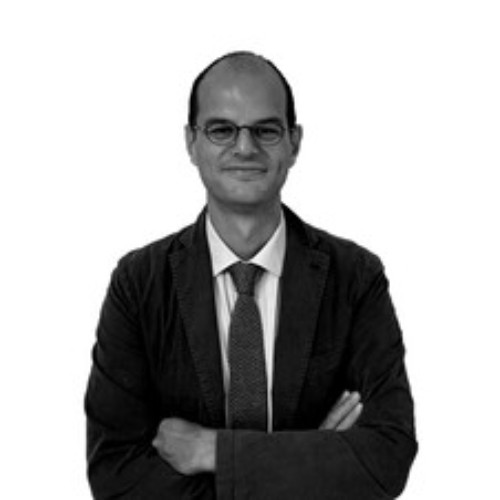
Giulio Meotti è giornalista de «Il Foglio» dal 2003. È autore di numerosi libri, fra cui Non smetteremo di danzare. Le storie mai raccontate dei martiri di Israele (Premio Capalbio); Hanno ucciso Charlie Hebdo; La fine dell’Europa (Premio Capri); Israele. L’ultimo Stato europeo; Il suicidio della cultura occidentale; La tomba di Dio; Notre Dame brucia; L’Ultimo Papa d’Occidente? e L’Europa senza ebrei.