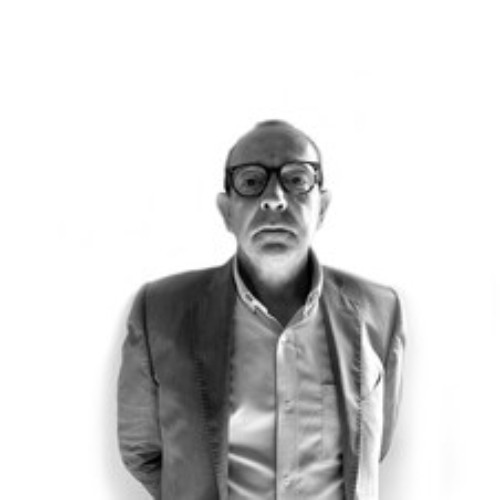
‘Do you already have an idea for the next four years?’ they asked him point-blank as soon as he was appointed – after political preambles reminiscent of a bygone era – on 4 June, whilst Milan was already sinking into the Great Heat, yet floating on the Great Slumber of a numb city, which has become something of its recent cultural and conceptual hallmark.
Vincenzo Trione outlined two – or rather three – ideas. The first is that he would like to be, for the Triennale, “a bit like a lightning conductor, which is firmly rooted to the ground but looks up at the sky”. To be serious and visionary, he said. The other two are more pertinent to defining what the Milan Triennale is and the direction in which to steer an institution that is complex in structure and unique in Italy.
“I have two images for the Triennale,” he continues today in conversation with Il Foglio, “on the one hand, the Renaissance workshop, which was a crossroads of knowledge and skills, of dialogue between art, craftsmanship, techniques and productive imagination linked to the local area and to cities”. The other image is the Bauhaus, the ‘house of building’ in 1920s Germany, which ‘in the 20th century – or rather, in the free Europe of the 20th century – was an ultra-modern experience, a democratic hub: that is, non-hierarchical and open to society, composed of cross-disciplinary knowledge and cultures. The opposite of a guardian of specialised languages: architecture, industrial design, art. A fruitful cross-pollination’. And the Triennale, founded in 1923 as the ‘International Exhibition of Decorative Arts’, is, in an ideal sense, quite rightly a potential Italian Bauhaus. All the more so given that today – to digress briefly into current affairs – the neo-Nazis would also like to erase the memory of the famous Dessau institute, accused of having ‘destroyed tradition’. We are not in Saxony-Anhalt, but ‘the Triennale Milano must look to Europe and its democracy, with a critical eye and also with a touch of optimism, as you at Il Foglio say’, comments President Vincenzo Trione. A critic, art historian, curator and writer, Trione has a different profile from his predecessors, Stefano Boeri and the property developer Claudio De Albertis, who were more focused on urban planning – an aspect which, after all, is central to the history of the Triennale. It is no coincidence that the new governance structure includes the role of creative director – and director of the revamped Museum of Design – the architect Michele De Lucchi; alongside the reappointment of the director-general, Carla Morogallo, who, as Trione puts it, serves as a vital link in navigating a complex organisational structure comprising around a hundred employees and collaborators.
The new editor-in-chief had asked for a month to reflect. In July, he then presented his strategic guidelines. In Il Foglio, he explores the underlying ideas for what is, to all intents and purposes, a ‘cultural stakeholder’ in Milan – distinct from other institutions, yet capable of charting paths of innovation that affect the city. Paolo Baratta adds to his list of role models, in recognition of the immense work through which he shaped what has now become the Venice Biennale: “Full creative autonomy, undisputed international prestige and a great ability to identify the new and the changing in every sector. A model to look to, despite the many differences”. The cities themselves are also different. Milan is now the celebrated capital of design, a magnet for an international audience, but it is also somewhat weary. It is as though a certain cycle of image-building, based on ‘events’, ‘weeks’ and trade fairs, has run its course. ‘Milan close to Europe’, as Lucio Dalla sang: but ‘Milan, how you struggle’. Is that the case? Can the Triennale help? “There is a risk of becoming an ‘event factory’, a constant showcase for brands; this is precisely what we need to work on to avoid it. But of course the city has its own rhythms and needs; it is up to others to reflect on this and decide. However, a place like ours can point the way forward, offering ideas. Design not just as a brand, but as a way of thinking that brings together art, industry, design and academia.”
The new series kicked off a few days ago with a lecture by
Werner Herzog, open to the public
, dedicated to the concept of ‘Truth’. It is the first, explains the editor-in-chief, in a series of ‘Milan lectures’ that will feature leading figures from the Italian and international cultural scene:
“The series is called ‘Work in Progress’; it is a new initiative and aims to mark the steps towards the 25th International Exhibition, scheduled for 2028, which is the Triennale’s central event: incidentally, the curator will be announced shortly and a dedicated board comprising figures with diverse experience and backgrounds is currently working to define the theme”. Next up will be
Jasmina Reza and Asma Mhalla, a Franco-Tunisian specialist in the politics and geopolitics of technology. The important thing, explains Trione, is to start networking – with the city but also within our institution, which comprises many different sectors – to develop ideas for a shared path that contributes to a collective and open vision, rather than one consisting solely of projects that are at times somewhat fragmented. It should be noted that, in the past, some of the Triennale’s exhibitions or initiatives – while of an excellent standard – appeared somewhat esoteric to the public, reserved for those versed in specific fields. Perhaps a limitation? “If there is one, it must be overcome; it’s something to work on. For example, we’ve analysed the profile of the audience at our exhibitions: industry professionals, students, specialists.
Obviously an excellent audience that must be nurtured, one that would certainly not accept mere ‘events’ or proposals of lower quality. But at the same time, I believe the Triennale must be able to speak to a wider, more diverse audience; it’s also a question of mission and democracy, if I may say so.”Starting with the exhibition programme: “It will feature both thematic, more conceptual exhibitions and monographic exhibitions – which does not mean didactic – focusing on leading figures in art, architecture, design and fashion”. There will be discussions on urban planning, now a sore point not only in Milan. Without losing continuity, “on the contrary, I am a firm believer in the method – which is, after all, very Milanese – of continuity. I believe that institutions should be run by respecting and building on what has been achieved previously. In this regard, Stefano Boeri’s presidency played a significant role”. For example, on the international front, if the Triennale is now a well-known and attractive brand (oops!). “But it’s not just that; his work to enhance the original structure of the building – designed in 1933 by Giovanni Muzio, one of Milan’s finest – is indispensable. The ‘Back to Muzio’ project has stripped away layers that had built up over the years and breathed new life into the space. The creation on the ground floor of the spaces known as ‘Cuore’ – Study Centre, Archives, Research – is one of the interventions that best encapsulates what a place like the Triennale is all about.” Will this work continue? “Certainly. Michele De Lucchi is overseeing the expansion of the Museum of Italian Design, which by April will feature not only new spaces but also a new acquisitions policy – a commitment guaranteed by the Minister for Culture, Giuli, who takes a keen interest in our organisation. It will truly become the museum of the history of ideas and Italian design.”
‘Triennale is a series of islands,’ says Trione, ‘but it must become an archipelago. “Back to Muzio” has also meant connecting places and elements of a shared experience. But it’s not over yet. We will strengthen the Research Centre with a new Advisory Board. A group—which I wanted to be Italian—comprising diverse yet outstanding figures: Melania Mazzucco, Franco Farinelli, Nathalie Heinich, Carlo Rovelli, Father Paolo Benanti and Giuliano da Empoli. We shall intensify our work on the archives, a treasure trove that is currently only partially accessible to the public—with open shelves on the ground floor. Once again, the Biennale serves as a model.” In this regard, it is possible to envisage collaborations and cross-fertilisation with other institutions: with the Biennale and the MAXXI in Rome, which, as a national museum of contemporary art, holds archives – such as those on architecture – and where very important first steps have already been taken. But the aim is also to establish dialogues with international institutions. Finally, Trione explains with pride, the launch and expansion of advanced training initiatives, such as the Triennale PhD Programme for new research doctorates on specific themes and fellowship programmes for scholars, curators and artists through international calls for applications. All of this will also be covered by the biannual magazine Lotus, which, with a dedicated editorial team, will bring together material relating to the activities of the Triennale, the archive and the research centre.
Regarding his connection with Milan, Trione’s most recent project in the city as curator was the exhibition Metafisica/Metafisiche (what a wealth of links to the Triennale, starting with De Chirico’s Bagni Misteriosi), which concluded with a significant legacy for the city: the installation Vedere le cose (per A.S.) by the conceptual artist Joseph Kosuth. A site-specific installation on the exterior façade of the Museo del Novecento, the first work of public art donated to the city for quite some time (the last one dates back to Cattelan). “We would like to be able to donate a work of contemporary art to the city – that is, to exhibit it outside the building – every year. Perhaps even using the adjacent space in Parco Sempione, where Burri’s Teatro Continuo is already located, if the City Council and the Superintendency agree. It would be a visible sign of renewing the city’s connection with its creative force.” After all, Alberto Savinio’s illuminating phrase, which today stands out on the exterior of the Museo del Novecento, reads: “The present, which is to time what a façade is to space, prevents us from seeing things in depth.” But perhaps delving deeply into the creativity of the future is the key to seeing the present.