
World
In the United Kingdom •
Iranian ghosts. The dissidents amongst us. “I change my home every three days: Tehran wants to kill me”
From Mojtaba Pourmohsen to Kambiz Hosseini and Pouria Zeraati. Journalists fleeing the Ayatollahs’ regime are not safe even in the United Kingdom. And in London, a former commander of the Islamic Revolutionary Guard Corps is set to speak as a keynote speaker at a conference on Islamophobia

Photo: LaPresse
When, one Saturday afternoon, British counter-terrorism officers turned up at Mojtaba Pourmohsen’s door in London, the British-Iranian journalist was ill-prepared for the impact that visit would have on his life. “There is a potential threat to you at this address,” one of the officers told him. “You must leave immediately.” Since that day, Pourmohsen has lived in dozens of hotels and safe houses under armed escort, in an attempt to thwart Tehran’s repeated attempts to assassinate him. He has been forced to move every three days. “Over the past two years, I’ve seen more police officers than ordinary people.” Pourmohsen, who works for Iran International, an independent Farsi-language broadcaster, told the Sunday Times about his situation after two Iranian migrants were convicted this month of spying on him and a colleague on the orders of the Islamic Revolutionary Guard Corps. His colleague Kambiz Hosseini, a cartoonist who was also placed under surveillance, has left Britain for the United States. Pouria Zeraati, another journalist at Iran International, was stabbed in the leg outside his home in Wimbledon. “I’m like a ghost in London; it’s like having a team of killers following you everywhere,” says Pourmohsen.
Meanwhile, a former commander of the Islamic Revolutionary Guard Corps, Saied Reza Ameli, secretary of Iran’s Supreme Council of the Cultural Revolution from 2019 to 2023 (a body involved in drafting the compulsory hijab policy during the 2019–2022 crackdowns), will speak as a keynote speaker at a London conference on Islamophobia. The 13th conference of the Islamic Human Rights Commission, entitled ‘Artificial Intelligence and Islamophobia’, will take place on 13 December. Also speaking will be Syed Mustafa Ali, a lecturer at the Open University; Ramón Grosfoguel, a lecturer at UC Berkeley; and Alexandra Darby of the Forum of European Muslim Youth and Student Organisations, identified by the European Parliament as part of the Muslim Brotherhood network. Ameli held the post until 17 January 2023, serving under Iranian Presidents Hassan Rouhani and Ebrahim Raisi. During Ameli’s four-year term, the Supreme Council of the Cultural Revolution – one of Iran’s most powerful bodies for shaping ideological policy – carried out some of the most significant crackdowns against protesters, women, students and civil society. The two best-known were the November 2019 protests, during which Iranian security forces killed hundreds of demonstrators, and the ‘Woman, Life, Freedom’ uprising of 2022, sparked by the death of Mahsa Amini whilst in the custody of the morality police. Ameli was sanctioned by Canada in February 2023.
At least eight Pasdaran leaders have addressed British students. Saeed Ghasemi, a Pasdaran general, during an online address to British students, denied the Holocaust and called on the students to join the struggle against those he described as “oppressors and occupiers”, namely the Israelis. Furthermore, Ezzatollah Zarghami, a former Pasdaran commander and former Minister of Cultural Heritage, took part in a Zoom session aimed at British students, despite being subject to sanctions by the United Kingdom. The choice of London is no coincidence. The city offers visibility, academic networks and a cultural climate in which denunciations of Islamophobia are well received.
The France 2050 think tank has published a report revealing how Iran has worked to “shape politics and the media in an attempt to sow chaos”. According to Gilles Platret, mayor of Chalon-sur-Saône in eastern France and lead author of the study, Tehran has succeeded in extending its ideological and political influence within Western societies. “Iranian infiltration has acted like a poison, drop by drop, and is now spreading and corroding,” the report states. Former police officer Matthieu Ghadiri told Emmanuel Razavi and Jean-Marie Montali, authors of the book La Pieuvre de Téhéran (Éditions du Cerf), that whilst leading the normal life of a student, he was approached by the Iranian secret services. The German Körber Foundation hosted Hossein Mousavian, who served as Tehran’s ambassador to Germany from 1990 to 1997 and has been accused by some activists of playing a crucial role in the assassination of 24 Iranian dissidents in Europe during the 1990s. When a regime that has killed in the name of the hijab is given a platform to speak about discrimination, the term ‘human rights’ becomes nothing more than a weapon in the hands of regimes bent on overthrowing the West from within.
More on these topics
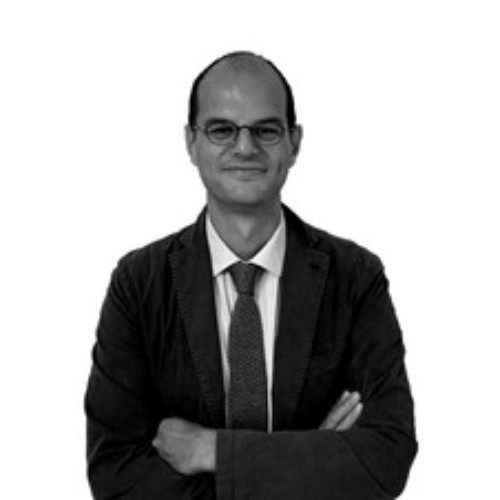
Giulio Meotti è giornalista de «Il Foglio» dal 2003. È autore di numerosi libri, fra cui Non smetteremo di danzare. Le storie mai raccontate dei martiri di Israele (Premio Capalbio); Hanno ucciso Charlie Hebdo; La fine dell’Europa (Premio Capri); Israele. L’ultimo Stato europeo; Il suicidio della cultura occidentale; La tomba di Dio; Notre Dame brucia; L’Ultimo Papa d’Occidente? e L’Europa senza ebrei.