
World
Censorship is not the same for everyone •
Iranian director Panahi also deserves Naza’s applause
The renowned director, sentenced to five years, is subjected to the punishment of a terrifying regime which for decades has prevented him from filming, arrested him and banned him. Yet at best he receives only formal, detached solidarity – if any at all.

Photo: ANSA
“Boualem Sansal is very brave, and for years I’ve been wondering why he stays in Algeria,” said Michel Houellebecq of the novelist sentenced to five years’ imprisonment in Algiers. “There is a certain grandeur in his remaining in his own country as a member of the resistance. I’ve always thought that in 1940 it was braver to stay in France than to go to London, for example.” Now Jafar Panahi has also been sentenced to five years. On the one hand, the renowned Iranian director has been punished by a revolutionary court in Tehran, with his assets confiscated and a ban on travelling and using social media. On the other, there is ‘Naza’, the documentary by Yuval Abraham and Rachel Szor, which was acclaimed at Venice with a record-breaking standing ovation and the Special Jury Prize.
Panahi is suffering the consequences of a terrifying regime that has for decades prevented him from filming, arrested him and banned him. The latter denounce Israeli democracy at war. But only Abraham and Szor receive the loudest media and political acclaim. Panahi is a classic case of an artist living under a dictatorship. He won the Palme d’Or at Cannes, has defied Iranian bans for twenty years and declared that the regime has lost its legitimacy. The sentence comes after his return to Tehran – just as Sansal’s did in Algiers – against a backdrop of repression and early-morning executions for dissent. He is not an ‘uncomfortable critic’ of a democracy: he is an opponent of a regime that shoots, hangs and, since 1979, has kept intellectuals and filmmakers in prison.
In Israel, a film can accuse the army of indiscriminate civilian deaths, receive standing ovations and awards in Venice, and its makers face, at most, an official response from the Israeli army. In Iran, a director who makes films critical of the regime ends up with a five-year prison sentence, confiscation of assets and silence. ‘Naza’ causes a scandal and is celebrated on the festival circuit and in the Western media; Panahi, at best, receives formal, detached solidarity – if any at all.
“Artists have a duty not to remain silent on Iran,” Panahi said in January at the EFA ceremony, the European Oscars. The last appeal on Panahi’s behalf by the National Association of Film Authors dates back sixteen years, when Bernardo Bertolucci spoke out in his favour. Sixteen years have passed. Amnesty International called for his release on 3 January 2011, although in the meantime Panahi has been threatened and re-arrested, despite the efforts of Xavier Bardem, Susan Sarandon and Juliette Binoche. Indignation runs high when the target is the Jewish state, but is lukewarm when it is a theocracy that has been repressing its own artists for half a century. Italian cinema has produced many appeals for Gaza or against Israel over the past year. Where are those for the Iranian people being massacred?
Last month, at the Casa del Cinema in Rome’s Villa Borghese—an event organised by the Iranian Cultural Institute—films produced by the regime were screened, such as "Il dio della guerra", produced by Owj Arts and Media Organisation, which sounds like an independent production company but is in fact the Pasdaran’s audiovisual arm. The film centres on Hassan Tehrani Moghaddam, the ‘father’ of the Islamic Republic’s missile programme. A large-scale Iranian propaganda event. A public venue in Rome, run by a foundation that organises the Rome Film Festival, has lent its platform to an operation that Tehran shamelessly refers to as the ‘cultural front of the revolution’. And perhaps even some of our own ‘red-carpet resistance’ filmmakers.
More on these topics
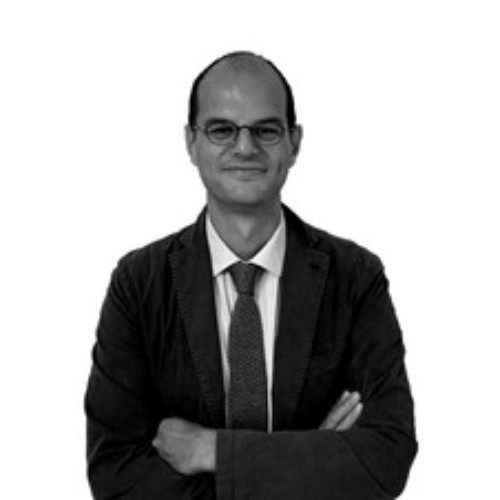
Giulio Meotti è giornalista de «Il Foglio» dal 2003. È autore di numerosi libri, fra cui Non smetteremo di danzare. Le storie mai raccontate dei martiri di Israele (Premio Capalbio); Hanno ucciso Charlie Hebdo; La fine dell’Europa (Premio Capri); Israele. L’ultimo Stato europeo; Il suicidio della cultura occidentale; La tomba di Dio; Notre Dame brucia; L’Ultimo Papa d’Occidente? e L’Europa senza ebrei.