
World
THE VOTE •
Israel’s strange apartheid: the only place where Arabs experience democracy
In Israel, there has been a record turnout among Arab voters (80 per cent, three percentage points higher than the national average) and a record number of Knesset seats for Arab parties – rising from ten to nineteen – including those that do not recognise the Jewish state and more than double the number of far-right parties. Yet the accusation levelled at Israel of ‘new apartheid’ remains the most sadly effective and persistent.

(Photo: Getty)
Regardless of who is in power, Israel has already demonstrated what democracy entails to all pro-Palestinian supporters who praise Hamas, a terrorist regime specialising in coffins rather than ballot boxes. Israel has once again proved itself to be the ‘freest Arab country in the world’. No Arab country is classified as a ‘full democracy’ or a ‘flawed democracy’. Only two are ‘hybrid regimes’ (halfway between democracy and authoritarianism): Morocco and Tunisia. All the others (Algeria, Egypt, Iraq, Lebanon, Jordan, the Gulf states, Yemen, Syria, Sudan, Libya, Mauritania) are authoritarian and dictatorial regimes. And then there is Israel, where there has been a record turnout among Arab voters (80 per cent, three percentage points higher than the national average) and a record number of Knesset seats for Arab parties – rising from ten to nineteen – including those that do not recognise the Jewish state and more than double the number of far-right parties. One of the defining images of these elections is the queues of women in niqabs waiting to enter polling stations, alongside Bedouins travelling on camels and donkeys to the polls. The paradox is explained by Daniella Greenbaum Davis, a columnist for the Washington Post: “Israel was the first country in the Middle East to grant Muslim women the right to vote. Israel is remarkably free of apartheid and genocide”. Less flattering, but no less paradoxical, is Hassan Khaled’s comment: “Israel allows Arabs who refuse to recognise Hamas as terrorists to win seats in parliament.”
Israel, Hassan Khaled continues, “is practically the only country that has not banned the Muslim Brotherhood. They think they are living in Switzerland, not in the Middle East”. Yet the accusation levelled at Israel of “new apartheid” is the most sadly effective and persistent. The only legal distinction between Jewish and Arab citizens of Israel is that the latter are not required to serve in the Israeli army. In 1999, Abdel Rahman Zuabi became the first Israeli Arab to join the Supreme Court. Today, there is permanent judge Khaled Kabub, who is also the first Muslim to rise to the highest ranks of this highly influential Court. In 2004, Salim Joubran, another Israeli Arab, was appointed a permanent judge of the Court. The independence Joubran enjoyed as a judge was demonstrated in March 2012 at the Court’s inauguration ceremony, when Joubran chose not to sing the Israeli national anthem, ‘Hatikvah’. Such a scene would be unthinkable in any other country in the region, from Morocco to Iran. Arab judge George Kara presided over the three-judge panel that convicted former Israeli President Moshe Katsav. An Arab sending a Jew to prison.
There have always been Arab MPs in the Knesset, ever since 1949, when elections were first held in Israel. Whatever shortcomings there may be in the treatment of Arabs in Israel, one can always compare it to the treatment of Jews in Arab countries. Yet such a comparison is impossible: no Jews now live in Arab countries. There are five left in Egypt, ten in Syria, about twenty in Lebanon, and none in Jordan—to focus only on Israel’s neighbors (from Algeria to Iraq, all that remains of the Jewish presence are old cemeteries). “The first thing to say about Tuesday’s elections in Israel is what is usually mentioned least: the very fact that they are taking place,” writes Bret Stephens in the New York Times. “They are competitive, legitimate elections, taking place on schedule and offering a real chance to unseat a very powerful incumbent leader.”
This is something that cannot be said of the Palestinian Authority under the presidency of Mahmoud Abbas, who was elected in 2005 for a four-year term and has since consistently avoided calling new elections. The same applies to Hamas, which, after winning the Palestinian legislative elections in 2006, waged war on its internal political opponents, ruling through fear. This observation cannot even be applied to Egypt, whose president came to power in a coup in 2013 and won an ‘election’ the following year with 97 per cent of the vote; nor to Turkey, whose president maintains his grip on power by imprisoning political rivals and independent journalists who prove inconvenient; nor to Jordan, a repressive dynastic monarchy; nor to Lebanon, whose parliamentary government is unable to assert its authority against Hezbollah and its mentors in Tehran”.
Pro-Palestinian supporters respond: “But Palestinians cannot vote in Israel”, an argument implicitly in favour of the annexation of Gaza and the West Bank. On Tuesday, the Arabs of Gaza and the West Bank (and all their useful Western idiots, from Melanchion’s supporters to the ‘very special’ rapporteur) watched their brothers in Israel vote en masse. They recalled the last time they were able to do so themselves, twenty years ago. However, those who speak of ‘Israeli apartheid’ will continue to assert that even this is the fault of the Jews ‘from the river to the sea’, the democratic supremacists.
More on these topics
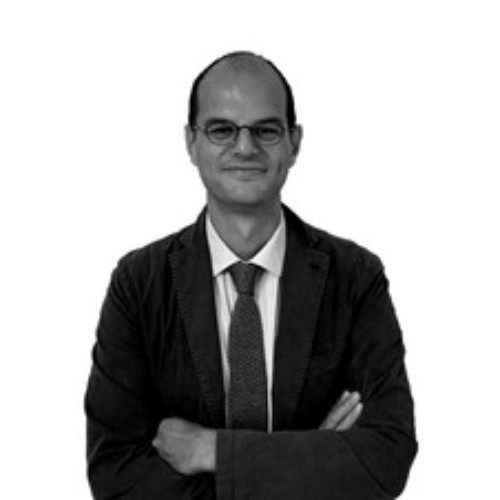
Giulio Meotti è giornalista de «Il Foglio» dal 2003. È autore di numerosi libri, fra cui Non smetteremo di danzare. Le storie mai raccontate dei martiri di Israele (Premio Capalbio); Hanno ucciso Charlie Hebdo; La fine dell’Europa (Premio Capri); Israele. L’ultimo Stato europeo; Il suicidio della cultura occidentale; La tomba di Dio; Notre Dame brucia; L’Ultimo Papa d’Occidente? e L’Europa senza ebrei.