
Is it Milan or California?
Eat the rich, Italian style
With this measure in the Budget Bill, Italy has succeeded in its fight against billionaires – a fight that failed in California with Proposition 40, which was rejected in the mid-term elections. What will happen in Milan?

Against the bosses, vote for Meloni! Where the Californian left has failed, where the broad coalition has failed or will fail, where the Milanese ‘municipal’ socialist candidate and all his imitators – who are throwing themselves into the most popular sport of the moment (even more so than padel) – the hunt for millionaires or, better still, billionaires – are failing, she, Meloni, succeeds. With the sensational ‘exit tax’, which will tax millionaires or billionaires leaving the country. Twenty-six per cent on the capital gains of those with financial wealth exceeding 800,000 – small change for a millionaire or billionaire – which will be levied, the past participle of the verb ‘to levy’, once they have left.
‘But how,’ everyone says, ‘have you gone to such lengths to attract them – the millions and billions – and now you’re scaring them off at the start?’ The prestigious foreign press is up in arms, protests Forza Italia, over the measure set out in the Budget Bill, the threshold for which may rise to one, or even five million, but it is certainly a strange signal, as well as generating very little revenue – three and a half million in the first year, then six and a half, it is estimated (a sum that the wealthy from prestigious foreign countries who come to Italy spend in a year, or on a two-room flat in Brera). So what does this signal indicate?
In Milan, the epicentre of the Collective Foreign Rich, a sense of despondency is spreading, particularly among the Mamdani-style mayoral hopefuls à la cassoeula. Lorenzo Pacini, who campaigns in the suburbs to the tune of ‘drink Peroni, hate the bosses’ – the local version of ‘tax the rich’ – and Carlotta Cossutta, Armando’s niece with her rolled ‘r’, whose unruly curls symbolise her aim for a more inclusive and less patronising Milan, are suffering. All have been overtaken on the left—or on the right—by Meloni, who, with a knight’s move while riding a white horse among the ponies at Fieracavalli in Verona, has brought the entire group to heel. Against the bosses, vote Meloni.
Without the wealthy foreigners, however, an epic and an era would come to an end: the Milan of the ‘fresca’, of overpriced villas on Lake Como, of clubs, of international schools (in Monza, a veritable enclave of Americans who have discovered the ‘ville di delizia’ and send their little ones to the International School). Yet Rome too, it should be noted – rarely mentioned in these discussions, yet property prices there may have risen even more. After all, in Rome there have even been bombs in the suburbs; for weeks now there has been a war between mafia and para-mafia families, but this draws little attention, just as the smashed shop windows in Milan’s Maranza district go largely unnoticed.
In short, even in the capital there is a veritable who’s who of billionaires who have driven up property prices to such an extent that one constantly wonders which Romans can still afford to live there. While in Milan, prices on Via Montenapoleone reach a modest 50,000 euros per square metre, in Parioli they stand at 20,000 – with the difference being that in Milan, apart from the collective influx of wealthy outsiders, some people actually work and earn a living (and pay, and make demands), whereas in Rome one really does wonder who on earth could possibly fork out such sums. Through what professions or sources of income? Former ministerial ‘baby pensioners’? Senior executives? Corrupt officials on a fixed allowance? Pizza makers adored by Korean influencers? It remains a mystery. Even the grand hotels will feel the pinch; they, too, are springing up everywhere: the latest being the former Botteghe Oscure, once the headquarters of the Italian Communist Party and now a newly opened resort, complete with a grand terrace and paintings by the sublime prince-painter Francesco Del Drago. Will all this now come to an end?
International reactions were, as they say, not long in coming. The Financial Times warns that the measure may make Italy less attractive to the super-rich. Bloomberg sees it as a populist shift. The Daily Telegraph warns: the tax risks hitting wealthy Britons who have moved to Italy in recent years, many of whom were fleeing the abolition of non-dom status. To add insult to injury, some had left London specifically to avoid an exit tax in the UK. Matteo Renzi is also voicing strong opposition; after all, he was the one who devised the law to attract millionaires and billionaires, which initially provided for an annual flat tax of 100, then 200, and now 300 thousand euros, regardless of foreign income. However, Giorgia Meloni is now taking charge.
It even outdoes Silicon Valley: in fact, they had not managed it in California with ‘Proposition 40’, which imposed a one-off 5 per cent tax on fortunes exceeding a billion and was rejected in the mid-term elections. Many, unable to read or write, had already left, such as Elon Musk, who is based in Texas (with the result that he now finds himself governed by the Democrats!). Being wealthy in the current environment is certainly challenging; there is little room for complacency.
And then there’s the rich. Let’s be clear: if we’re talking about the ‘super-rich’, 800,000 euros (declared) is actually a tidy sum by Italian standards – we’re in the upper echelons of income tax, not talking about five million, the sort of figure associated with Leonardo Maria – whilst for the poor millionaire or foreign billionaire, it’s peanuts. How, then, do we reconcile a country where the average taxi driver declares 1,200 a month with one where Mr Musk shells out 250 million in election funding in a single go?
The fact is, many countries already have this tax. France has it – a master of taxation, just as it once was of conversation – and Germany has had it since 1972. However, Germany does not have Lake Como; German tourists arrive by campervan at Lake Garda; who on earth would ever move there, to Germany, apart from slightly romantic digital nomads like those in Vincenzo Latronico’s latest novel, “Una splendida rovina” (Einaudi), where a group of adventurers buy a ramshackle house in Pomerania and soon realise their mistake, amidst dodgy solicitors, draughts, structural defects and AfD resurgence. Here, on the other hand, life was so good; everything was flourishing, even in the most out-of-the-way villages, even in the most unlikely neighbourhoods: everyone had their own wealthy foreigner. We’d grown fond of them. The wealthy foreigner was part of the public landscape. Websites, social media accounts and guides were popping up, explaining how to come to Italy – and above all to Milan – as a wealthy person.
However, have you considered the consequences? If the exit tax goes ahead, an entire sector of journalism and publishing could collapse under the Madonnina—essayists, urban planners and commentators opposed to the ‘exclusionary Milan’, the gentrified Milan. This comes on top of the existing crisis in the book industry. Of course, perhaps the property market will stabilise, but is this really the right time, while the fashion industry is also sinking (exports from the Milanese fashion sector down 23 per cent)? Will we be left with nothing but the poor and the Maranza? Dear Meloni, please reconsider and consult the major stakeholders.
More on these topics
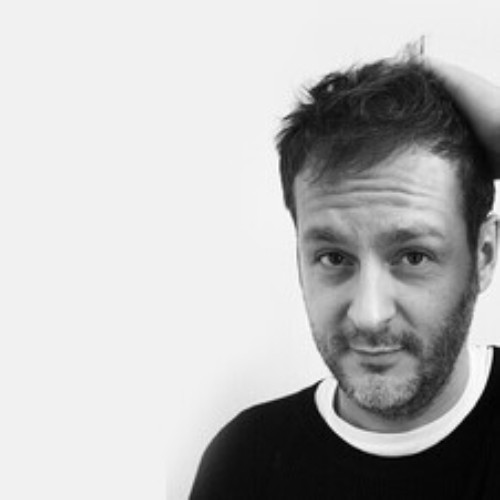
Michele Masneri (1974) è nato a Brescia e vive tra Roma e Milano. Scrive da un bel po’ sul Foglio. I suoi ultimi libri sono il romanzo “Paradiso” (Adelphi, 2024), “Steve Jobs non abita più qui”, una raccolta di reportage dalla Silicon Valley e dalla California nella prima èra Trump (Adelphi, 2020) e il saggio-biografia “Stile Alberto”, attorno alla figura di Alberto Arbasino, per Quodlibet (2021), da cui anche l’omonimo documentario.