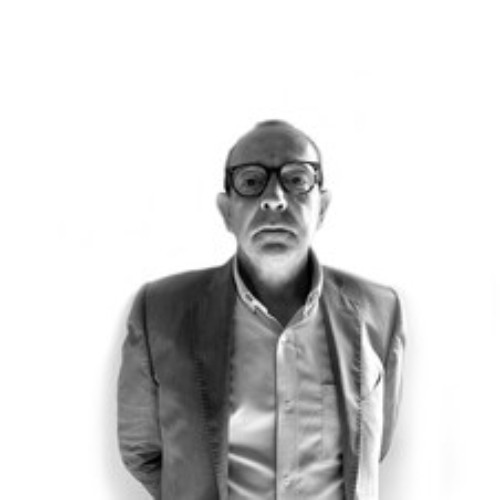
“The only positive news is that the MAXXI will have a first-rate curator for its art section: Andrea Viliani,” wrote Artribune yesterday morning, in the wake of the art world’s transfer market bombshell that had just exploded. Indeed, it is one of those expressions that lend themselves to footballers’ sudden transfers, usually involving million-euro fees, facilitated by a few underhand manoeuvres between major clubs. Andrea Viliani, on the other hand, is a highly regarded curator of contemporary art and had only recently signed a contract with the Triennale di Milano. The news of his appointment at the MAXXI is nothing short of incredible. A surprise move, a real snub between cultural institutions.
Yesterday morning, the Triennale, directed by Vincenzo Trione, issued a statement, summarising in just a few lines the irritation that nevertheless shines through: “The Fondazione La Triennale di Milano announces that, over the coming weeks, a new member of the Scientific Committee for the contemporary art sector will be appointed. The working relationship with Andrea Viliani has come to an end, and the institution thanks him for the work he has carried out to date”. The role lasted from June until now; the contract was for four years, and until a few days ago, Viliani was carrying out his programming duties as if nothing had happened.
There was no hint of institutional friction – one public institution pitted against another – given that, just a few weeks ago in Milan, the Triennale and MAXXI had jointly awarded the Gold Medal for Italian Architecture. The two major institutions dedicated to contemporary art, after all, lead parallel lives; and whilst there is a difference in budget size – with the MAXXI’s being much higher – this should not lead to one institution dominating the other. They share a vision of research and the promotion of archives, in which the staging of new temporary exhibitions is very important, but not the be-all and end-all. These are two venues that ought to strive to form a network – as Trione suggested when speaking to Il Foglio some time ago, referring also to other national institutions – and so this ‘snatching’ seems all the more serious.
However, some clues or insights can be gleaned from the furore stirred up yesterday amongst industry insiders. First and foremost, the context of the situation. The MAXXI, directed by Maria Emanuela Bruni since March 2025 – having taken over the reins following Alessandro Giuli’s departure – had lost its artistic director role last June, following a not entirely amicable split from Francesco Stocchi. His early departure was fuelled by differing visions regarding the approach to exhibitions and also the way in which the role of this prestigious institution (which, it should be noted, is not a museum) was understood. Replacing a director for contemporary art – a role that requires a strong CV and standing – is no easy task, even for the MAXXI.
Initially, a direct appointment had been envisaged, but this was advised against by the ministry. The decision was therefore made to opt for the more structured approach of an open competition, and critics and curators were selected. Then the first part of the market bombshell exploded: Andrea Viliani – who had not been invited to that competition – was chosen by the senior management at MAXXI (with Bruni as general director of the Foundation and Paola Macchi as his deputy). A first-rate choice, it goes without saying: Viliani, aged fifty-three, has directed, amongst others, the MADRE in Naples and the Museum of Civilisation in Rome, and cut his teeth fifteen years ago as part of the curatorial team at dOCUMENTA in Kassel, the pinnacle of international contemporary art events in Europe. However, after leaving the Museum of Civilisation in the EUR district and being appointed to head the Ministry of Culture’s ‘Digital Heritage Gateway Platform’ – where he enjoys the trust of Massimo Osanna – Viliani had accepted the offer from Milan made to him last June by the Triennale’s new director, Trione.
It is perfectly understandable that yesterday, within the sector, the talking point of the day was choosing between two scenarios: was this an unprecedented (and in any case of dubious taste) transfer-market-style move applied to the world of art curators and cultural institutions? Or was it a politically orchestrated appointment, the sort typically seen at the end of a parliamentary term? In reality, this doubt is easy to resolve: the appointment at the MAXXI was not dictated by the ministry; indeed, Giuli in Milan immediately established a constructive working relationship with the Triennale’s new leadership, following the long and troubled process of selecting Stefano Boeri’s successor. Plenty of projects and collaborative ideas. It is easier to imagine that the management of the MAXXI, faced with some difficulties and delays in identifying a replacement for Stocchi, opted for a fast-track process. Absolute discretion, no gesture of fair play towards the Triennale, which was only notified shortly before the MAXXI board of directors unanimously approved the appointment. An institutional snub without precedent, in a world as sheltered as that of cultural institutions. Some scars will remain.