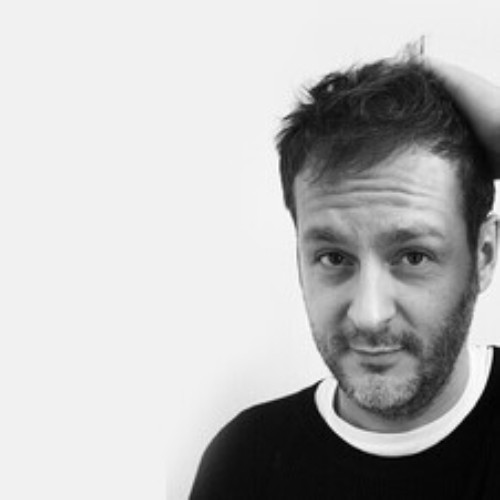
First, the face. And the hair. And then: bringing together Repubblica, Telefono giallo, and those best-selling books about cities that aren’t gruesome. And then the European Parliament with the PDS, back when being an MEP was still an honour; music (a music lover), civic engagement (but can engagement ever be uncivilised?).
Corrado Augias, who passed away yesterday in Rome at the age of 91, was something of a James Bond of the Italian pop-culture metaverse, spanning books, newspapers and television. It is as if, in today’s media landscape, there were someone who, for example, progressed from serving as a correspondent for – insert the name of a young yet wealthy newspaper, one that has the resources to maintain a correspondent in New York – to hosting a – insert the name of a successful yet also interesting and intelligent programme, conceived by a culturally attuned RAI department head who nevertheless understands popular culture and devises a series of shows that will make history and attract large audiences.
In short, it is clear that today this would be a science-fiction character—one that could only be created using AI—but perhaps, using the basic, free model and focusing solely on versatility, it would reply: Tommaso Cerno or Selvaggia Lucarelli. Change your subscription?
It is easy to say ‘the old days’, perhaps followed by ‘my dear lady’. It was a different world. I recently came across an old Italian film on an obscure platform, adapted from a novel by Augias and his wife, Daniela Pasti, Tre colonne in cronaca, directed by Carlo Vanzina – a crime thriller set between Rome and Milan at the turn of the 1980s and 1990s, starring Eugenio Scalfari, played by Gian Maria Volonté, and a young, strapping reporter played by Sergio Castellitto.
The film was not a success – as both Castellitto and Enrico Vanzina told me: those who went to see a Vanzina film did not want a committed actor like Volonté, whilst those who went for Volonté were horrified by the Vanzinas. The film captures the minute details of a world that has now vanished: newspapers and journalists still wealthy enough to fly frequently, with beautiful homes, servants, and lunches and dinners at restaurants, fine clothes, teletype machines, and ANSA monitors. And then there were the many characters from the *Repubblica* universe, each with their own distinct flavour: the cynical reporter, the ‘at large’ commentator – even more cynical and a real smooth operator… This was ‘the world’, as a modern-day TV series producer might say, of Augias – the setting in which he operated. With that face of his, like an American actor.
Then there was the Augias style, which Ezio Mauro also mentioned, but I would add some small, basic and practical details: an atmosphere characterised by elegant, often mismatched outfits, contrasting pocket squares and Shetland jumpers, or perhaps a tuxedo worn under a windcheater – the style of Romans who have emigrated to New York, à la Mario D’Urso, and what could be better.
Augias had, after all, been in America ever since *Repubblica* was founded – indeed, even before that: that face and that hair do not appear in the famous photo of “The Group”, the “Rep men” of Piazza Indipendenza, the founders amongst the printing presses – Viola, Pirani, Forattini, Barbato, Rocca, immortalised by Vittoriano Rastelli gathered round Scalfari in December 1975: because Augias was already in New York, sent by Repubblica to set up the correspondent’s office. And then, after that period of maturing in barriques – as the move to weekly magazines was – in his case, L’Espresso and Panorama – here, indeed, was Rep.
Now that there’s so much talk of family – “the Dancing with the Stars family” – amongst the stars of *Repubblica*, Augias had carved out his own distinctive niche. He was the sun that shone on everyone, on Scalfari, Augias (with that face and that hair) was a pop version, a second line – albeit an extremely prestigious one and perhaps even more beloved by the masses than the ‘top’ line – in short, he was the Miu Miu to the Prada of journalism that was La Repubblica: a great factory, stylistically too, with all its aesthetic, moral and moralistic codes, from Bodoni-style typography to certain ties, certain homes and certain causes.
He, too, had his phase with mystical catchphrases, at one point, along with books on Jesus and investigations into Christianity, but again he was less demanding and imperious than Barbapapa; after all, he had the face of a Hollywood actor rather than a bishop. He made do with the resources available in Italy – immense by today’s standards, but minuscule when compared to America’s.
So not Hollywood, but other business models: books about cities and beyond, and a pioneer amongst journalists who’d moved into crime television – hence ‘Telefono giallo’, the RAI programme that launched and popularised all the cold cases, which would go on to spawn ‘Chi l’ha visto’, well before Garlasco. There he was, the Perry Mason of Italian-style true crime, an embodiment of that other character created by Guglielmi (a man of civic commitment in the Parioli district). He was also a regular at the Rome Opera House. And then there was his voice – a velvety voice, yet one that was familiar from Rai TV dramas, with a slow, clearly enunciated delivery. And many other things. But what was most important was his face. His face, and his hair.