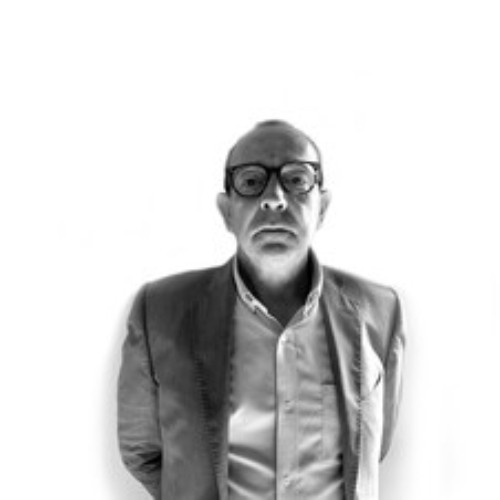
In the Torre di Chia, the last voluntary hermitage unearthed amongst the hills of Tuscia, Pier Paolo Pasolini wrote many of his Lettere Luterane and drew the famous, enigmatic series of portraits dedicated to the art historian Roberto Longhi, his mentor – a sort of dramatic interrogation of the Father. This is one of the poetic reasons why that old stone cottage, which had belonged to the artist, caught the attention and captured the passion of the actor Gabriele Gallinari, who bought it from PPP’s heirs, selling his house in Rome to do so. Over the years, he has spent a great deal of his own money on restoration work and on the idea of turning it into a place of remembrance and cultural events that is open to the public.
It was 2021, and, quite rightly, before the purchase he enquired whether there were any historical or usage restrictions on the Tower, and if so, what form they took. The authorities replied that there were none. The story soon became much more convoluted, practically impossible to resolve. First of all, an archaeological and monumental protection order had been imposed in 2001; but contrary to popular belief, this does not oblige the ministry (now the Ministry of Culture) to exercise any right of pre-emption, as some have recently tried to claim: ‘And what is the state doing?’, to quote the evergreen De Andrè. Then came the legal dispute – still ongoing – with the Università Agraria di Chia, which is not a university but a private-law body that manages ‘the assets for civic use and the collective rural heritage of the community of Chia’.
Institutions and documents dating back to the Kingdom of Italy would confirm its right to use the area surrounding the Tower, and in 2021 it effectively claimed ownership of it. In 2025, however, the Special Commissioner for Civic Uses upheld the Agricultural University’s claim, annulled the 2021 deed of sale, and ordered the property to be returned. In recent days, an eviction order has been issued—though it has been postponed for the time being—while a final ruling on ownership of the tower and the surrounding area is not expected for at least a year (what would happen if the evicted owner were subsequently recognised as the rightful owner)?
The story is even more complicated, because in the meantime the local council has won a case against the Agricultural University, found guilty of having placed a number of incongruous structures on the surrounding land, used for various events and as venues. For years, the affair has sparked a bitter factional and media war on a scale not even seen in Garlasco, were it not for the fact that it is confined to the cultural and artistic world and to enthusiasts of events in the Tuscia region. The case is indicative of the country’s convoluted relationship with its countless artistic treasures. The MIC, despite being pressed on the matter, can do nothing but wait for the legal dispute between private parties to be resolved through the appropriate channels, and at best hope for goodwill on all sides so that such a unique site can be opened to the public. After all, it was the Conte II government – with Franceschini as minister – that waived its right of pre-emption in 2020: it is neither in the Italian state’s interest, nor within its means, to take on the responsibility for every ruined castle tower or work of art. That would be sheer madness. Yet there remains hope for the romantic – and perhaps slightly mad – dream of Gabriele Gallinari to preserve the ever-restless spirit of PPP in a village in Tuscia.