
Esteri
in Baghdad •
The challenges facing Iraq’s new Prime Minister, Ali al Zaidi, caught between Washington and Tehran
Nominated by the Coordination Framework’s as a compromise candidate, he now finds himself at the center of a regional power struggle where every move toward one side is seen as a betrayal by the other. It is a precarious balance that promises no stability, but only the postponement of a deeper crisis

Iraq is currently experiencing a highly sensitive political moment, amid growing debate over the nature of the balances governing Baghdad’s relationship with both Washington and Tehran, in light of the ongoing conflict and war between Washington, Tehran, and Israel, particularly following the Coordination Framework’s decision to appoint Ali al-Zaidi to form the Iraqi government a move that has raised many questions.
The Coordination Framework’s selection of Ali al Zaidi was less a reflection of cohesion or strength than a belated attempt to escape an increasingly exposed internal impasse. After failing to push through heavyweight figures, it turned to a politically low-profile name, hoping to pass a “compromise candidate” with minimal friction.
Al Zaidi, a figure largely unknown to the broader public, has never previously held a political office. He is primarily known as a businessman whose name has been associated with major deals and who possesses an extensive network of relations with Shiite political forces, cooperating with some of them particularly those that receive direct support from Iran and maintain influential armed factions, some of which are listed under U.S. sanctions. Yet this seemingly quiet choice raises more questions than it answers. Al-Zaidi, who is presented today as a businessman, lacks a clearly traceable pre-2003 trajectory, and his rapid ascent invites scrutiny rather than confidence. How was his wealth accumulated? What networks enabled his rise to head a financial institution that later fell under U.S. sanctions (South Bank)? These are not peripheral details; they go to the heart of the legitimacy of a figure now being propelled toward the premiership.
This appointment cannot be understood in isolation from the nature of the Iraqi political landscape that has taken shape since 2003. Iraq is no longer merely an arena of influence between Washington and Tehran; rather, it has become a complex intersection of regional and international interests and conflicts. Since the fall of Saddam Hussein’s regime, Iraq entered a phase of profound political and security restructuring, during which the United States was the dominant actor until the withdrawal of its forces at the end of 2011, before returning once again in 2014 under the framework of the war against ISIS. In parallel, Iran capitalized on this transformation to strengthen its political and military presence by supporting local forces and armed factions that have now become an essential part of the equation of power both within and beyond the state.
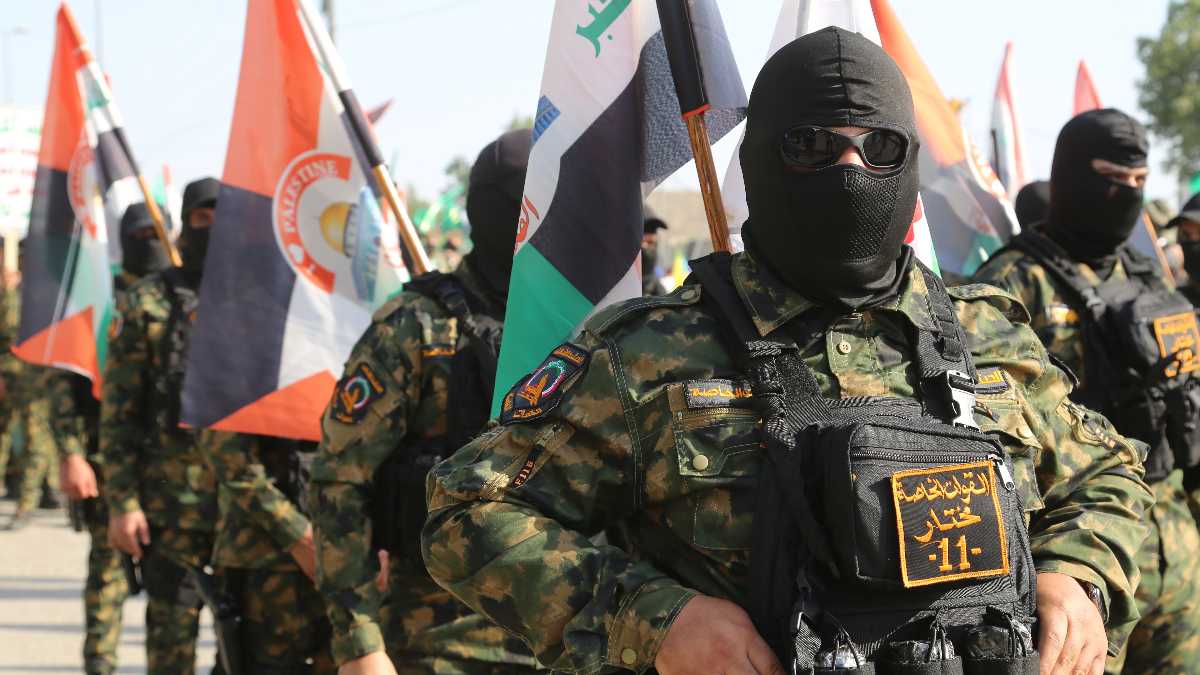
At the political level, these factions continue to entrench their influence through party wings and parliamentary blocs that actively participate in the political process, granting them direct power to affect legislation, form governments, and distribute positions. Yet this political presence is inseparable from their armed strength; rather, it complements it, as this force is used as an undeclared pressure tool that reinforces their negotiating position, often granting them weight beyond their electoral size. The results of recent elections clearly demonstrated this intertwining of arms and politics, as forces and factions linked to this axis achieved a notable parliamentary presence, enabling them to impose broader influence within state institutions. For example, the League of the Righteous (AAH) won 29 seats, while Sayyid al-Shuhada Battalions won 7 seats, and Faleh al Fayyadh, Chairman of the PMF, running within Prime Minister Mohammed Shia’ al-Sudani’s alliance, garnered 9 seats out of 45 within the alliance.
As for the much-discussed international backing of Ali al-Zaidi, it too warrants a more balanced reading. The phone call he received from the U.S. President, along with the accompanying public welcome, should not be interpreted as an open-ended endorsement so much as a cautious signal an initial vote of conditional confidence. Washington, having extended this preliminary cover, is unlikely to sustain it if tensions with Tehran escalate again or if the future Iraqi government fails to meet U.S. demands. In other words, what exists now resembles a temporary de-escalation one that could quickly evolve into full support, or just as easily collapse into a sharp rupture.
What stands out even more is that the narrative of a swift resolution masks the reality of how the decision emerged. Al Zaidi did not rise through prolonged internal negotiations within the Framework; rather, he appeared as a surprise candidate, reportedly pushed forward by Nouri al Maliki, before the bloc rapidly coalesced around him and granted him collective cover. This abrupt shift from an unexpected name to a consensus choice reveals more about the internal balance of power within the Framework than any genuine unity of position.
His close ties with influential actors within the Framework particularly those closely aligned with Iran further explain the speed with which he was embraced and presented as a ready-made solution. Far from being externally imposed, as some narratives suggest, al-Zaidi appears to have emerged from within this very network, backed by forces that view him as a reliable extension of their interests rather than a political gamble.
In parallel, with the outbreak of the broad war in 2026 between the United States and Iran, Iraq entered a far more sensitive phase, becoming a near-open arena for the indirect exchange of military messages, with all the deep ramifications this carries for the stability and internal balance of the state. Since the regional confrontation escalated to an unprecedented level at the start of 2026, Iraq witnessed an intense wave of attacks targeting American interests most notably the U.S. Embassy in Baghdad, military bases housing international coalition forces, and the American Consulate in Erbil. These attacks took multiple forms, including short-range missiles and drones, within a clear escalatory pattern led by armed factions linked to Iran.
Estimates indicate that during the period from early 2026 through the second quarter of the year, at least 90 to 120 attacks targeting American positions inside Iraq were recorded, including approximately 35 to 45 direct or indirect attacks on the U.S. Embassy in Baghdad, while around 50 to 70 attacks targeted military bases, particularly in Baghdad (around the airport and Victory Base) and Erbil (Erbil Airport and Harir Base).
Field reports show that some of these attacks were of high intensity, with dozens of strikes executed within just a few days, as occurred in Erbil, which sustained more than 70 missiles and drones in a matter of days at the outset of the war. Armed factions also claimed dozens of attacks over short periods, including more than 20 attacks in a single day against American bases.
At the same time, the U.S. Embassy in Baghdad was subjected to near-periodic attacks via missiles and drones, some of which penetrated defense systems and struck the perimeter of the diplomatic compound. Other reports have confirmed the continued targeting of American diplomatic facilities within the context of escalation linked to the war. Ultimately, this escalation reflects Iraq’s transformation from a sphere of influence into a direct arena of proxy combat, where the roles of the state are intertwined with those of armed actors, and its territory is used as a mutual pressure platform between Washington and Tehran. Despite the severity and recurrence of these attacks, the former Iraqi government’s stance drew widespread criticism both domestically and internationally due to what is perceived as an inability or reluctance to hold perpetrators accountable. Even in cases where arrests were announced, these files often ended without clear outcomes or were closed under political and security pressure, reinforcing the perception of a gap between the actual authority of the state and that of the armed factions.
This dysfunction is most starkly visible in the kidnapping of American journalist Shelly Kittleson, who was abducted in broad daylight in central Baghdad by Kata’ib Hezbollah. Multiple security sources reported that a number of KH members arrested for their involvement in targeting American interests and facilities were released in exchange for her freedom in a deal struck between the state and the factions (some sources cited 9 individuals, others reported 13). This incident was not merely an isolated security event; it reflected the nature of the fragile balances within the state, where political and security considerations intermingle and crises are sometimes managed outside formal frameworks.
At the same time, portraying al Zaidi as Washington’s man in Baghdad is as misleading as framing him as merely an Iranian proxy. In reality, he appears to be a figure under scrutiny, placed within a broader regional recalibration in which the United States is attempting to readjust the balance of power in Iraq, particularly with regard to Iran-aligned actors. This places al Zaidi in a complex position: U.S. signals point toward curbing the influence of these factions, while those same groups retain sufficient political and electoral weight to make their marginalization both costly and potentially unfeasible.
Herein lies the core dilemma if al-Zaidi moves to accommodate U.S. pressure, he risks direct confrontation with the very forces that enabled his rise. If he ignores those pressures, he jeopardizes the already fragile international cover underpinning his candidacy. In either case, he is navigating a highly constrained equation less a durable settlement than a short-term test, one unlikely to extend beyond a matter of months before its outcome becomes clear.
What is unfolding, therefore, does not signal the birth of stability so much as a temporary rearrangement of a deeper crisis. The Framework is postponing an inevitable rupture rather than resolving it, and al-Zaidi, instead of serving as an exit from the crisis, appears closer to being a tool for managing its delay.
Brigadier General Olivier Passot, Associate Researcher at the French Institute for Strategic Research (IRSEM), outlines the trajectory of the Baghdad–Washington relationship and the challenges that have accompanied it over the past two decades. He notes that Iraq, following the fall of Saddam Hussein's regime, clearly struggled to build a balanced strategic partnership with the United States, even as Iranian influence within the country continued to expand.
Passot argues that the challenges in the relationship between the two parties stem primarily from a gap between Washington's objectives and the political and social dynamics that governed Iraq's domestic scene a gap that rendered many American policies misaligned with conditions on the ground. He explains that the United States was caught between two contradictory goals: supporting the construction of a new political and economic system, while simultaneously reducing its presence to avoid overreach a contradiction that undermined its capacity for long-term strategy.
He also notes that the weakness of the security sector allowed armed actors to entrench themselves within official structures while retaining independent decision-making, which hindered the construction of a unified security system. He adds that American policies were often reactive to crises rather than guided by a consistent strategic approach, and that Washington underestimated the speed with which certain armed groups were transforming into influential political and economic forces.
On whether Washington should reassess its approach to Baghdad, Passot asserts that the most effective approach today must focus on practical steps rather than broad political goals through supporting institutions, enhancing transparency, and engaging more consistently with local realities instead of relying on reactive crisis management. He believes this approach could help bridge gaps in understanding and build a more stable foundation for cooperation.
Regarding the Iraqi government's inability to prevent attacks carried out by Iran-backed groups against American interests, Passot clarifies that the problem is not so much a lack of will as it is tied to the structural nature of the security system. Armed groups have managed to entrench their influence within formal institutions while retaining command networks and external relationships, creating a reality in which not all armed forces are subject to a unified chain of command. These groups have also built political, economic, and social influence that makes any attempt to curtail their activities fraught with complex political and security repercussions.
He adds that some attacks are carried out through small cells that are difficult to trace and operate under various names, making the question of attribution sensitive and further complicating any response particularly in an already tense environment.
On the challenges facing the next Iraqi government, Passot points to the foremost challenge of keeping Iraq from being drawn into broader regional conflicts, amid mounting pressure from multiple parties. He also highlights the challenge posed by armed groups operating inside and outside formal frameworks limiting the government's ability to control security decisions and guide foreign relations. He further notes that regional developments, including the ongoing war against Iran, may open a limited window for Iraq to rebalance its external relations particularly if the capabilities of some Tehran-linked groups diminish, or if Iranian leadership becomes preoccupied with managing its internal affairs. This, he believes, could provide an opportunity to strengthen the role of national institutions.
In this context, Dr. Haider Saeed, Head of Research at the Arab Center for Research and Policy Studies, argues that the phenomenon of armed actors in Iraq cannot be understood in isolation from the regional context particularly the threat faced by the political system in parallel with the Arab Spring uprisings, especially in Syria. These factions did not emerge suddenly; rather, they were revived after sustaining heavy blows in 2008 during the "Charge of the Knights" operations. That year, then-Prime Minister Nouri al-Maliki led a military campaign against Shia militias as part of the "Law Enforcement" plan, in parallel with an American strategy led by David Petraeus targeting Al-Qaeda. This dual approach succeeded in achieving a degree of stability that lasted until the American withdrawal at the end of 2011.
The most significant turning point, however, came after the government formation crisis of 2010, followed by the American withdrawal, the escalation of tensions between Maliki and Sunni leaders, the subsequent protests, and the concurrent outbreak of the Arab Spring. In this context, a perception took hold among the Shia political and religious elite of the necessity for a parallel security force which can be seen as the embryo of the Popular Mobilization Forces (PMF) from as early as 2012.
Subsequently, with the fall of Mosul and Grand Ayatollah Ali al Sistani's fatwa of "Kifai Jihad" (collective religious duty), this force received religious legitimacy and emerged to fill a genuine security vacuum created by state weakness not merely to compete with official institutions. At that phase, American influence was at its lowest point, and Washington was unable to curb the political rise of these factions.
As for Iranian influence, Saeed argues that it grew significantly after 2011, though its roots are older. Following the American withdrawal, Iraq moved closer to the Iranian axis a gradual shift from a non-subordinate relationship to a tighter bond, especially as Baghdad's positions toward Syria changed. Saeed attributes this trajectory to several factors: the absence of a clear American vision for the post-2003 period; the early moves by regional states to undermine the American project; the nature of the ruling political forces, which maintain close ties with Iran; Washington's declining interest in Iraq during the Barack Obama era; and the rise of ISIS as an existential threat that pushed Tehran to intervene forcefully.
After the defeat of ISIS, Saeed asserts that Iranian influence had already entrenched itself within the political and security structure, in contrast to a clear decline in the American role, which had become limited to financial instruments and some relationships with Kurdish parties. He concludes that achieving a balance between Iran and the United States is theoretically possible, but requires an independent Iraqi political will something that has yet to materialize, as Iraq continues to lean clearly toward Tehran. Nonetheless, recent regional changes may present a genuine test of Iraqi decision-makers' ability to create greater distance in their relationship with Iran.
Where Did Washington Go Wrong?
Iraq is no longer merely an arena of influence between Tehran and Washington; it has transformed into a central field where their confrontation unfolds across political, security, and economic dimensions. The nature of this conflict is no longer conventional or confined to diplomatic channels; rather, it is conducted through indirect tools, where the roles of the state intersect with those of non-state actors, and Iraqi geography is used as a platform for exchanging messages and exerting pressure.
Tehran relies on a complex network of influence within Iraq, extending from political relationships to armed factions, granting it a significant capacity to shape internal decision-making processes. In contrast, Washington seeks to maintain its presence through a range of instruments, including security and economic support, relationships with state institutions, as well as political and diplomatic pressure aimed at curbing the influence of Iran-aligned factions.
This entanglement has created a fragile balance, in which neither side possesses the ability to achieve a decisive outcome, while Iraq bears the cost of this ongoing confrontation. Escalation between the two parties often manifests internally through attacks on American interests or through political pressures that affect government formation and the trajectory of public policy.
With rising regional tensions, Iraq has become increasingly akin to an arena of indirect confrontation, where international calculations intersect with local dynamics. Rather than acting as an autonomous player, it often finds itself constrained by these balances, unable to fully disengage from either side.
Accordingly, Iraq’s future within the context of this conflict remains contingent on its ability to redefine its position and to build an independent policy that reduces its reliance on external actors and limits the use of its territory as a battleground for settling scores. The real challenge lies not only in managing relations with Tehran and Washington, but in moving beyond the logic of sharp polarization toward a framework that ensures greater sovereignty and stability.
In this context, Dr. Firas Elias, a specialist in national security affairs and Iranian studies, argues that the American failure was caused not only by Iran's strength, but also by the nature of the American approach itself. Since 2003, Washington succeeded in overthrowing the regime, but failed to build a political-security arrangement capable of producing a strong Iraqi state independent of patronage networks and parallel armed forces. Moreover, it focused for too long on the security and military dimension, rather than on re-engineering governance and building sustainable institutional legitimacy. Even when its partnership with Baghdad resumed after 2014 under the banner of combating ISIS, that partnership remained governed by the logic of security necessity not by the logic of a long-term political project. It was for this reason that Iran was able to expand into the spaces neglected by the United States: parties, the informal economy, border crossings, welfare networks, factions, and the capacity to influence government formation and internal settlements.
Dr. Elias adds that the United States repeatedly fell into the same error: it wanted Baghdad to be a sovereign partner against the factions, without always providing it with sufficient political tools to accomplish this or without acknowledging that part of these factions was already integrated into the structures of governance and public funding. Consequently, the American position often appeared contradictory: demanding that the Iraqi state act against groups that were themselves part of the political arrangement Washington had dealt with for years. This is what made American influence appear strong militarily, yet politically and socially weaker than Iranian influence, which was far more deeply embedded within the local structure.
By contrast, Iranian expansion was more visible because it did not rely solely on the formal ally, but on a model of networked influence: factions, parties, security relationships, border understandings, and bilateral cooperation files. Ali Larijani's visit to Baghdad in August 2025, and the security border memorandum of understanding that accompanied it, reveals that Iran did not settle for informal influence alone it also worked to institutionalize it through formal agreements with the Iraqi state itself. This granted Iran a dual capacity: the ability to influence from within the system and from its periphery simultaneously.
In light of current regional developments, Elias argues that Iraq today faces four interrelated strategic outcomes. First, any new American–Iranian escalation will leave Baghdad less able to claim neutrality, because Iraqi geography itself has become part of the theater of deterrence and counter-deterrence. Second, the continuation of factions in their current status will delay the completion of the Iraqi state, as the duality of security decision-making will persist. Third, Iraq's intense economic dependence on oil and maritime export routes makes every regional crisis a direct threat to financial and social stability. Fourth, the transformation underway in the regional order following October 7th and the ongoing war against Iran means that the old formula that allowed Iraq to live between Washington and Tehran has become weaker than before, and requires a comprehensive redefinition of Iraq's regional role.
Elias believes that Iraq is no longer living in a stable balance between the United States and Iran rather, it is living through a transition from "managing influence" to "managing confrontation." This shift, if it continues, will render the Iraqi state less capable of making independent sovereign decisions, and more vulnerable to having its institutions transformed into shock absorbers for regional upheavals, rather than instruments for building a national project. Therefore, the Iraqi challenge is no longer merely how to balance between Washington and Tehran it is how to reclaim the definition of the state itself as the sole reference point for arms, foreign decisions, and national interest. Without that, "balance" will remain nothing more than a temporary political truce within an open-ended crisis.
Ultimately, Iraq’s crisis today does not appear to be merely a failure in managing the balance between the United States and Iran, but rather a reflection of a deeper failure to build a state capable of monopolizing decision-making and sovereignty. While regional powers move according to clear strategies, the Iraqi scene remains governed by a logic of reaction rather than initiative.
In this context, the position of Ali al Zaidi becomes a condensed example of this dilemma. His rise to the forefront of the political scene does not place him outside the equation of conflict; rather, it positions him at its very center, as a figure being tested within an extremely complex space where U.S. and Iranian calculations intersect with Iraq’s internal balances. Any attempt by him to consolidate his position will directly collide with a dual reality: external pressure demanding a redefinition of the limits of influence, and internal forces that possess tools of leverage extending beyond formal state institutions.
The real danger he will face lies not only in the difficulty of managing this balance, but in the fact that he is operating within an inherently unstable equation, where no long-term safe space exists. Every move toward one side will be interpreted as a shift away from the other, and every attempt at positioning will be read as implicit alignment within a larger conflict.
Thus, the challenge before him is not merely the management of a political file or the formation of a government, but rather an actual test of the limits of maneuvering within a deeply intertwined regional and domestic system. In this context, “balance” itself becomes less of a political choice and more of a temporary equation, one that remains perpetually vulnerable to collapse at any moment.