
World
Area of no interest •
Another Holocaust survivor has been killed. Are these the side effects of the ‘globalised Intifada’?
Eva Geller died a year after being seriously injured in the attack at Bondi Beach. Across the world, after eighty years of relative peace, survivors have become victims of modern anti-Semitic violence, which has only intensified since 7 October

Photo: LaPresse
In an essay published this week in the Neue Zürcher Zeitung, the Dutch writer Arnon Grünberg – whose work is published in Italy by Feltrinelli – explains that for centuries Jesus has served as the West’s moral compass. After the Second World War and with the rise of secularisation, we wanted to be the exact opposite of Hitler. “The victim was imbued with a sacred aura, which allowed anyone who perceived themselves as a victim to claim privileges,” writes Grünberg. “The term ‘woke’ fits perfectly with the Hitler era. Injustice must be rectified or compensated for. But if the status of victim takes on sacred dimensions, it will eventually become universal, until everyone becomes a victim.” And the true victims of the Holocaust will end up being forgotten.
On Thursday, Eva Geller, aged 90, a Holocaust survivor from Romania, died one year after being seriously injured in the Bondi Beach attack; she was the fifteenth victim of the terrorists who opened fire on the crowd gathered to celebrate Hanukkah on Sydney’s beach. Two other survivors, Alex Kleytman from Ukraine and Marika Pogany from Hungary, had already lost their lives in the massacre in Australia. A fifth of the victims at Bondi were therefore Holocaust survivors. Across the world, after eighty years of living in relative peace, survivors have become victims of modern anti-Semitic violence, which has only intensified since 7 October. ‘Globalising the Intifada’ often translates into ‘globalising the Holocaust’.
In Petah Tikva, Iranian missiles killed Holocaust survivor Yvette Shmilovich. Two other survivors of the Nazi extermination camps, Bella Ashkenazi and Olga Weissberg, met the same fate. Gina Semiatichova, a survivor of the Terezin concentration camp, lived in the Kisufim kibbutz. Hamas terrorists dragged her from her shelter into the living room, where they killed her with a bullet to the head during ‘Black Saturday’. Moshe Ridler’s life, too, ended much as it had begun. Ridler, aged 91, who as a boy escaped from a Nazi concentration camp – where his mother and sister died of typhus – was murdered at the Holit kibbutz. Yaffa Adar, a survivor, is one of the iconic images of 7 October, when she was abducted and dragged to Gaza on a golf trolley during the massacre carried out by Hamas. Another Holocaust survivor, Barbara Steinmetz, was seriously injured in the attack carried out by Mohamed Sabry Soliman: she was shouting “Free Palestine” when she began throwing Molotov cocktails at the march in Boulder, Colorado, in support of the Israeli hostages. Mireille Knoll, aged 85, who had escaped the Vel d’Hiv round-up at the winter velodrome in Paris, was murdered in her flat in Paris. In Western public discourse, there is none of the outrage one might expect, as if contemporary anti-Semitic violence were a minor detail, a side effect or even a legitimate response to Israel.
To combat evil, Grünberg concludes, one is forced to constantly evoke it, and “the Nazi uniform is almost reassuring: they are the villains, we are the heroes, regardless of what we do”. Regardless of the fact that, in the name of anti-Zionism, even Holocaust survivors are being killed. There it is: the scandal.
More on these topics
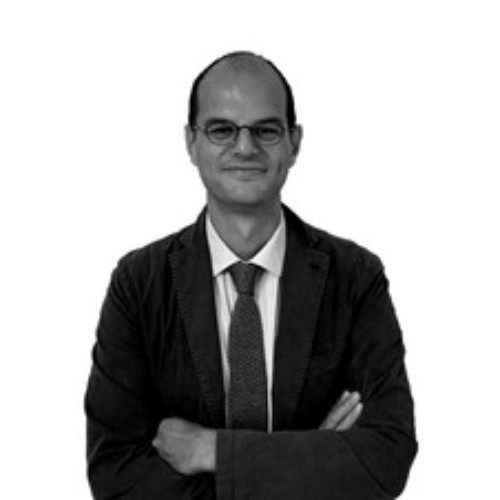
Giulio Meotti è giornalista de «Il Foglio» dal 2003. È autore di numerosi libri, fra cui Non smetteremo di danzare. Le storie mai raccontate dei martiri di Israele (Premio Capalbio); Hanno ucciso Charlie Hebdo; La fine dell’Europa (Premio Capri); Israele. L’ultimo Stato europeo; Il suicidio della cultura occidentale; La tomba di Dio; Notre Dame brucia; L’Ultimo Papa d’Occidente? e L’Europa senza ebrei.