
World
The Last Illusion •
David Grossman’s hope and the ‘peace’ that coincides with the end of Israel
The writer hopes that a change of government in the Jewish state might stem the tide of anti-Semitism, but the hatred predates 7 October. And peace does not depend solely on Jerusalem: without a negotiating partner willing to renounce the destruction of the Jewish people, hope risks becoming an illusion

David Grossman, writing in *Repubblica*, speaks of “one last chance” for Israel to choose hope over the sword, liberal democracy over Sparta (Athens, too, was defended by the sword), and dialogue over despair. Moving, like almost everything Grossman writes. But one last chance for what?
The history of the last thirty years is not a dialogue interrupted by malicious Israeli governments. It is the story of extremely generous offers (Camp David, Taba, the Olmert plan) that were rejected and turned into platforms for further demands (on 7 October, Hamas even killed the volunteers who were taking Palestinians to Israel for medical treatment). To hope that a new government in Jerusalem will single-handedly break this deadlock is to attribute to Israel a miraculous power to transform the Islamic world – a power it does not possess and which no state has ever possessed. (continued on page four)
Even more tenuous is the link that David Grossman draws between Israeli policies and the surge in anti-Semitism in Europe and the United States. Grossman hopes that a change of government in Jerusalem will reduce that hatred, ‘at least in part’. Yet anti-Semitism has not been dormant over the last twenty years; it has shifted from the pulpits of mosques and churches to university campuses, from party branches to the banlieues to Telegram chat groups, from the Protocols of the Elders of Zion to UN theories on ‘genocide’. We had already seen the pogroms in France (2012) and the synagogues set alight in Sweden (2017), the Jewish museums raked with gunfire in Brussels (2014) and the attacks over a kippah in Berlin (2016).
7 October merely acted as a catalyst. It removed the last remaining inhibitions from those who already regarded the Jews, as a political community, as guilty simply of existing. Grossman confuses the pretext with the cause. As for the refusal to believe one is condemned to live by the sword, this is understandable for those who have lost a child in war and continue to believe in peace. Yet Grossman risks a form of self-delusion: what is to be done with those who believe that peace is synonymous with the end of Israel? Israel remains a great liberal democracy (the only one from Madeira to India). But it cannot, on its own, determine the outcome of a process that requires a negotiating partner willing to renounce its plan for Israel’s elimination. As long as such a counterpart does not exist in any politically significant form (and there have been no elections in the Palestinian territories since 2006, including the Hamas coup), Grossman’s last hope risks being the ultimate illusion: that of being able to choose peace without the other side choosing to abandon war.
More on these topics
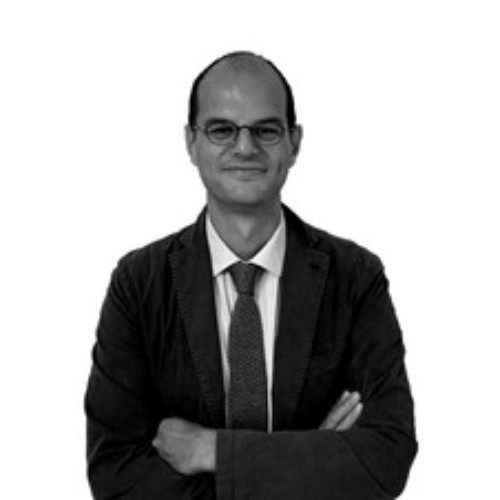
Giulio Meotti è giornalista de «Il Foglio» dal 2003. È autore di numerosi libri, fra cui Non smetteremo di danzare. Le storie mai raccontate dei martiri di Israele (Premio Capalbio); Hanno ucciso Charlie Hebdo; La fine dell’Europa (Premio Capri); Israele. L’ultimo Stato europeo; Il suicidio della cultura occidentale; La tomba di Dio; Notre Dame brucia; L’Ultimo Papa d’Occidente? e L’Europa senza ebrei.