
World
It’s time for false prophets •
Todd and the other Pythias, paid by the West to proclaim that we shall all die because of progress and freedom
From Chomsky to Butler, right through to Agamben and the sociologist – scion of the French intelligentsia and author of "La dislocation". It is the age of impostor oracles, weary of the democracy in which they wallow and all too fond of autocracies.

George Grosz, ‘The Pillars of Society’, 1926 (via Getty)
In ancient Greece, people flocked to Delphi to hear the prophecies of the Pythia. Today, the media consult a strange oracle: Emmanuel Todd. Nothing but apocalyptic titles: "La Chute finale", "Après l’Empire", "Après la démocratie", "La Défaite de l’Occident" and now "La dislocation", published this week by Gallimard. A sociologist and scion of the French intelligentsia—son of a journalist and an advertising executive, grandson of the writer Paul Nizan and great-grandson of the great Claude Lévi-Strauss—Todd is an eclectic intellectual known for having foreseen, back in 1976, the rather inglorious end that the Soviet Union would meet. While it was still fashionable to philosophise about the inevitable decline of capitalism, Todd vied for the role of prophet with Hélène Carrère d’Encausse. Now Todd is heralding the ‘Western dislocation’.
“I wonder how Russia, with three per cent of the West’s GDP, manages to produce more howitzers than all its adversaries put together,” writes Todd in the book. For him, American warmongering is proof of what he has been arguing for decades. The weaker the country feels, the more it attacks. Israel and Ukraine? “Two American proxies”. “Americans prefer studies in finance, law – anything that yields monetary gain. The Russians retain an industrial culture that enables the manufacture of things.” Todd panders to anti-Americanism, which is one of the great dividends of European peace. The oracle of Saint-Germain-des-Prés can assert without proving. She can describe without needing to see. The Annales School provides her with an alibi: the long term, family structures, the demographic clock that marks the hour that matters. Once this framework is in place, every contemporary event becomes a confirmation. Does Todd wish to demonstrate that Russia is an ‘authoritarian democracy’? She cites the polls favourable to Putin: case closed. The war in Ukraine is not a Russian invasion: it is a symptom of American weakness. The air strikes on Iran are proof that a declining empire strikes out so as not to admit it is already finished. The mechanism is ingenious, circular and unassailable. If the West is aggressive, it is because it is weak. If it is weak, it is because it has stopped producing things and now produces only signs. Each link closes the previous one. “Iran’s victory over the United States and Israel, if it proves definitive, will allow a republic to flourish – certainly Islamic in name, but fully pluralist in practice and in spirit,” writes Todd in his book published by Gallimard. “Before the attack, the Iranian regime had loosened its grip on women’s clothing.” The scientist often gives way to the charlatan. A scourge of democracy, Todd is extremely lenient towards autocracies.
“It would be preferable for Iran to acquire nuclear weapons.” And again: “After a long life of reflection, I have come to the conclusion that the destruction of American power will mark the beginning of peace for the planet.” A lifetime of reflection has led Todd to conclude that “the destruction of American power will mark the beginning of peace for the planet”. If Washington withdraws, it is powerless; if it intervenes, it is desperate. In both cases, Todd is right. And a world subject to Chinese, Russian and Iranian agendas will be more peaceful. He does not ask what sort of ‘peace’ Tehran and Moscow will bring to dissidents, to women, or to their neighbours. That is not his job. His job is to explain why the West deserves to lose, even when it is under attack.
“The Iranian regime had loosened its grip on women’s clothing.” The scientist often gives way to the charlatan
A few months after 11 September, whilst much of the Western world was still expressing feeble support for the United States, Todd published "After the Empire". He argues that it is wrong to label those who brought down the Twin Towers as ‘terrorists’. A work so measured that it attracted the smug attention of a certain Osama bin Laden, who, in a 2007 video, urged people to read Todd, alongside the anniversaries of Hiroshima and Nagasaki, the influence of multinationals, the assassination of Kennedy, the Vietnam War and the extermination of Native Americans (Osama was already in his ‘woke’ phase). When terrorists killed half the editorial staff of Charlie Hebdo, Todd said he “was not Charlie”, going so far as to claim that the France that demonstrated on 11 January 2015 was Vichy France. Todd summons the French people, who had gathered to say ‘no’ to Islamic terrorism and the threats to freedom of thought, before the court of history. He portrays them as partisans of a totalitarian secular ideology and stigmatises them by painting a picture of a xenophobic and racist France. Anti-Semitism? A consequence of Islamophobia, of which immigrants are the primary victims. Case closed. He published a scathing pamphlet, Chi è Charlie?, describing one of the largest demonstrations since the end of the war – and one of the most fraternal – as a “moment of collective hysteria”, the product of a “zombie Catholicism” that had taken to the streets to spew “hatred of Islam”. Chi è Charlie? caused an uproar. By attacking the millions who had taken to the streets, Todd had crossed the line. But it guaranteed a buzz for one of the very few social science researchers to sell fifty thousand copies per book.
Todd is adept at turning hatred of the West into a scientific fact. He offers those who already detest the West the satisfaction of doing so in the name of figures, not resentment. The West is losing. Russia, Iran, and anyone resisting American hegemony are winning. Or at least they are putting up a fight with greater dignity. Todd is no amateur. He knows that societies do not collapse solely because of ideologies, but because of the way they reproduce and organise themselves. Brought up by parents who instilled in him the very Anglo-Saxon reverence for facts, Todd propagates a false image of Russia. Life expectancy for Russian men is on a par with that in Sudan. Russia leads the world in the number of abortions. And a quarter of all Russian men die before the age of 55. Yet Todd might attribute all this to Western nihilism, which he claims infested Russia under Yeltsin. Meanwhile, the sociologist continues to imagine himself as a dissident, even though there are few dissidents known to publish with Gallimard and receive honours from Le Monde and L’Obs. Todd lives in the country he describes as decaying, speaks the language of an elite he pretends to detest, and continues to be consulted whenever a verdict is required. He is no idiot. He is something more: a useful idiot – one of those well-fed types committed full-time to overthrowing Western society, those on the payroll of a democracy they declare to be in its death throes, the well-born and well-cared-for intellectual who lends anti-Western resentment an academic veneer.
Todd imagines himself as a martyr – a martyr published by Gallimard and lauded by the newspapers – who speaks the language of an elite he pretends to detest
Take Noam Chomsky, the prominent MIT linguist and founder of the modern pro-Palestinian and postcolonial movement, who devoted his intellectual and political life to undermining the very possibility of private jets, only to end up sitting comfortably on Jeffrey Epstein’s jet. Chomsky has led the life of a pleasure-seeking capitalist; he ranks amongst the richest two per cent in the United States, with homes in Lexington and Cape Cod. And the ‘empire of evil’ funded the university where he taught. The beauty of those who make a living from their dissent in a democracy is that they are never called to account for their skewed notion of truth. The same holds true for Judith Butler, the Berkeley philosopher who is now taking up a chair at the Normale in Pisa. She lives in California, tours European universities and speaks from one of the most protected bubbles in the world. But for her, the West discriminates, the West colonises, the West racialises, the West produces ‘unfulfilled’ lives. The nation state, capitalism, Zionism and ‘cis-heteronormative’ gender norms are her sole targets. Butler does not live under a regime that punishes queer theory with imprisonment or the gallows. She lives in a system that has granted her tenure, publishers, festivals, awards, visiting professorships, non-binary marriages and the freedom to define 7 October as ‘armed resistance’. Beyond Western borders, the volume of her voice drops. When she speaks of women’s or queer rights in non-Western contexts, Butler’s instinct is to denounce Western ‘Islamophobia’ and the ‘imperialist use of feminism’, never the norms that stone, imprison or veil people by law. The West is the sole source of evil; others are merely reactions, acts of resistance, or side effects of the empire.
A bit like Giorgio Agamben, the theorist of the ‘state of exception’ who claims that ‘Iran is defending itself’ – never mind half a century of global terrorism and the ‘bare life’ in Evin Prison. Agamben may assert that Europe is a sham, that Ukraine is a protectorate, that Gaza represents the destruction of Judaism, and that vaccines are biopolitics, but in Tehran his “end of Judaism” might end up as a column in Quodlibet in Farsi, not as a critique of the velayat-e faqih. Similarly, the ‘Candide’ of physics, Carlo Rovelli, in the Corriere della Sera extols the virtues of Beijing, ‘a voice of moderation’ against the coercive model of the United States, and says that the Chinese experience calls for ‘reopening the historical question of the effectiveness of communism’ – no less. Just like another famous gender philosopher, Gayatri Chakravorty Spivak, born in Calcutta and living in the United States for over sixty years. She is a lecturer at Columbia, translates Derrida, and flies back and forth between New York and West Bengal. Her most famous essay asks: ‘Can the Subaltern Speak?’. The answer is no, they cannot, and the Western intellectual must speak on their behalf thanks to the Ivy League, English-speaking publishing circles, paid-for conferences and the sari worn in a Manhattan lecture theatre. The subaltern remains in Bengal; the theory of the subaltern resides in Morningside Heights.
In Tehran, Agamben’s “end of Judaism” would end up as a column in Quodlibet in Farsi, but not the critique of velayat-e faqih.
The anti-liberal philosopher Byung-Chul Han was born in Seoul and lives in Berlin: a house with a garden, a Steinway grand piano, a professorship at the Universität der Künste, and well-paid, short, pithy essays on the ‘performance society’, ‘burnout’ and ‘psychopolitics’. Contemporary man, Han repeats, is no longer oppressed: he exploits himself. He is free and, for that very reason, a slave. But the ‘toxic freedom’ he denounces is the very condition that has enabled him to become Byung-Chul Han. In North Korea, "The Society of Fatigue" is not published. The market he calls the ‘violence of positivity’ is the very same one that translates his aphorisms into dozens of languages and sponsors him on Instagram. Someone who teaches in Berlin and owns a Steinway can afford to advise others to step away from ‘performance’ and the ‘loss of inner life’. Those living under a one-party state or a family dictatorship do not have the same leeway. His philosophy is a luxury produced in the West and consumed in the West: he criticises the emptiness of freedom whilst remaining within the only civilisation that still pays philosophers to say that freedom is a deception.
From the anti-liberal Korean professor based in Berlin to the Slovenian who tours the lucrative intellectual circuit to repeat that capitalism is dead
Take Slavoj Žižek, who has just published a modest "Contro il progresso" for Ponte alle Grazie. He lives in Ljubljana, in the European Union, and tours the most lucrative circuit of Western thought: universities, festivals, Project Syndicate, Bloomsbury, rock-star-style conferences. He spends his life dismantling liberal capitalism whilst collaborating with the New York Times, commenting on everything from politics to oral sex. And so, someone who dares to write that ‘the worst Stalinist terror is better than the best liberal capitalist democracy’ is invited by the New York Times to celebrate the fall of the Berlin Wall. Marx, Lacan, Hegel and an obscene Slovenian joke are enough to prove that capitalism is already dead and that we are its ghosts. Žižek believes that Western liberal civilisation is ‘a nightmare’ from which only a ‘violent revolution’ can awaken us. The Prague Spring marked the high point of his formative years: “There, in the central square, I found a café that was still open during that crisis. It served magnificent strawberry cakes. I sat there, watching the Russian tanks facing off against the demonstrators. It was perfect.”
Their war against ‘the system’ is a brilliant sleight of hand, because it is the only one in which Todd, Chomsky, Butler, Han and Žižek can be Todd, Chomsky, Butler, Han and Žižek. False prophets who always predict the same thing and who, for this very reason, can never be entirely wrong. All we need to do is wait for the next crisis and apocalyptic headline. Buzz guaranteed. Because only the West produces its own ideological gravediggers. Meanwhile, in a skyscraper in Berkeley, a community of artificial intelligence researchers is mobilising to save the world. They enjoy catered vegan meals on sofas with views over San Francisco Bay. At monthly dinners and happy hours, they discuss the end of the world. They exchange predictions at conferences in the Bahamas. They were among the first employees of OpenAI and Anthropic. They are inspired by an Oxford philosopher, Will MacAskill, who popularised ‘effective altruism’ and who does not want the United States to have a monopoly on artificial intelligence. MacAskill is a disciple of the anti-speciesist oracle Peter Singer, who argues that “human newborns are not born with self-awareness; they are not persons and therefore the life of a newborn is worth less than that of a pig, a dog or a chimpanzee”.
They discuss purchasing remote islands, stockpiling iodine tablets and relocating to shielded bunkers in the desert. At one event, the menu included a cocktail titled ‘Death With Dignity’. Death with dignity. The Western Pythia is the director of a Swiss euthanasia clinic.
More on these topics
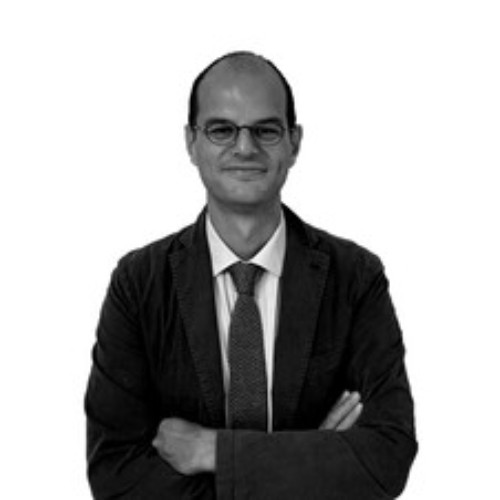
Giulio Meotti è giornalista de «Il Foglio» dal 2003. È autore di numerosi libri, fra cui Non smetteremo di danzare. Le storie mai raccontate dei martiri di Israele (Premio Capalbio); Hanno ucciso Charlie Hebdo; La fine dell’Europa (Premio Capri); Israele. L’ultimo Stato europeo; Il suicidio della cultura occidentale; La tomba di Dio; Notre Dame brucia; L’Ultimo Papa d’Occidente? e L’Europa senza ebrei.