
World
racism and the Holocaust •
The cunning philological analysis of the Holocaust by the UN’s very special rapporteur
In Francesca Albanese’s speech, anti-Semitism refers to hatred towards anyone who is not European and comes from the Middle East. Zionism, on the other hand, has equated Jews with the West, turning them into Orientalists.

Photo: ANSA
Whoopi Goldberg caused a scandal on ABC for saying: “The Holocaust is not about race. No, it’s not about race. It’s about the inhumanity of man towards other men. These are two groups of white people.” The Nazis and the Jews. All “white”. According to Francesca Albanese, a United Nations Special Rapporteur, in the Nazi extermination camps Jews “were called Muslims”; anti-Semitism is not merely hatred towards Jews but towards “Semitic peoples”, and the term, when it was coined, referred to anyone who was not European and came from the Middle East.
Anti-Semitism: the term was coined by Wilhelm Marr in 1879 to lend a veneer of scientific legitimacy to hatred of Jews. Marr had no doubts as to what he meant or whom he hated. He also founded a League of Anti-Semites. He did not hate Arabs, Maltese people or those who spoke Amharic. He hated Jews. To claim, in 2026, that this word originated as an umbrella term for all non-Europeans from the Levant is like saying that ‘pogrom’ is an agricultural term for crop rotation.
Then comes the Muselmann. In the concentration camps, prisoners used this term to describe those who were already living skeletons. A walking corpse. It wasn’t as though the SS were updating the register to rename Jews ‘Muslims’ out of respect for the extended Semitic family. It was the language used by the victims to describe the final stage of their suffering. To twist this into ‘proof that “Jews were Muslims”’ is a minor masterpiece of bar-room philology or something straight out of a glossy high-fashion magazine – Love, perhaps. However, anyone who listens and wishes to understand has received the message: if the hatred that produced Auschwitz is no longer directed solely at Jews, then the Jews are merely extras in a greater drama whose contemporary protagonist is someone else, ‘the other’ – perhaps the Palestinians. It is a refined technique of subtraction: one does not deny the dead, one simply changes their name. And so we have the Holocaust of migrants, the ecological Holocaust, the African-American Holocaust, the Holocaust of Indigenous peoples, the Holocaust of animals, the Palestinian Holocaust.
The question is why the United Nations expert, tasked with monitoring a territory and a conflict, feels compelled to rework the vocabulary of the Holocaust. For whilst Albanese may not be a skilled philologist, she is an excellent scholar of Edward Said, whose legacy—now dominant on American campuses—was a syllogism that made him famous: ‘Orientalism’, Western racism towards the Arab East, is in fact anti-Semitism because Arabs are Semites; Zionism has assimilated the Jews into the West and therefore they have lost their Semitism; they have become ‘Orientalists’; the Palestinians are the new Jews and today’s Jews are the new Nazis.
History has thus become a warehouse of metaphors for hire. Hatred of Jews simply for being Jews is one of the most well-documented phenomena in history. It does not need to be ‘broadened’. Broadening it serves a specific purpose: when that boundary becomes blurred, every accusation of anti-Semitism becomes, by definition, a form of blackmail. No to the draft law against anti-Semitism. For all Semites.
More on these topics
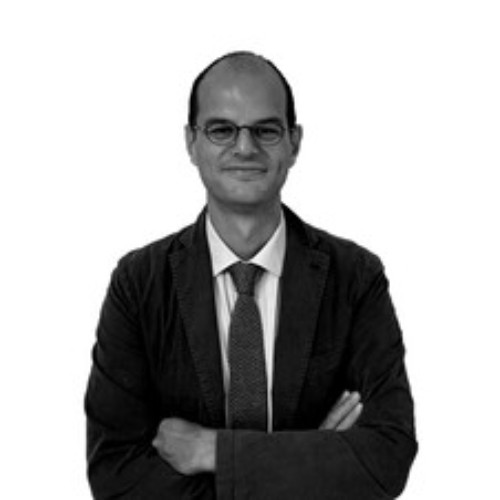
Giulio Meotti è giornalista de «Il Foglio» dal 2003. È autore di numerosi libri, fra cui Non smetteremo di danzare. Le storie mai raccontate dei martiri di Israele (Premio Capalbio); Hanno ucciso Charlie Hebdo; La fine dell’Europa (Premio Capri); Israele. L’ultimo Stato europeo; Il suicidio della cultura occidentale; La tomba di Dio; Notre Dame brucia; L’Ultimo Papa d’Occidente? e L’Europa senza ebrei.