
World
Nothing normal •
La Normale has welcomed Judith Butler in Ciampi’s name, but has ruled out any agreements with Israel
Butler is to deliver a series of lectures for ‘La Normale des idées’. A leading figure in postmodern and postcolonial thought, in a lecture in Paris following the attacks of 7 October he had described the massacre perpetrated by Hamas as ‘an act of armed resistance’

(Photo: Ansa)
Judith Butler is a renowned professor at Berkeley, whose book "Gender Trouble" has reshaped our vocabulary, rendered performative what was previously believed to be natural, and fuelled an academic industry that today presents itself as secular theology in Europe and the United States, the ‘woke 1’. Butler will be teaching at the Scuola Normale Superiore, just as Ciampi did. She is the Visiting Scholar for October and will hold a series of seminars in Florence and Pisa. The text reads: “At a time characterised by growing anti-gender protests across various political and social contexts, Butler will offer students and researchers critical tools to understand the narratives, anxieties and power dynamics shaping the contemporary debate on gender”.
Judith Butler will then deliver a series of lectures for ‘La Normale des idées’. Butler is undoubtedly a leading figure in postmodern and postcolonial thought. However, at a conference in Paris organised by Paroles d’Honneur following the attacks of 7 October 2023, the American philosopher stated that the massacre perpetrated by Hamas against Israel was ‘an act of armed resistance’.
“We may have different views on Hamas as a political organisation, as well as on armed resistance, but I think it is more honest, and historically more accurate, to say that 7 October was an act of armed resistance,” said Butler. “Not a terrorist attack, not an anti-Semitic attack: it was an attack against the Israelis. And you know, I didn’t like this attack; I’ve said so publicly. However, I’d be really stupid if I decided that the only violence in this region is directed against the Israeli people. The violence suffered by the Palestinians has been going on for decades. It was an uprising born of a state of subjugation and directed against a violent state apparatus. You can be for or against armed resistance. You can be for or against Hamas. But let’s at least call it armed resistance. After that, we can discuss whether we think it was justified or whether they acted correctly.”
In an article published in Haaretz, sociologist Eva Illouz points out that the statements made by Butler in Paris did not occur at a time of immediate uncertainty in the aftermath of 7 October, but rather following the publication of several investigative reports: “Faced with the extreme sexual violence suffered by Israeli women at the hands of Hamas members; faced with the images broadcast around the world of a young woman killed and paraded through the streets of Gaza amidst the shouts of the crowd… what does Judith Butler tell us? That they want proof.” Even before this statement, Professor Butler, who is part of the movement to boycott Israel, had described the terrorists of Hamas and Hezbollah as “part of the global left”. It is hard to blame the Berlin Jews who protested against her visit to the city to receive an award named after the philosopher Adorno.
The Normale di Pisa is perfectly free to open its doors to confused thinking on terrorism, but that same institution has closed its doors to Israel by passing a motion calling on the Ministry of Foreign Affairs to “cease scientific, industrial and technological collaboration with Israel”. The Normale di Pisa was also among the first universities in Europe to decide to withdraw from a Horizon Europe project due to the presence, among the partners, of the Hebrew University of Jerusalem. Students at the Normale would struggle to identify even one of the Israeli professors who have been barred from teaching and who advocates the indiscriminate massacre of Palestinians.
Instead, it targets those who downplay the events of 7 October whilst turning a blind eye to those in the Middle East who continue to conduct independent research and who are themselves victims of that terrorism. Academic freedom, it seems, is a one-way right: absolute when it comes to deconstructing gender and ‘colonial narratives’, but denied to those from Jerusalem.
The teachers at the teacher-training college are perfectly free to invite Butler and to boycott their Israeli colleagues. However, the name given to the visiting scholar assigned to Butler is not very appropriate.
On 12 October 1999, speaking at the Knesset, President Carlo Azeglio Ciampi said: “I feel a profound emotion when I consider the historical significance and the civic values inherent in this institution. Its very name derives from the Great Knesset, which convened on the occasion of the Jews’ return to Zion from the Babylonian exile. Italy and Israel have much in common: a history stretching back millennia that nourishes our cultures, our religions and the civic values of our societies.”
While it is perfectly clear what Judith Butler means regarding 7 October, it is not clear what the American philosopher has in common with someone named Ciampi. None of this seems normal. But perhaps it is just ‘woke 2’.
More on these topics
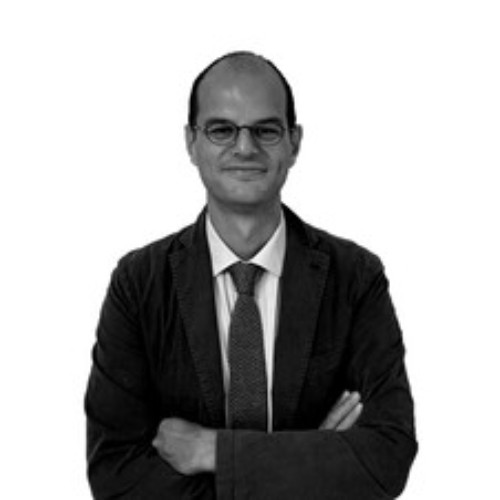
Giulio Meotti è giornalista de «Il Foglio» dal 2003. È autore di numerosi libri, fra cui Non smetteremo di danzare. Le storie mai raccontate dei martiri di Israele (Premio Capalbio); Hanno ucciso Charlie Hebdo; La fine dell’Europa (Premio Capri); Israele. L’ultimo Stato europeo; Il suicidio della cultura occidentale; La tomba di Dio; Notre Dame brucia; L’Ultimo Papa d’Occidente? e L’Europa senza ebrei.