
World
Reading •
The mad Westerners united by a common enemy: the Israeli Jew
Nora Bussigny, a French journalist of Moroccan origin, discusses anti-Semitism disguised as progressivism: this is the ‘sur-blanc’, the perfect scapegoat for wokism.

French President Emmanuel Macron attends the day dedicated to the memory of Alfred Dreyfus and the fight against anti-Semitism (Photo: ANSA)
“Under the guise of anti-Zionism, it is anti-Semitism that thrives. Not a shameful, repressed form of anti-Semitism, but an exuberant, militant form, dressed in the rags of progressivism.”
It is a book well worth reading – and undoubtedly one to be re-read in about ten years’ time – written by a courageous French journalist of Moroccan origin, a non-Jewish woman, Nora Bussigny, who has been accused as a result of being a ‘sale traître’. Her book “The New Anti-Semites” is due to be published in Italy by Setteottobre, translated by Daniele Scalise, and will be presented tomorrow at Pordenonelegge alongside former French Prime Minister Manuel Valls.
The journalist did not merely give a platform to anti-Semites: she mingled with them. Under a false name, Bussigny took part in their demonstrations, seminars and social media channels; she interviewed the leaders of anti-Semitic groups and moved amongst secondary schools, universities and collectives. She walked with them and alongside those who glorified 7 October. The result is disconcerting. She had carried out the same work when Bussigny spent a year infiltrating ‘woke’ movements. And she had turned this into the book Les Nouveaux Inquisiteurs. The new inquisitors and the morbid, uterine and fanatical madness that is tearing the Western mind to pieces.
Her investigation led her to the following conclusion: this far-left movement (comprising pseudo-communists, Antifa, the Black Bloc, radical environmentalists and voters for La France Insoumise) has managed to unite its disparate struggles around a common enemy: the figure of the Jew, rebranded as a ‘Zionist’ so that they might hate him without shame, as Vladimir Jankelevitch wrote. On university campuses, at demonstrations, and within organisations defending the rights of racial or LGBT minorities, the demonisation of Israeli Jews is now the dominant narrative. Yet it is cloaked in the scent of justice and dressed in the garb of rights. Bussigny shows that anti-Semitism does not need to identify itself as such to be effective. All it needs is an up-to-date (woke) vocabulary and a noble cause (Gaza).
The white heterosexual male was already the favourite scapegoat for wokism; the Israeli has become its superlative, the ‘sur-blanc’, as Bussigny defines him. A Jew who dares to possess a state, an army, and a memory that cannot be erased is unbearable to those who have made the permanent victim their theology: the Western Butlerians. Thus, one learns never to utter the word ‘Israel’ again, just like an Iranian Pasdaran. One learns that every Jew must prove they are not a Zionist before they are allowed to speak. One learns that the intifada is not a distant historical event: it is an exportable project, to and from the banlieues.
“When Jews are no longer safe, it is democracy itself that is in danger,” writes Bussigny. “This is not a community issue: it is a matter of civilisation.” Multiculturalism, in the name of ‘woke’ decolonisation, is colonising itself to the point of self-destruction. An interviewee tells Bussigny: “Are we ready to bring the intifada to Paris? To the suburbs, to our neighbourhoods?”
French Jews are not waiting for an answer: on average, eleven per day are currently packing their bags to emigrate to Israel. This silent exodus represents the harshest judgment that a historically persecuted minority can pass on the society that hosts them and which, once again, has turned against them.
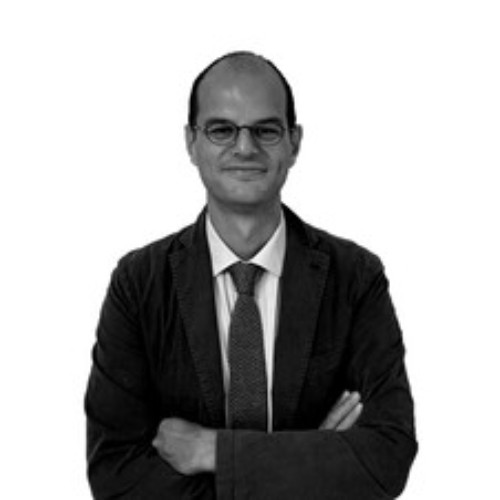
Giulio Meotti è giornalista de «Il Foglio» dal 2003. È autore di numerosi libri, fra cui Non smetteremo di danzare. Le storie mai raccontate dei martiri di Israele (Premio Capalbio); Hanno ucciso Charlie Hebdo; La fine dell’Europa (Premio Capri); Israele. L’ultimo Stato europeo; Il suicidio della cultura occidentale; La tomba di Dio; Notre Dame brucia; L’Ultimo Papa d’Occidente? e L’Europa senza ebrei.