
World
irrational leaders •
Iran is frightening
The Saudis are also moving towards nuclear weapons. Inbar says: “A nightmare for Israel and the West”

Photo: LaPresse
Rome. As if the (already failed) agreement with Iran and the promise of F-35s to Turkey were not enough, the Trump Administration’s announcement regarding Saudi Arabia’s nuclear programme is causing alarm in Jerusalem. Saudi Crown Prince Mohammed bin Salman had stated on several occasions that, should Iran attempt to develop a nuclear weapon, Saudi Arabia would do the same. The prince told CBS: “Without a doubt, if Iran were to develop a nuclear bomb, we would follow suit as soon as possible.” The Trump administration now plans to submit to Congress an agreement with Saudi Arabia to share civilian nuclear technology; this agreement does not include a plan for normalisation with Israel, nor the safeguards that the United States has long maintained are necessary to prevent such materials from being used in military programmes.
The Saudi nuclear deal was initially conceived as part of a broader pact that could have led to the recognition of Israel, but Riyadh withdrew from this possibility during the war between Israel and Hamas. The agreement does not include the so-called ‘Gold Standard’, which would prevent the Kingdom from enriching uranium and reprocessing spent nuclear fuel – two pathways to nuclear weapons. Meanwhile, the Wall Street Journal reveals that Israeli intelligence believes Iran has transferred thousands of uranium enrichment centrifuges into tunnels dug deep inside a mountain. Israel has passed the intelligence on to the United States, stating that the centrifuges were moved to the Pickaxe site following the ‘Twelve-Day War’ in June 2025, when American and Israeli strikes dealt a heavy blow to Iran’s three main nuclear sites. Known in Iran as Kolang, Pickaxe has been under surveillance by the United States and Israel for years. “It is plausible that Iran has moved centrifuges into the Pickaxe tunnels,” said David Albright, one of the leading experts on nuclear weapons and proliferation. Experts estimate that the underground complex extends to a depth of between ninety and one hundred and forty metres, with sufficient space to house various nuclear-related facilities.
Israel cannot imagine a Middle East becoming nuclearised on its borders. “The Saudis have announced on several occasions that they want the same nuclear status as Iran, and if they acquire enrichment capabilities, they too will move towards the bomb – that much is clear,” Efraim Inbar, president of the Jerusalem Institute for Strategy and Security and former adviser to Benjamin Netanyahu, tells Il Foglio. “The West has dithered over Iran. Part of its nuclear programme has been destroyed, but now they will try to rebuild it. We already know that the Israelis have warned the Americans that the Iranians have started a new enrichment facility by moving centrifuges.” If Tehran pushes ahead with the bomb, other countries in the region will follow suit. “They will seek to acquire similar capabilities, and in the Middle East it is very difficult to establish an effective deterrent due to the short distances between countries and the nature of the fanatical leadership we are seeing. Even Erdogan’s Turkey will want the atomic bomb, and he too is a fanatic. Egypt will want it too, and perhaps the Emirates as well. A multipolar nuclear Middle East is a strategic nightmare for Israel, and we must prevent it. There is no difference between a civilian and a military nuclear programme. There are key components of such a programme – such as enrichment or plutonium separation – that can be converted in a short space of time.” The mutual deterrence that held sway during the Cold War does not work in the Middle East. “The distances between Moscow and Washington were much greater. And the type of leadership in Moscow, as in Washington, was ideological but rational. Whereas rationality is not a quality of Middle Eastern leadership. Rudimentary nuclear forces can trigger pre-emptive strikes. It’s like two cowboys facing off with pistols. What happens? Whoever fires first has the advantage.”
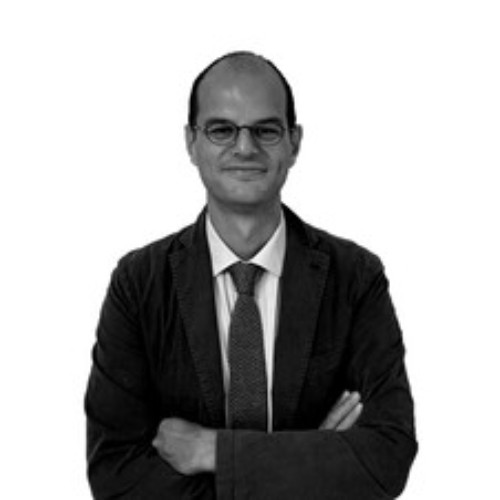
Giulio Meotti è giornalista de «Il Foglio» dal 2003. È autore di numerosi libri, fra cui Non smetteremo di danzare. Le storie mai raccontate dei martiri di Israele (Premio Capalbio); Hanno ucciso Charlie Hebdo; La fine dell’Europa (Premio Capri); Israele. L’ultimo Stato europeo; Il suicidio della cultura occidentale; La tomba di Dio; Notre Dame brucia; L’Ultimo Papa d’Occidente? e L’Europa senza ebrei.