
World
the counterpoint •
Progressives against death by debt
Criticism of euthanasia comes from secular intellectuals horrified by ‘the elderly being sacrificed for GDP’

Photo: LaPresse
Rome. Whilst former French Minister for Education Luc Ferry speaks of the “victory of death over life and of narcissistic individualism over love”, Dominique Reynié continues to reiterate that the law marks the transition from a welfare state, attentive to the needs of those who cannot provide for themselves, to a state in which freedom does not exist for the most vulnerable. It is the secular camp – the one that refuses to be lulled into complacency by superficial progressivism – that is most critical of the ‘sweet death’ approved by the French Parliament. For twenty years at the helm of Fondapol, a ‘progressive and European’ think tank, and as a liberal intellectual in favour of ‘marriage for all’, Reynié believes that individual freedom is not the key to understanding the euthanasia law. “I’m not sure that MPs have fully grasped the gravity of what they are about to vote on,” says Reynié. Because this bill embodies “a fundamental anthropological rupture”.
“I was appalled by the adoption of the amendment providing for the funding of euthanasia through health insurance,” says Reynié. “How does euthanasia fall under healthcare expenditure?” A study by Fondapol shows that people over 85 cost an average of 8,000 euros a year, compared with 1,700 euros for those under 59. The shortage of hospital beds is a structural issue that obviously does not feature among the law’s stated justifications, but which is very much on many people’s minds. Reynié denounces this as an “almost Orwellian” reversal of language, in which assisted dying is presented as just another form of treatment for those who have reached the end of their lives.
Whilst other secular intellectuals such as Michel Onfray, Alain Finkielkraut and André Comte-Sponville are in favour of decriminalising euthanasia, Didier Sicard, too, should in theory have been in favour of the law. After all, it is, in a sense, his own. A professor of medicine, Sicard submitted a report in late 2012, “Pensare solidalmente la fine della vita”, to François Hollande, then President of the Republic, which inspired the Claeys-Leonetti Act of 2016. As head of the National Consultative Ethics Committee from 1999 to 2008 – of which he is now honorary president – Sicard issued an opinion in 2000 proposing a protective legal framework for doctors who perform euthanasia at the request of a patient. But today, Sicard tells Le Monde: “This law bureaucratises euthanasia to make it acceptable.”
Even Alain Minc, a renowned political scientist and economic adviser to several French presidents, warns: “This law is made for Saint-Germain-des-Prés”. Minc says the law is designed for an elite who are masters of their own destiny right up to their last breath. “This law is made for Saint-Germain-des-Prés, for educated people who have no material worries, who read the newspapers and make their own free choices.” But the law would exacerbate social inequalities for those who are unproductive because they are too old, too disabled or too mentally frail.
“There is no need to read Balzac, Stendhal or Zola to imagine the conversations around the family table where the elderly parent hears their children discussing, without any aggression, the life they will lead after his or her death, what they will do after he or she is gone, and so on.” It would open Pandora’s box. “And, as always, there will be a gradual broadening of attitudes, ever-increasing permissiveness. It will become a licence to kill granted to doctors.” Minc frames this as a matter of progressivism. “I defend fairness and equality in the face of death, whatever one’s economic circumstances.” But he also argues that economic decline will force France to accept this price: the sacrifice of the sick and the elderly. “We are a country with a weak commitment to safeguarding equality. If we did not have a debt amounting to 115 per cent of GDP – and thus a greater economic constraint – we would treat old age in the same way as we treat illness. It would be a fourth pillar of the welfare state, and we would genuinely invest in palliative care. But since we no longer have the means to do so, we simply brush the issue aside and accept all social and cultural inequalities as inevitable.”
And France’s most famous writer, the secular and libertine Michel Houellebecq, explained in recent days how this piece of legislation should not be seen as a step forward towards progress, but as a symptom of the West’s agony. We are faced with a civilisation that, through such a law, has chosen to legislate its own demise. “I would have preferred a world in which it was possible to live. We are entering a world in which it will be easier to die.” Not out of heroism, but because one has run out of credit.
More on these topics
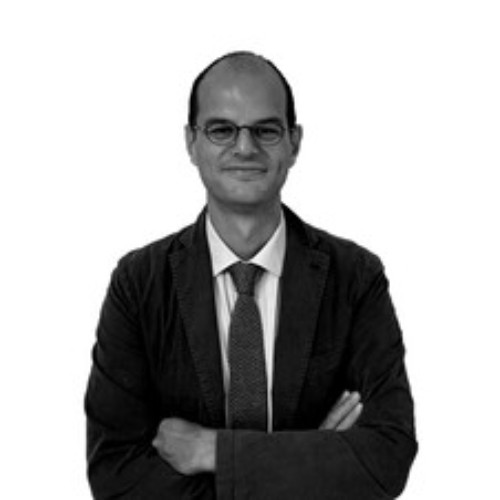
Giulio Meotti è giornalista de «Il Foglio» dal 2003. È autore di numerosi libri, fra cui Non smetteremo di danzare. Le storie mai raccontate dei martiri di Israele (Premio Capalbio); Hanno ucciso Charlie Hebdo; La fine dell’Europa (Premio Capri); Israele. L’ultimo Stato europeo; Il suicidio della cultura occidentale; La tomba di Dio; Notre Dame brucia; L’Ultimo Papa d’Occidente? e L’Europa senza ebrei.