
From Augias to De Gennaro
The nation’s obituary
The deaths – whether tragic or natural – of recent days, as a reflection of the country’s political and economic (as well as emotional) landscape

Perhaps because we delude ourselves – perhaps not quite to the extent seen in Silicon Valley, but almost – into believing that by eating right, exercising and taking a few supplements, that thing – death – will almost never come; it is all the more shocking, however, when we see it striking as frequently and virulently as it did last week.
Forget ‘longevity’: instead, a mass death, primarily but not exclusively of the over-80s, with exceptions and real tragedies; yet taken as a whole, this mass death, with its macabre spectacle, also gives us some insight into the country’s (political and economic) geography.
Milan is in mourning for the fashion designer Lella Curiel, but also for the less mainstream and, to young people, more obscure Mariuccia Casadio, the driving force behind Vogue Italia, a creative ‘at large’, talent scout and ‘magazine journalist and critical observer’ – as she described herself. She had just managed to present her latest scrapbook-style book, Sommario, ten days before her death, in front of the entire Milan fashion and arts scene, which is now mourning her in a wave of Instagram tributes. But people are also mourning the fashion of yesteryear, the Milan and publishing world of the past (the deceased was, as ever, dressed in Prada).
In Rome, however, there is institutional-Veltronian mourning for Corrado Augias, complete with post-Scalfari pomp and ceremony: twenty pages in La Repubblica, a double tribute at the Campidoglio and then (next Saturday) at the Auditorium, whilst the funeral itself will be a private affair, with a tribute on La7 (“Saluto di un Maestro”), featuring a compilation of the final episode of ‘La torre di Babele’ decided, in fact, by the deceased himself. We are celebrating those who are no longer with us, but perhaps also the newspapers, ‘culture’ and ‘highbrow’ television.
Also in Rome, Paolo Bulgari (pictured above), one of three brothers from a Greco-Roman lineage of silversmiths, alongside Nicola, the car collector, and Gianni, who was once the victim of a notorious kidnapping that had ‘derailed’ his career – leading him to leave well before the sale to LVMH and launch his own Enigma line – and who lives in the magnificent house formerly owned by Audrey Hepburn in the Parioli district (overlooking the Augias house).
Then, of course, there was the tragic suicide of Gianni De Gennaro, the former Chief of Police, near Capalbio; yet what strikes and terrifies here is the nostalgia that takes on a strange, active and coercive form, with this Italian format of the never-ending investigation – the revisiting of cold cases from thirty, forty or fifty years ago – as the distinguished lawyer Gian Domenico Caiazza has pointed out here in Il Foglio.
Setting aside any potential legal liability (which has likely now passed the statute of limitations) in this case, we are in the midst of a vintage scandal: investigations have been reopened into the death of Pasolini and the Monster of Florence. At this rate, might we even see a feature on the anarchist Bresci, who shot Umberto I on 29 July 1900 (complete with explosive new revelations)? And are we really sure that’s exactly how things went on 18 July 1610 at the Argentario in Caravaggio (perhaps with new wiretaps from that era)?
What could be behind this trend, which goes hand in hand with ‘biopics’ of every conceivable kind about any person or public figure? The appeal of a perpetual ‘Telefono giallo’, the search for a ‘truth’ that is ever-changing, ever-different – the curse of Pasolini’s ‘I know, but I have no proof’ – so that everyone can form their own idea and personal playlist, an analogue algorithm invented in Italy for once?
Moreover, do convictions and investigations that arrive almost on cue – particularly for those who have achieved a great deal in life – serve as a reward and consolation for those who do nothing, whilst acting as an incentive to scale back any ambitions, much like the bureaucratic and tax-related difficulties involved in expanding a business? Get by on NASPI.
Fortunately, the obituary market is always buoyant; scattered between Rome and Milan are these somewhat wordy tributes (film producer Guido Lombardo emerges as the new champion of length for Paolo Bulgari and Gianni De Gennaro, positioning himself as the heir to the greatest obituary writer – who was himself later the subject of an obituary – Alfredo Ambrosetti of the forum of the same name).
Even obituaries, however, are no longer what they used to be: first come the notices of bereavement, followed the next day by the family’s announcements – it’s all a bit of a shambles. Obituaries are yet another clue that explains how everything has gone to pot (in neo-American parlance: enshittification). Those who do not invest in an obituary—the only item in a newspaper’s budget that has retained the prices of the golden years—settle for the usual selfie with the deceased; the most affluent post about their appearances on Augias’s show, some at dinner with De Gennaro, and many young people outside the Plastic club with Casadio and the obligatory cigarette.
Finally, we cannot overlook the eternal, melancholic drama of the second-tier footballer who has passed away – the one who, had he died in different circumstances, might well have been given a page of tribute, but instead was not.
I always remember the tragic case of Gil Cagné, make-up artist to the stars, who died on the same day as Gianni Agnelli, on 24 January 2003. Now, the day before Augias, during this week of obituaries, Piero Vigorelli has also passed away – a journalist, primarily a television presenter from bygone eras at Rai and Mediaset, and the creator of ‘Detto tra noi’ and ‘Miracoli’. He died, it is reported, ‘far from his beloved Ponza’.
More on these topics
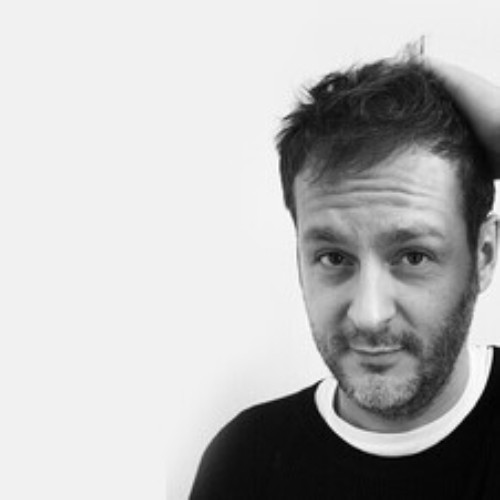
Michele Masneri (1974) è nato a Brescia e vive tra Roma e Milano. Scrive da un bel po’ sul Foglio. I suoi ultimi libri sono il romanzo “Paradiso” (Adelphi, 2024), “Steve Jobs non abita più qui”, una raccolta di reportage dalla Silicon Valley e dalla California nella prima èra Trump (Adelphi, 2020) e il saggio-biografia “Stile Alberto”, attorno alla figura di Alberto Arbasino, per Quodlibet (2021), da cui anche l’omonimo documentario.