
Sport
cycling •
Typical Nibali. ‘The Shark’s’ feat at the Milan–San Remo
After twelve years, an Italian has won the Classicissima. The Sicilian launched an attack on the Poggio, flew towards the Aurelia and held on to the finish line. Ewan came second, Démare third
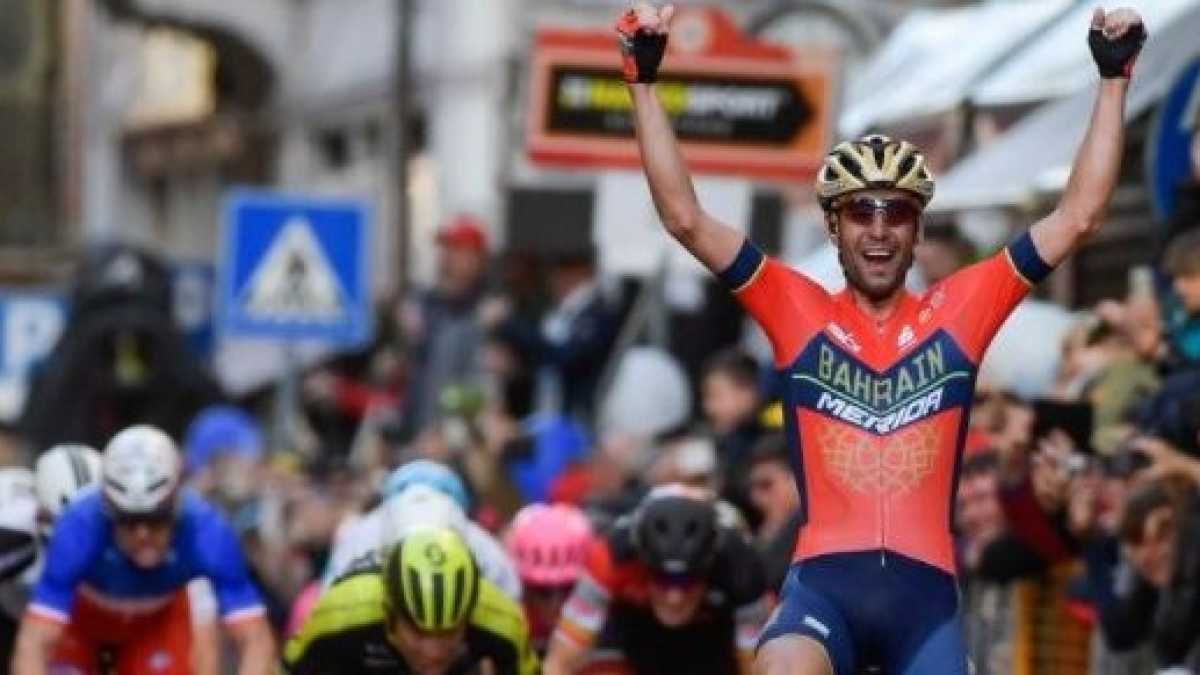
Photo: LaPresse
“Let’s go.” “We can’t.” “Why?” “We’re waiting.” There are over fifty Vladimirs and over fifty Estragons in the peloton racing the Milan–San Remo. They’re there every year, and almost never for lack of will. And the 2018 edition was no different. On the other hand, they do race – and hard at that; they go fast – and hard at that; there are few climbs and they aren’t even all that steep, and taking a gamble is as risky as staking everything on a single number at the Sanremo casino’s roulette table. And so it happens that they wait, they hold their breath, they weigh up their options, and Godot never arrives. Ever. But if he does arrive… If he does arrive, it is a fantastic thing, because it is unusual, difficult, almost impossible. If he arrives, it is a sigh two kilometres long – the distance separating the end of the final descent from the finish line. The distance over which Vincenzo Nibali was chased, hounded, nearly caught, but never caught. Those kilometres of Nibali’s triumph, of jubilation for Nibali, of redemption – not just for Nibali, but for Italian cycling – because up there on the Riviera, no one had won for twelve years and eleven editions, not since Pippo Pozzato and his brilliant burst of speed in 2006. No one had won, and people were talking of a curse. A dramatic move was needed – perhaps the ‘Shark’s’ move.
Caught between Vladimir and Estragon, Nibali decides not to play the part of Godot whilst the Poggio was halfway through, just as the Poggio was reaching its steepest gradients. A surge to chase down Neilands, another to shake off Neilands, a burst of speed to attempt a breakaway from the peloton, to get as far away as possible from that Peter Sagan, who is terrifying because of just how strong he is, and from those ravenous sprinters who remain on his wheel, waiting to play their cards in the final three hundred metres. Nibali breaks away, crosses the summit first, is the first to descend, rejoins the Aurelia, and pushes himself to the limit to avoid being just one of the many, one of the usual riders caught in the final five hundred metres. And he takes Sanremo with a gamble that, for once, pays off.
The sprinters are left with a handful of regrets. Caleb Ewan’s on the handlebars, Arnaud Démare’s on his thigh. The wrong ones, because the right ones had already gone past; they saw them soaring skywards from behind – they were those of ‘The Shark’, who at the start of the season had said he wanted to find out where he stood in the Classics. He was thinking of the Amstel Gold Race, Liège–Bastogne–Liège, perhaps the Tour of Flanders, and above all the World Championships. In the meantime, the Sanremo has come and gone, and that’s just fine, because a victory like that was so difficult it seemed impossible.
Meanwhile, Marc Cavendish’s run of bad luck continues. The English sprinter has suffered yet another crash – this one a particularly nasty one. Whilst the peloton was racing at fifty per hour towards the start of the Poggio, Cannonball failed to spot a traffic island and hit it head-on, taking a nasty tumble onto the tarmac. Get well soon
Order of appearance:
1. Vincenzo Nibali, 2. Caleb Ewan, 3. Arnaud Démare, 4. Alexander Kristoff, 5. Jurgen Roelandts.
