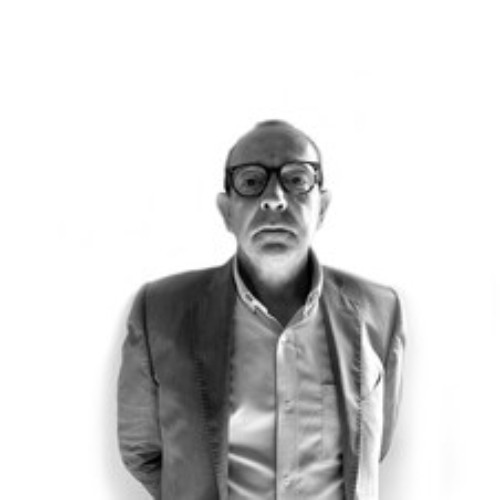
“A tough day”.
His voice is weary; we’ve all seen the emotion in his eyes and in his words.
Saying goodbye to the PD and drawing an “insurmountable” line that inevitably divides not only the internal history of the Left, but also the historical relationship between the Jewish community and the Left – beyond the personal circumstances – is exhausting. Is this a thread that has been painfully, completely severed?
Emanuele Fiano is as composed as ever: “In politics, nothing is ever definitively severed, but it is certainly a difficult time.
I think the PD should have set different priorities regarding that measure. It is certainly the case that, at the moment, relations between the Left and a substantial part of the community – I continue to receive many messages of solidarity – are very strained.” You are from Milan; in Milan, the left has a strong, historic relationship with the Jewish community, dating back to before the Republic was even founded. Recently, you have had clear clashes with representatives of the Milanese Jewish community on the issue of anti-Semitism, for example following the protests on 25 April. What is your view on this? “I don’t think we should focus on Milan, because it’s not as though the situation concerning me is unique to that city. Generally speaking, yes, I don’t think this is a time of particularly fruitful relations between the Milanese PD and the Jewish community.”
There was a clash over Milan’s attempt to sever its twinning arrangement with Tel Aviv. “That was the first time I said I might leave the PD.”“That motion was rejected because three PD city councillors refused to vote in line with the group’s position,” recalls Fiano: “I then proposed to the Milanese PD that we organise an evening event – a video call – with the group of Democrats on the Tel Aviv City Council. To talk to one another, to explain what Tel Aviv is like, and why it is important to maintain relations between the two cities. However, nothing came of my proposal – we had already organised it, we already had a contact in Tel Aviv. I see this as yet another wasted opportunity. If one believes that the only way to deal with Israel is to regard it as a country made up entirely of bloodthirsty extremists, then the contribution the PD can make, even to the search for peace in that blood-soaked land, is truly minimal.” Incidentally, the text adopted by Parliament – which incorporates the definition of antisemitism formulated by the IHRA – had been voted for in the European Parliament by Schlein. What has changed? Is it merely political tactics, or has the moral issue of the war in Gaza radically shifted the judgement? “It is a combination of many factors. Within a diverse alliance such as Campo Largo, I get the impression that AVS and Conte have taken the lead on this issue, whilst the PD has not developed a distinct position. And this has led to a course of action that now prioritises the legitimate reaction to the events in Gaza – certainly to the abnormal number of civilian deaths and the actions of the Israeli army – all of which, taken together, has influenced a different phenomenon, namely anti-Semitism.”
This is a separate issue, and one that must be kept distinct. “The rise in anti-Semitism is striking, not only in Italy but throughout Europe,” says Fiano. “And these two matters must be kept in two separate boxes. It’s one thing to discuss what is happening in the Middle East. Might we disagree? Fine, we won’t all agree. I am certain that terrible things have occurred in Gaza, but I am also certain that the election result in Israel has demonstrated that it is not a failed democracy. It may be a democracy with flaws, but the democratic fabric there requires support.” This includes the right to criticise, of course. Which is not prohibited in Italy… “We must allow the right to criticise, something which is permitted by the Constitution in Italy. But if someone were to use this right to criticise the State of Israel to spout anti-Semitism, even yesterday a magistrate – regardless of the draft bill – could have charged them with anti-Semitism under the Mancino Act.”
Then there is, of course, the second ‘context’, the one in which a different problem needs to be addressed. ‘This bill is about prevention; it is not true that it aims to silence those who wish to criticise Israel. The issue is not committing acts or using expressions of anti-Semitism, which can already be judged today. It is one thing to reflect on what is happening in the Middle East, thereby allowing anyone to criticise Israel in the same way that other countries around the world are criticised. It is quite another to combat anti-Semitism, because there is a need to prevent anti-Semitism: which means culture, culture, culture, education and learning.”
There has been a great deal of confusion amongst those who say, ‘We already have the Mancino Law, but prevention and education are a different matter, aren’t they?’ ‘Yes. The Mancino Law comes into play afterwards, if you’ve committed the offence. But if you go into an Italian secondary school today and ask what the difference is between an Israeli Jew and a Zionist – or perhaps even a Palestinian – you’ll get a staggering number of incorrect answers or displays of ignorance. If you ask how many Jews there are in Italy, you’ll get some absurd figures. Do we want to take action on this, or not? I believe it is an obligation and that this measure does not pave the way for any form of punishment for holding opinions’. It is true, however, that views on this issue have deeply divided the representatives of the Jewish community with whom you have worked closely for many years. “With Gad Lerner, Stefano Levi della Torre, or Anna Foa – who are, after all, my friends – we currently hold opposing views. That’s all there is to it. They put forward arguments which I respect, but do not share. They believe this measure will backfire because it favours Jews. It’s a legitimate opinion; these aren’t scientific theories, after all. My response is that, in my parliamentary work, I have drafted a bill against Islamic radicalisation, and within it I have also addressed Islamophobia; I have always taken part in any initiative against anti-Gypsyism and discrimination against Sinti and Roma; and, of course, I have fought for the introduction of the offence of homophobia and transphobia. I am against all forms of discrimination.” It is a broader issue, one that concerns rights. “It is not just me, as a politician, who says that this measure cannot prevent criticism of Israel: there are leading constitutional experts who say so too. Stefano Ceccanti, or Salvatore Curreri. And I have received a great deal of support for this position from members of the PD. The problem cannot be reduced to my position alone. There are views that differ from mine, and I believe they are wrong.” Despite the rift, therefore, there is still room for political debate.
What is most worrying, however, in society, is the anti-Semitic sentiment, which is on the rise. Unfortunately, we have seen this even in a city like Milan, where the Jewish community has always played such a significant role. One need only look at the incident involving the City Council, which prevented the installation of a plaque commemorating the Bibas brothers, who were abducted and murdered on 7 October. “I am always reluctant to accuse those who disagree with me on Israel of anti-Semitism. This is certainly not a time for easy relations, and it will be even less so after this incident, between the Italian Jewish community – including that in Milan – and the PD. People often say: ‘Well, the president of the Jewish Community of Milan is a right-winger.’ But Jewish communities are not political communities. Walker Megnaghi is at the helm; he is a right-wing man who won the election, and there was an opposing progressive list. But there are a great many Jews who have always voted for the PD, and they are writing to me saying they will no longer vote for it. I think this is a very serious mistake, because this story is part of the history of the left.”