
Magazine
magazine •
Those under investigation for ‘Islamophobia’ and intellectual fraudsters
From Fallaci, who was the first to face trial over her book "Rage and Pride", to Houellebecq, who now finds himself facing the same charge and risks a year in prison for saying that “entire territories are under Islamist control”. Even Custodio Ballester, a priest from Barcelona in Spain, has been investigated for a “hate crime against Islam”.

Oriana Fallaci ended up in court over “La rabbia e l’orgoglio”. She was sued by the Grand Mosque of Paris (Getty image)
It used to take an Iranian ayatollah to bring charges against a writer for ‘offending Islam’. And when that happened, the literary world was horrified. Today, all it takes is a Western European government, and the literary world merely gives a discreet cough.” So writes Meghan Cox Gurdon in the Wall Street Journal regarding the French judicial investigation into Michel Houellebecq, accused of having “incited hatred against Islam”.
Oriana Fallaci was the first to be taken to court over her book La rabbia e l’orgoglio. The case was brought by the Grand Mosque of Paris. Libération described her as “the woman who defames Islam”. “Fallaci, the Bin Laden of literature”, according to Patrick Baudouin of the International Federation for Human Rights. Tahar Ben Jelloun, a columnist for *La Repubblica*, called on “Italians to stop buying Fallaci’s books”. Bernard-Henri Lévy said that Fallaci was ignorant and a fascist. According to Hacen Taleb of the Movement Against Racism and for Friendship Among Peoples, Fallaci was guilty of having “reproduced the anti-Semitic literature of the 1930s”. Mouloud Aounit, a well-known anti-racist activist, appealed to booksellers not to stock Fallaci’s books: “We will do everything we can to stop this work.” Indeed, they did everything they could.
When she died of cancer in 2007, Fallaci was still on trial in Bergamo. The charge? ‘Contempt of the Islamic religion’. It remains uncertain how the case would have concluded had cancer not intervened. In Geneva, a “Committee for Respect for Muslims” was formed, which demanded that Fallaci and “all those involved in the distribution of her book”, directly or indirectly, be put on trial. It called for “the immediate seizure of the book and a ban on its sale”. Switzerland issued an arrest warrant. The Florentine writer was taken to court by the Islamic Centre of Geneva. Consequently, a Swiss judge requested her extradition. The then Minister of Justice, Roberto Castelli, reminded him that the Italian Constitution protects freedom of expression. Fallaci herself referred to her “trophies, which I call trials” in her speech accepting the Annie Taylor Award in New York: “They take place in every country where a son of Allah or a homegrown traitor wishes to silence and gag me in the manner described by Tocqueville”.
From Switzerland to France to Italy, Oriana Fallaci was the first to be taken to court. The only thing missing was book burnings
Now it is Houellebecq who faces the same charge and risks a year in prison. The aim is to punish the author of Submission for the interview he gave to Michel Onfray, in which he said that “entire territories are under Islamist control”, that “there will be attacks and shootings in mosques”, that “the French population does not want Muslims to assimilate, but rather to respect the law and other people, or to leave”, and that “calling the Great Replacement a ‘theory’ is misleading, when it is a fact”.
The state therefore appears to be seeking to carry out the subjugation that the novelist envisaged in his book. As early as 2002, a Paris court examined a complaint against Houellebecq, who in his novel Platform had described Islam as ‘the most stupid religion’. The writer Fernando Arrabal, who had been arrested in Franco’s Spain, was called by Houellebecq to give evidence. “What a joy it is to be a witness in a trial for crimes of opinion,” Arrabal said in the Paris courtroom. “Zaragoza, Valladolid, Santander,” the playwright began to list a series of Spanish cities. “This is the list of prisons I was held in for doing the same thing as Houellebecq.”
A few months ago, in Paris, even the philosopher Pierre Manent was reported to the judicial authorities for having said that “secularism can more easily move a statue of St Michael than transform Islam. Failure to act could lead to a tragedy that no version of secularism will enable us to tackle”.
In Spain, a priest from Barcelona, Custodio Ballester, has also been investigated for a ‘hate crime against Islam’ due to an article entitled ‘The Impossible Dialogue with Islam’, in which he explained that ‘this revival of Christian-Muslim dialogue, paralysed by the alleged “imprudences” of Benedict XVI, is far from becoming a reality. Islam does not allow for dialogue. Either you believe or you are an infidel who must be subjugated. In countries where Muslims hold power, Christians are persecuted and killed. What dialogue are we talking about?”.
Then there was the trial of the French philosopher Pascal Bruckner, who faced charges for speaking out against “collaborators with radical Islam”, and the columnist Ivan Rioufol, who had to defend himself against accusations levelled at him by the “Collective Against Islamophobia”. Lars Hedegaard, director of the Danish Free Press Society, was tried for “incitement to hatred” (and acquitted) for his criticism of Islam. The Dutch cartoonist Gregorius Nekschot even spent a night in a police cell. The police seized his computer and summoned him to appear before the public prosecutors. He was investigated for “incitement to hatred” because his drawings mocked Islam. An article by the Canadian journalist Mark Steyn, entitled “The future belongs to Islam”, which appeared in Maclean’s magazine – for which Mordechai Richler also wrote – earned him a textbook politically correct trial from which he emerged acquitted. Appearing as a guest on the radio programme Répliques on France 2, the historian George Bensoussan spoke of the failure of integration in the banlieues, a subject on which he edited the book Les Territoires perdus de la République: “There will be no integration until we have rid ourselves of this atavistic anti-Semitism,” says Bensoussan. “The Algerian sociologist Smain Laacher has said that in Arab families in France – it is common knowledge but nobody wants to say it – anti-Semitism is passed on with the mother’s milk.” Bensoussan’s career suffered a severe setback. Two trials, culminating in his acquittal. And public shaming.
The list of critics of Islam – journalists, writers and intellectuals – who are now being told across Europe to raise their right hand before a judge and swear to tell the truth, the whole truth and nothing but the truth, is therefore becoming rather long and extensive.
In 2007, Charlie Hebdo was brought before the Paris Criminal Court, which tried its editor, Philippe Val, who was compelled to answer for ‘public insults against a group of people on the grounds of their religion’. ‘But who should define the concept of freedom of expression and the scope within which it may be exercised: members of parliament, elected by the people, or religious groups?’, Val asked in court. The Muslim essayist Abdelwahab Meddeb appeared as a witness for Charlie. The Muslim World League, on the other hand, called Michel Lelong, a Catholic priest, as a witness: “I find it deplorable that a newspaper should have seen fit to reignite this dispute,” said the veteran advocate of Franco-Arab friendship.
Since then, Val has been living like a ghost in his own country. The doors and windows of his home are bulletproof. Val is part of ‘Uclat 2’, the protection programme provided for US and Israeli ambassadors in Paris. Seventeen gendarmes are posted to watch over him. The house has been transformed into a veritable bunker. The flat also contains a ‘safe room’, a reinforced chamber where food and water are kept at all times and a dedicated telephone line connects directly to the emergency services. His address is a state secret. One morning he received a call from the Home Office. “Can you come to the Home Office? When you leave the house tomorrow, don’t worry, but we’ve had to change your cover.” The next day, eight heavily armed security officers were waiting for him in three cars. At the Ministry of the Interior, Val learnt that the threat had reached the Prime Minister, who had passed it on to the Ministry. It was a poster bearing an al-Qaeda death sentence. And a photo of Val, splattered with blood.
Fallaci was right: Tocqueville is invoked to denounce the tyranny of the majority, whilst at the same time a majority is being built – not a numerical one, but a moral one – comprising Islamic associations, leagues and cultural centres that claim to speak on behalf of an entire community.
“Charb? Where’s Charb?”.
These were the words that echoed through the editorial offices of Charlie Hebdo on the morning of 7 January 2015. “Charb”, Stéphane Charbonnier, was the editor-in-chief. After looking him in the eye, the terrorists shot him. Charb was working on a book, Letter to the Islamophobia Swindlers. It was not addressed to the terrorists who would go on to decimate his editorial team, but to the “escrocs” – “the intellectual swindlers, the self-righteous who seek to ‘impose the political concept of “Islamophobia”’”. Charb handed those pages to his publisher two days before he was killed. The fact that it was published posthumously was the perfect closing of the circle: the word comes after the bullet and must justify itself before those who have decided that certain words were guilty.
At the time of the Rushdie affair, in the West, at least the ideas were clearer. Intellectuals rallied to Rushdie’s defence, as he was forced into hiding under police protection. The writer Susan Sontag, a leading figure in PEN America, described the Iranian fatwa as ‘an act of international terrorism’. Heberto Padilla, the Cuban dissident: “It’s like having the entire global intellectual community on a single hijacked aeroplane.” The situation was not to be taken lightly. In fact, it was notable that people could reach such a state of frenzy over a book that very few of them – if any – had actually read. At the time, in Pakistan and Bangladesh, the illiteracy rate stood at around eighty per cent. It later emerged that not even Khomeini had read The Satanic Verses. Today, our literary figures are presumed to be able to read, yet they still spout nonsense. Today we consider it normal for people to die over a book, and we no longer even want to know who is prepared to kill for it.
In Rushdie’s day, ideas were much clearer in the West. Intellectuals rallied to the defence of the writer who was forced into hiding
When the Irish author Sally Rooney pledged to donate the proceeds from her books to ‘Palestine Action’ – a group designated as terrorist by the London government – her British publisher, Faber, announced that it would no longer be able to sell her works in the UK. Unlike Houellebecq, Rooney embodies a ‘safe’ form of artistic expression, in which opinions are detached from the real issues at stake in our time. The progressive left has portrayed Rooney as a victim of censorship, and dozens of prominent writers and actors have come to her defence, including the most recent Nobel Laureate in Literature, the Canadian poet Anne Carson.
At the time of writing, no writer or actor has come to Houellebecq’s defence. “If not even worldwide fame and apologies can protect Houellebecq, then nothing can protect the teacher, the journalist or the local politician,” comments the liberal Welt. “The success of this precedent is measured by the texts that are no longer written in its wake. The state is already, of its own accord, enacting the subjugation that Houellebecq foresaw.” Yesterday’s dissidents may become today’s censors. Luther used the printing press to spread his ideas, before resorting to censorship to silence his enemies. The Jacobins proclaimed freedom of opinion as a human right, before having the heads of those who did not share their views cut off. This tendency is still clearly visible today: claiming freedom of expression solely for oneself whilst denying it to one’s ideological opponents.
Yesterday’s dissidents may become today’s censors. The revolutionaries proclaimed freedom of opinion before they started beheading people
The Berlin-based writers’ association PEN was the only organisation to condemn the investigation launched by the authorities against Houellebecq. It upholds ‘one of the most precious human rights’, the freedom of opinion enshrined in the 1789 Declaration of the Rights of Man and of the Citizen, and calls on the French authorities to bear in mind De Gaulle’s maxim: ‘You cannot arrest Voltaire’.
There is also said to be a PEN Italy, whose secretariat is made up of Dacia Maraini and Moni Ovadia, but perhaps they are too busy condemning Israel to defend their colleagues in the dock. PEN Rome has also been established, chaired by Sandro Veronesi. But nobody seems to have noticed its existence.
“Esta es la lista de las prisiones franquistas en las que estuve por hacer lo mismo” by Fernando Arrabal
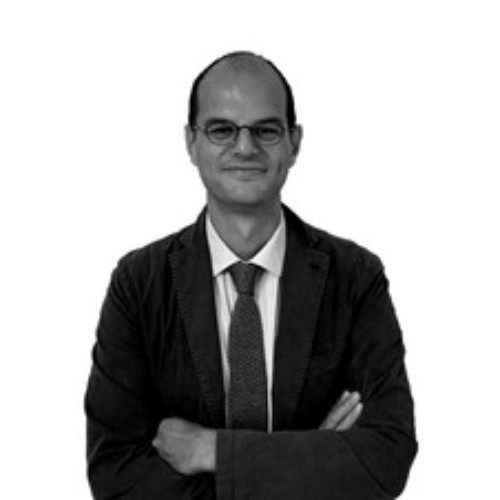
Giulio Meotti è giornalista de «Il Foglio» dal 2003. È autore di numerosi libri, fra cui Non smetteremo di danzare. Le storie mai raccontate dei martiri di Israele (Premio Capalbio); Hanno ucciso Charlie Hebdo; La fine dell’Europa (Premio Capri); Israele. L’ultimo Stato europeo; Il suicidio della cultura occidentale; La tomba di Dio; Notre Dame brucia; L’Ultimo Papa d’Occidente? e L’Europa senza ebrei.