
Magazine
The show must go on •
Dancing amongst scents and poisons
Disputes, audits and even suspected rodent infestations. From D’Urso to Diaco, from Venier to De Martino: all the families at Rai are much the same; every programme fights in its own way. The only certainty is him: Guillermo Mariotto

The war in Ukraine, the situation in Gaza, the Strait of Hormuz, or the summit between Trump, Putin and Xi Jinping are all deemed irrelevant. The real challenge—the one everyone is discussing, the one capturing public attention—is Rai’s audience ratings. It is a conflict with no holds barred (or plot twists): one a day, even more on particularly eventful weeks, such as the last few, dominated by the ‘Profumo affair’ – which is not a rehash of the old British scandal, but a splash aimed – and here even UN observers are divided – some say at Barbara D’Urso, others in a more general, atmospheric direction. And we had not yet recovered from the Ravagnani affair—the pious former priest who was also a dancer on Ballando con le Stelle and made to look bad by Pierluigi Diaco—when Report was hit by low viewing figures and Ranucci’s suspension from Spotlight. In short, Rai appears to be an emirate—or rather, a collection of emirates, Arab or otherwise, united yet deeply divided—where something occurs every single day.
The scandal still making headlines is, of course, the one sparked last Saturday by Guillermo Mariotto’s attack on Barbara D’Urso. And here we are at Saxa Rubra, where Ballando is being filmed for the first time. The palace moves to the caliph, just as they pitched a tent for Gaddafi (complete with the Amazons). Ballando is in fact being staged this year not at the Foro Italico but at the RAI compound in northern Rome, in the new Studio Pippo Baudo – the first to be built from scratch by the RAI since 1990, the year of the glorious World Cup, for which the complex was erected; some claim, however, that those white rectangular blocks were originally designed as a prison. What is certain is that in this area, where the news programmes are now produced, Constantine and Maxentius clashed in 312, and nearby, according to tradition, Constantine had his vision of the cross. Seventeen centuries later, in the very same place, the showdown is “it’s either him or me”.
The controversy involves Barbara D’Urso, Mediaset’s queen in exile, who was ousted for reasons whose mystery is rivalled only by the Via Poma affair and the Ustica DC-9 crash. A dethroned sovereign, much like the King of Afghanistan, who ended up at Olgiata (not far from these parts).
There she is the defendant, here she is the judge. A judge, however, who does not pass judgement – especially with this year’s star contestant, Ornella Muti. It all stems from the fact that D’Urso says and does not say, judges and does not judge; there are things she did not like but does not wish to reveal, and Mariotto asks her why, then, she agreed to be a judge. Then the whole affair explodes – or rather, fizzes out.
Guillermo Mariotto, an Italian-Venezuelan fashion designer and costume designer, but above all a permanent fixture on the dance judging panel since 2005; Twenty-one years on, not even Ciro Grillo’s trial: and now he is becoming agitated and, spraying her with perfume (Hermès, he claims) – which, for some unknown reason, he has to hand – causes a diplomatic incident on a par with the one Venezuela faced when Trump announced: “We will run the country”.
“An unwatchable spectacle”, according to the leading television critic Aldo Grasso. But in the meantime, Mariotto, much like Trump, is running “Ballando”. For the twenty-first year running. Not since the days of Segni has a Mariotto been so much the talk of the town in Italy. “His scathing comments have made him iconic”, writes Il Messaggero.
“He’s the only one to have appeared in every edition without missing a single one,” emphasises TvBlog, praising his “percorso” – to be pronounced in the Roman style, percorzo – which is a key word in these audiovisual battles, just like ‘emozione’ (emotion), which must always come across (“it got through to me”, “it doesn’t get through to me”, including the variant “you get through to me – you don’t get through to me”). Mariotto has made his mark and established himself. He has turned sixty; he was bullied as a child, as he recounted in an interview with Corriere, and, again according to Corriere, he is the inventor of the expression “lato B” to refer to the bottom. It seems to me that’s not a bad percorzo at all.
“From the sofa in my flat, he seemed to me like a fictional character in a reality programme, like in those films that blend real and animated elements, where humans and cartoon characters interact with one another,” said Selvaggia Lucarelli, a former judge who has moved to Mediaset.
Humans and cartoon characters. And mice. Because then there’s the matter of the mice and the stench. That’s why he keeps his perfume to hand: “There’s been a nasty smell since the programme started; we’re in the middle of the countryside: there are mice, wild boars, camels and zebras,” Mariotto explained. While camels and zebras may be something of an exaggeration (are we really in the desert?), he might be correct about the rest. That Hermès, he went on to clarify, had cost him “a thousand euros from the very first episode”, and “someone will have to pay me back”. “Even if that were the case, I would never have said that there are mice or a foul smell in the studio where I work, named after Pippo Baudo,” D’Urso replied on Tg1.
In fact, the issue of mice does not appear to be a joke. In the past, people have complained about the presence of rodents inside the Rai compound. Serena Bortone, for example, did so during her time on ‘Agorà’, and Fanpage has recently confirmed this, complete with photos, whilst announcing that a rodent control operation is currently underway. ‘Ballando’ like Watergate.
After all, in that microclimate of ‘Saxa’ – as insiders call it – it is difficult to ascertain exactly what creatures are lurking there: the most feared animal is not the Mariottus selvaticus but the wild boar. In July, TG1 journalist Leonardo Metalli posted a video of a particularly large animal lying beneath a ‘nasone’, the typical Roman drinking fountain. “The wild boar that knocked me flat on the cycle path in Saxa Rubra as I was returning from Rai had a shower after the crash,” Metalli wrote on his social media.
The chair of the ‘Ballando’ judging panel, the British Carolyn Smith, also had her say on the ‘smell’ issue live on air: “I’ve got a reply for him regarding the ‘smell’ comment, but they’ll kick me off Rai”. And the reply did eventually come: “When your nose is too close to a certain part of the body, it’s because it’s coming from somewhere”. During the ad break, a leaked video—which immediately went viral—showed her in tears as she vented her feelings to Matano, Carlucci and the writer Giancarlo De Andreis. Was it because of the perfume? No, explained Zazzaroni: it was because her words had been misrepresented on social media. The scent of understanding, in short.
But now, following the ‘olfactory’ incident in the ‘Ballando’ court, a real trial is unfolding. First came the challenge – that is, ‘it’s either him or me’, as Barbara D’Urso put it when calling for Mariotto’s removal. Then came the appeal to a court of her own – a third strand in the ‘Ballando’ circus: YouTube. At dawn on Sunday, she posted a video in which she vents her frustration.
“This time, I didn’t feel defended,” she says, without directly naming Milly Carlucci. Finally, her appeal on Tg1, where D’Urso addressed the audience (the jury) to support her case, saying she felt “deeply humiliated by what happened. Much of Italy has sensed this, and I would like to take this opportunity to thank everyone who has shown me solidarity”.
And then the most sensitive topic: the family. “I joined a family that claimed to protect its members. The Ballando family had quite rightly protected one of its members a few weeks ago, so I expected that same family to rally round me a little. I felt a little bit abandoned,” D’Urso stated, her tone recalling The Godfather Part III and Mamma Lucia. The Ballando family, by now as iconic a concept as the Mulino Bianco family or the one in the woods, had been dragged into the spotlight a few weeks ago due to the other major television scandal.
Scene change. We move to the emirate of the former Dear, now ‘Studi Rai Fabrizio Frizzi’ (previously the Incom studios, where the famous ‘Settimana’ was filmed; they later took the name Dear, an acronym for De Sica, Amato and Rizzoli), in the Talenti neighbourhood, deep in Nomentana. It is there that ‘BellaMa’’, Diaco’s daily programme, is broadcast. It was there that, on 3 November, the presenter subjected poor, pious Alberto Ravagnani – Milly’s current dancer and a member of the Ballando family – to an interrogation worthy of the inquisitors in "Il Nome della Rosa". The now-famous interview in which, as always ‘with tact and on tiptoe’, Diaco was attempting to extract a confession from the ‘Gran Biscotto’ Ravagnani.
Milly promptly came to his defense in the name of the Ballando family: “When a member of the family is attacked…”. In short, the Ballando family functions more effectively than NATO; Milly invoked Article 5 and the Diaco affair appeared to be settled, as though the war in Ukraine had been resolved in 24 hours. That proved unlikely. Diaco also has a significant backstory, because immediately afterward the Profumo affair—or rather, “perfume”—erupted.
Diaco then appealed to a higher authority: “I owe everything solely to that being in whom I believe,” he said, referring not to Giorgia Meloni but to God. Meanwhile, Rai has launched an audit into BellaMa’, following testimonies from former staff members published in Lucarelli’s newsletter (her again). Which is likely to lead… nowhere. An audit, a Rai bigwig explains to me, is the best way to bury the whole thing. You launch a grand audit, and that’s that. No one knows what form this audit takes, whether there is a committee, whether there are real people involved, or whether it is an AI programme developed on Viale Mazzini or in Misoginistan; there are those who, over the course of their careers, have been through three, four, ten, twenty-five audits, none of which have led to absolutely anything. The Rai audit is a bit like the impeachment of Trump.
So Diaco, a real opportunist and former left-wing enfant prodige launched by Sandro Curzi, now a neo-Melonico – everyone swears he’ll carry on down his own path, and no one will remember the episode involving the Gran Biscotto Ravagnani.
Because, as it happens, the perfume scandal was breaking. “We’ve spent a week hearing about the Diaco affair and today marks the start of ‘stink week’,” commented Fiorello. And on the Ballando family: “Carlucci said, ‘We’re a family!’. Yeah… the Addams family!”. Ornella Muti’s daughter retorted to Fiorello: “You, on the other hand, belong to a family of monsters, because at least the Addams family are cool”.
However, as we’re in Italy, nobody really leaves their family, ‘Ballando’ or no ‘Ballando’. Barbara D’Urso said she was thinking of leaving. Then, again on Tg1: “Me, giving up? Absolutely not. I have a deal with Rai, with Ballando, with Milly; I’ll be there on Saturday. Everyone has their own way of dealing with things; that’s my way.” And since we’re in Italy, Codacons couldn’t be far behind: as soon as you make a mistake, they announce a request for access to documents to obtain the paperwork regarding her involvement. The only thing missing is a notice of investigation being served on the CEO of Hermès perfumes.
Meanwhile, all sorts of theories are circulating about the perfume affair: that it is a ploy by Mariotto to promote his forthcoming autobiography, due in bookshops at the end of the year; some are even whispering the unmentionable – that it’s a ploy by ‘Caliph’ Carlucci to boost her programme by snatching up her long-standing rival, the ‘Sheikh of Cologno Monzese’, Maria De Filippi, who takes her on every Saturday evening with ‘Tú sí que vales’.
Meanwhile, in the same emirate as the former Dear, on Sundays another sovereign reigns: Mara Venier, at the helm of ‘Domenica In’ for the eighteenth time, the ninth in a row. She too has her own court – the pundits who pass judgement on ‘Ballando’ every week – and she too changes her tune depending on which way the wind blows. On 8 November, in ‘Aunt Mara’s’ living room, Alan Friedman said that every time he sees D’Urso, he ‘feels like having Selvaggia Lucarelli back’ (her again), and that the new judge strikes him as ‘a misunderstanding’ (Alan Friedman now speaks like a Milanese). A week later, in the wake of the perfume controversy, the hostess weighed in: “Right now, I’m on Barbara D’Urso’s side; I’m with Barbara and I’m saying so publicly. She’s been a lady.” She then added, “If I’d been sitting there, a pizza would have arrived and you’d have seen where Mariotto ended up with it.” The two Sunday queens have been at loggerheads for years, “Domenica In” versus “Domenica Live”, only to later recount spending evenings together “in thick socks watching television”.
And now, just like in the real Emirates, alliances are shifting rapidly: some are writing that the exiled sultana can already see herself, next year, in Mara’s chair. After all, it was from those very studios that, on 1 November, Iva Zanicchi, a guest of Aunt Mara, told her old company, Mediaset, to go to hell live on air, accusing them of reviving “Ok, il prezzo è giusto” without even letting her know: “I would have expected Mediaset to give me a quick ring and say, ‘Look, Iva, we’re remaking Ok’… but go to hell, will you!” Venier laughs and distances herself: “You take responsibility for that.” The next day came an apology, but only for the tone. Family, yes, but at other people’s expense.
Meanwhile, in the Caliphate of Saxa, a minor drama is also unfolding: ‘Report’ has ‘plummeted’ with a 4.5 per cent audience share (876,000 viewers, over 300,000 fewer than the first episode). Admittedly, Super-Caliph Sigfrid Al-Ranucci is sorely missed; he has now moved to RaiNews24’s new investigative programme, ‘Spotlight’, and has also been suspended for ten days: he’ll miss two episodes from Monday. Is his presence or absence more noticeable? If ‘Spotlight’ goes down, it’s because he’s absent; if it goes up, it’s because Sigfrid is there, at least in spirit… Meanwhile, he’s out and about with repeat performances of his show – the trapeze act – and perhaps the suspension even works in his favour (though an audit has not yet been launched).
While Sigfrido carries his glory with him, others transport the entire castle. Rai thus resembles a mobile court, akin to that of the ancient Habsburg sovereigns, who moved from month to month between various palaces, from Vienna to lesser residences, depending on the weather and their whim, taking all their furniture with them. While Milly Carlucci heads to Saxa, Stefano De Martino—supreme emir and grand mufti of Sanremo—appears to be a favourite of the Al-Meloni clan; to move to Milan, he has taken his entire studio with him. The sets have in fact been relocated: ‘Affari Tuoi’ has left the Teatro delle Vittorie and Rome after 23 years for the RAI studios in Via Mecenate, Milan, partly because De Martino has moved there to be close to his son Santiago.
In the meantime, however, attention remains firmly on Ballando: While at the APEC summit in Shenzhen there was much discussion about Putin being seated at a different table from Trump and Chinese leader Xi Jinping at the gala dinner, on “Ballando” the ‘caliph’ Carlucci proposed tonight that D’Urso – who is due to take Matano’s seat – be moved away from any strong whiffs of perfume. She has already stated that she will not accept the proposal. Carlucci insists that she will relent. The world waits with bated breath—even the mice and the wild boars.
More on these topics
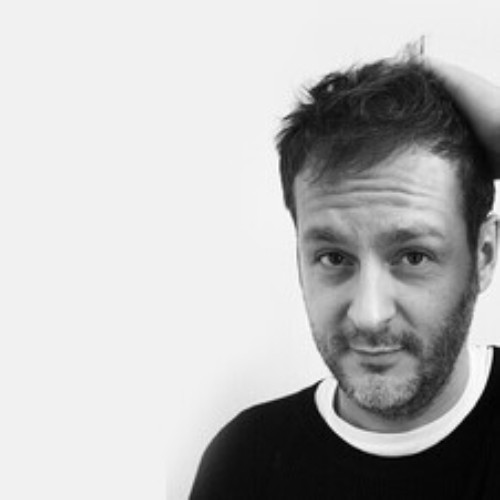
Michele Masneri (1974) è nato a Brescia e vive tra Roma e Milano. Scrive da un bel po’ sul Foglio. I suoi ultimi libri sono il romanzo “Paradiso” (Adelphi, 2024), “Steve Jobs non abita più qui”, una raccolta di reportage dalla Silicon Valley e dalla California nella prima èra Trump (Adelphi, 2020) e il saggio-biografia “Stile Alberto”, attorno alla figura di Alberto Arbasino, per Quodlibet (2021), da cui anche l’omonimo documentario.