
Magazine
MAGAZINE •
The biography of Cormac McCarthy, who never went out without a gun and wrote in the shadow of the Twin Towers
In 1980, McCarthy said he had no interest in writing socially critical novels in the vein of John Steinbeck or Upton Sinclair, who were too eager to lay bare racism. In his view, for a serious novelist there were three levels of inquiry, in ascending order of importance: the ethical, the political and the philosophical. His interest lay in “the fate and existence of evil. Or the meaning of life, or of death”.

(Getty image)
He never left home without a gun; he was fascinated by Hans Jonas’s history of Gnosticism and Flaubert’s The Temptation of St Anthony, and on the draft of an unfinished screenplay from the 1980s he scribbled: ‘Art is a failed religion’. The first biography of Cormac McCarthy, written by Tracy Daugherty, is a wealth of information on the great American novelist who passed away three years ago.
Such as the fact that McCarthy became friends with David Kaczynski, the Unabomber’s brother, after he reported him to the FBI, leading to his capture. David’s wife, Linda, was looking for a way to comfort her husband, who was tormented by remorse over what he had done. He had put an end to the Unabomber’s reign of terror and the longest manhunt in American history, but he had betrayed his brother. Linda knew that Cormac McCarthy was David’s favourite writer.
Unbeknown to him, she wrote to Ecco Press, which at the time distributed the novelist’s works. She asked if McCarthy could write a few lines to David to cheer him up. In the letter, Linda included their telephone number. A few weeks later, David heard her answer the phone. It was McCarthy, who told David that they had performed “an act of great courage; remember that”. They remained in contact over the next two years as the Unabomber trial unfolded. McCarthy was a source of comfort to David. “After the trial, I focused on trying to prevent my brother from receiving the death penalty; it was then that I realised that Cormac and I had slightly different political views,” David said. “McCarthy asked: ‘Why shouldn’t he face the death penalty?’” There is a moral obligation, he said, to “cut off the hand that is at your brother’s throat”.
Daugherty recounts that McCarthy was concerned with the question of whether ‘there is such a thing as an innate morality’. He feared that ‘the question must seem strange’ to most people. If that were the case, ‘how will children manage to survive?’. In 1980, McCarthy told Robert Coles that he had no interest in writing socially critical novels, in the vein of John Steinbeck or Upton Sinclair, who were too eager to lay bare racism. In his view, for a serious novelist there were three levels of inquiry, in ascending order of importance: the ethical, the political and the philosophical. His interest lay in “the fate and existence of evil. Or the meaning of life, or of death”.
McCarthy reads Milan Kundera’s The Art of the Novel and appreciates his worldview: “It’s refreshing to find someone almost as pessimistic as I am.” He reflects on the role of language in the origin of evil: “The source of evil must lie within ourselves. There was no evil in the garden until we arrived.” Melinda Meador recounts a trial she attended with McCarthy. A young vagrant kills a minister who had taken him in. “The life the defendant had led up to that point was rather horrific, but he received no credit from Cormac because of his terrible upbringing. Cormac didn’t care. He saw only the evil.”
A young typist, a convert to Catholicism, is typing up "Meridiano di sangue", which Harold Bloom considered the greatest novel of the second half of the twentieth century. She says to him: ‘Cormac, people can’t read all this darkness. There must be more hope.’ He replies: ‘Baby, it’s a very frightening world. And you’d better face up to it now.’ ‘I’m rather conservative,’ said McCarthy. ‘It’s just my historical perspective… Nothing has come back since the Second World War. All of America’s cultural wealth vanished with the war and hasn’t returned. You don’t need to be a literary critic to see that there’s a sort of rupture. Something has gone terribly wrong. And it’s not just novels. It’s architecture, music, art. Whatever you care to name. We’re not in a period of cultural decline. We’re in a period of cultural non-existence.” McCarthy’s rare novels set in our own time seem at odds with the historical moment. In No Country for Old Men, set in 1980, the sheriff who narrates much of the book complains about young people with ‘green hair and bones in their noses’. From Dougherty’s biography, we learn that McCarthy’s editor at the time, Gary Fisketjon, reported that the sheriff’s views mirrored those of McCarthy himself.
11 September features as a backdrop to his family life and as inspiration for "The Road". At the same time as McCarthy was taking notes on the story of Abraham and Isaac from the Danish philosopher Kierkegaard, his wife Jennifer drew inspiration from the attack on the Twin Towers to create a garden installation. To her, the people falling from the Towers resembled “little birds falling from the nest”. She thus built a nest of branches in place of the Twin Towers, made from tree debris, much like the rubble of the World Trade Centre. The nest remained for a while in the courtyard of McCarthy’s house. A month before the attacks in New York, McCarthy went on a trip with his four-year-old son, John. He stopped at a hotel in El Paso: “One night John was asleep; it must have been two or three in the morning, and I went to the window and looked out over the city: nothing was moving, just the trains passing by, and that very lonely sound, and I had this image of what the city might be like in fifty or a hundred years’ time. I saw fires on the hills and everything razed to the ground, and I thought a great deal about my little boy.” “Perhaps in the destruction of the world it would finally be possible to see how it had been made.” The origin of the disaster in The Road might have been hidden in any of the apocalyptic models circulating at the time at the Santa Fe Institute or in McCarthy’s regular conversations with his brother: “Dennis and I often end up talking about some horrific end-of-the-world scenario and eventually we start laughing,” McCarthy admitted. “We’d talk about what they’d do if only a small percentage of the human population remained. They’d probably split into small tribes and, when it was all over, the only thing left to eat would be each other. We know that’s historically true.” In 2005, while working on the book, McCarthy returned with his sisters to the old family home in Knoxville. The house had long been abandoned. In the wood of the shelf above the chipped fireplace, he could see the small holes where, as children, they used to nail up their Christmas stockings. McCarthy included the scene in The Road.
As the man and the boy make their way southwards, towards warmer weather and water, they pass through an unidentified countryside that is clearly the land of McCarthy’s childhood, the settings of his previous novels. “What’s this place, Dad?” the boy asks his father as they make their way along a bramble-choked path towards a crumbling wall. “It’s the house where I grew up.” In January 2009, Dougherty reveals, the house on Martin Mill Pike went up in flames. In the novel, however, the house had survived. Between Santa Fe and Los Alamos, heading south towards Alamogordo and the Trinity bomb test site, McCarthy would always pass by structures built long ago or in the recent past, empty and motionless, “forms extracted from the architecture of an older era”.
These ruins, shacks, huts, missions and burial mounds, barns, churches, prisons and tombs – now memorials or shrines – bore witness to the destruction of ancient ways of life in the face of new forms of existence. “Here, agriculture had succumbed to industry and the indigenous tribes to European immigrants; nomadism had vanished into the canyons of urban expansion; the open prairies had become fenced-off plots; and faith had given way to mathematical theorems. Today’s glory is tomorrow’s ruin.” In his Ford, with two failed marriages and three novels largely ignored by the public behind him, McCarthy was embarking on a kind of journey through time. He knew how difficult the task would be. The scope of what he imagined on his journeys shaped his future literary ambitions. It also compelled him to come to terms with his paternal legacy and with the moment when the world stood still in southern New Mexico on 16 July 1945.
Contrary to what Christians believed, McCarthy thought, the world really did end in the desert in the 1940s. The past foreshadows the future. “The U-235 for the ‘Little Boy’ bomb that levelled Hiroshima was transported to Santa Fe by train,” wrote McCarthy. Daugherty writes: “He was determined to trace the origins of the Western world’s fall from paradise.” El Paso, where McCarthy settled, was the westernmost point he could reach whilst still remaining in the South. The I-40 motorway was his umbilical cord; it erased the distinctions between his past and his future, linking his Southern roots and his Western obsessions, his father’s work in the humid valleys of Tennessee and the birth of the bomb on a grey dawn in New Mexico.
After the attack on the Twin Towers, McCarthy could think of nothing but his son and the world that lay ahead of him: “I think about it all the time, about John and what the world will be like. It will be a very troubled place.” “There is no God and we are his prophets,” he would write five years later in The Road. His brother Dennis speaks to Tracy Daugherty: “Cormac believed, in the end, that spirituality was the only thing that could save us.” We learn, for example, that the title of No Country for Old Men derives from William Butler Yeats’s poem Towards Byzantium. And that The Road opens with the image of a creature “pale, naked and translucent, moving silently through the darkness”, similar to that in another of Yeats’s poems, The Coming.
“If my family situation were different, I might even consider taking John and moving to New Zealand,” said McCarthy after 11 September. “It’s a civilised place, far away from all that evil shit that’s going on.” At the Santa Fe Institute, shortly after McCarthy became a regular there, a three-day conference was held on the consequences of 11 September. “The apocalypse was in the air.” In the institute’s corridors, someone was mapping the formation of terrorist cells. “If I knew where a knight of the faith lived, I’d walk all the way to him.” There were no writers amongst his friends, but there were a few mathematicians and physicists.
In ‘Beyond the Frontier’, McCarthy writes: ‘The wicked know that if the evil they do is of such horror, men will not oppose them’. The most disturbing scene in The Road depicts a child being roasted on a spit. In Tracy Daugherty’s book, there is a reference to Elaine Scarry in the discussion of the unpublished screenplay for Whales and Men. Daugherty explains that, whilst writing Whales and Men, McCarthy was reading Elaine Scarry’s The Body in Pain: The Making and Unmaking of the World.
Scarry’s argument is that pain narrows the experience of the sufferer: the world, with its relationships and meanings, seems to disappear, leaving only the suffering body. McCarthy’s conclusion is that those who torture seek to force the universe to react, to break its silence. As McCarthy writes: “What we need is a witness.” And what happens if the world stops believing the witnesses?
After 11 September comes 7 October. McCarthy dedicates his last two novels to the Jewish siblings Bobby and Alicia Western. Western, as in the West. If God does not exist, terrorism is his prophet and, as McCarthy told Der Spiegel, ‘we are like primitive tribes that have been driven from their culture and have lost their bearings, their identity, their ability to live’. In the end, it is the father who sacrifices himself so that his son may continue to live.
Western civilisation came to an end at Dachau, and ‘the dogs of hell can pass through the void within a circle’, wrote McCarthy before his death, pointing to the porosity of the boundaries between the ordinary world and the demonic one. The dogs need not break down doors or tear down fences; they find the passageway already open, the one that the banality of good has carved out at the centre of every moral circle. And even through a tiny hole, the forces of evil can pass.
There was a zoo at Buchenwald, where the SS took their children to see the animals. The circle of life remained intact; the dogs of hell passed through it without leaving a trace. Today, in the West, many would campaign for the closure of the concentration camp on the grounds of animal exploitation, not because Jews are killed there.
More on these topics
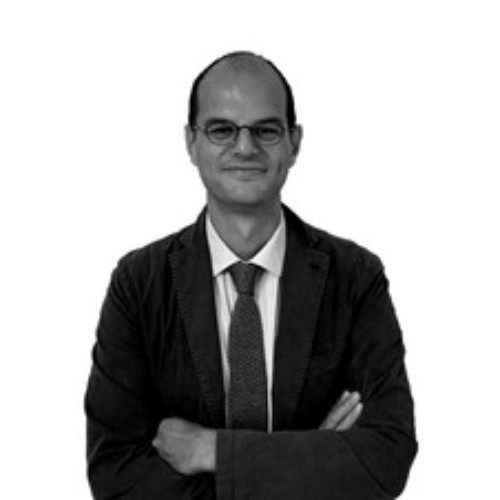
Giulio Meotti è giornalista de «Il Foglio» dal 2003. È autore di numerosi libri, fra cui Non smetteremo di danzare. Le storie mai raccontate dei martiri di Israele (Premio Capalbio); Hanno ucciso Charlie Hebdo; La fine dell’Europa (Premio Capri); Israele. L’ultimo Stato europeo; Il suicidio della cultura occidentale; La tomba di Dio; Notre Dame brucia; L’Ultimo Papa d’Occidente? e L’Europa senza ebrei.