
The young vandals
Milan and the problem of "maranzas"
They represent the nocturnal, underground dimension of a city that sparkles on the surface. According to some observers, the term was already in use in the 1980s. Some even sing

The first thought that came to mind was that Rete 4 has its programming secured for the entire winter. The scenes of the raids on the Galleria Vittorio Emanuele and the Duomo by the ‘baby maranza’ or ‘maranzini’ immediately brought to mind the images of so many TV brawls involving young lads – black, immigrants or semi-immigrants – who are the main attraction (alongside squatters) of Rete 4’s daytime programming and beyond.
Setting aside the investigations, the violence – which must always be condemned – and the online discourse that seems doomed to polarisation (on the one hand: they did the right thing; on the other, more powers for the police – powers understood not as prevention and management, but as greater scope to crack down), the ‘maranza’ are now the protagonists of the urban and television scene. They are hooligans of the highest order; they are almost always the children of immigrants; they speak strangely; they commit petty violent offences amplified by lyrics that glorify money, flashy cars and ‘drugs’, Maranza is inexpensive to produce and attracts large audiences, as demonstrated by a major on-screen brawl broadcast in April 2024 on Paolo Del Debbio’s programme ‘Dritto e Rovescio’.
However, the young men who populate the Milanese weekend scene are still without a contract or an ex-Enpals registration number (the old entertainment workers’ mutual insurance scheme). ‘Maranza’ is, in fact, a term of some vintage. That is what the ‘tamarri’ were called beneath the Madonnina in 1980s ‘paninaro’ slang, popularised by Enzo Braschi on ‘Drive In’, but I once came across ‘il maranzo’ – in the masculine form – in Tondelli’s work. I then became convinced that the ‘maranza’ or ‘maranzo’ is the shadow – black, of course – of the city; it is the underground Milan, the part you don’t see on the surface but which lies beneath, in the subway, with its uniform: a shiny black tracksuit, fake Gucci, Nike Air and Louis Vuitton accessories, and all the usual paraphernalia. The maranza, with its unsavoury appearance—above all aesthetic—is the settling of scores with Milan’s repressed past, eleven years on from the Expo, the ceremony that relaunched it as a ‘megacity’, a city of foreigners, of modernity, of rights, the only international city in Italy, CityLife with the former Ferragnez and the bunnies. Amidst all the controversy over its lack of sustainability and inclusivity, the salaries, and the high cost of housing. Maranza, however, more than the urban planning scholars with their chain-link glasses and more than our very own Mamdani types who challenge each other on TikTok in the run-up to the elections, represents everything that does not look good in the photograph – it is the black spot on the big face of Milan, which does its skincare routine from morning till night; even if it is probably unaware of its role as a social critic.
Unwitting Maranza, Maranza living off others’ backs, Maranza blending into the crowd – after all, all it took was a black hoodie and a dark complexion to get stopped these days, and perhaps even beaten up, even though they might well be the filthy rich children of Renzi’s law, the one that allows you to come and live in Italy (that is, in Milan) by paying just 100, later increased to 200, then 300,000 euros a year in tax on foreign income, whatever your wealth – or rather, your ‘assets’, as they say in Milan. The latest, Dua Lipa, in a line-up of stars and starlets who say Milan is absolutely brilliant. Or simply generic rich Italians, even locals: because the difference between the Milan on the surface and the underground Milan, in aesthetic terms, is becoming increasingly blurred: apart from the odd scion who still dresses at Pupi Solari (may she rest in peace), 90 per cent of the average son of a wealthy Milanese is an aspiring ‘Maranza’, even if he is descended from notaries for three generations. Even the parents are ‘Maranza-ised’ or semi-‘Maranza-ised’. Whether out of personal taste or professional necessity, they might well like to wear Pupi Solari or Solaro suits, but the business model won’t allow it: Consider a figure such as Tony Effe, for example, a first-generation immigrant from Rome who works out in Milanese gyms and, in recent days, has been seen running marathons through the city, his physique and tattoos on display as he chases trams: dressed in Gucci and slouching about – how would one explain to a marshal, perhaps from Reggio Calabria, that he is not the type to be struck with a truncheon? Because the ‘maranza’ defies labels and definitions; after all, in Milan, amongst these youths dressed in black, it was mainly Italian flags – far more than Palestinian ones – that were being waved. The ‘maranza’ is neither right-wing nor left-wing. The ‘maranza’ is a nasty beast.
The ‘maranza’ is also the culmination, the ‘I told you so’ moment of a city-wide ‘character assassination’ – a peculiar phenomenon that strikes particularly hard in cities with progressive governments. It happened in San Francisco, where for years we were told (first by the right-wing media, then everyone else followed suit) that it was hell on earth, that you’d be attacked by the homeless (all the whilst, there was an economic, property and scientific boom); London was the same, Paris too, and here in Italy, Bologna and, indeed, Milan. Perception then shapes reality, so after years of narratives centred on ‘maranza’ and pickpocketing, a foreigner arriving at Central Station feels as threatened as one would in old Bari back in the 1970s. “But… isn’t it dangerous?” a Roman friend of mine from Rai, who was just passing through a few days ago, asked me, terrified that I might dare to take the red metro line to get home. Another acquaintance happened to see a middle-aged couple from the provinces turn up at a block of flats’ meeting to announce to the astonished residents: “We’ve bought a flat here in the building for our student son; don’t worry if you see a man wandering around the courtyard – he’s a bodyguard; we were told we needed one.” And let’s not even get started on billionaire dynasties.
Milan has now become this sort of place, just a few months before the elections and a few weeks after one of the most grotesque spectacles ever staged: the privatisation of the Galleria Vittorio Emanuele for a fashion extravaganza, complete with little robots, orchestrated by Anna Wintour, the editor-in-chief of Vogue. On that day, even the Duomo underground station had been closed to mere mortals, let alone the Maranza. A few weeks later, I was struck by the coincidence and felt a touch of tenderness on seeing, amidst the break-ins and destruction—which are, of course, to be condemned—a huge tub of ice cream (I’d say vanilla) from an exorbitantly expensive ice-cream parlour in the aforementioned gallery, snatched like a trophy by a young man. While in Paris they raid Hermès, here they clear out Decathlon and the ice-cream parlour. Perhaps these ‘Maranza’ types have understood the country’s situation better than Istat.
The world saved by the people of Maranz? With a few second-generation ‘little Renzos’ amidst the turmoil, all set against the backdrop of a peaceful, Manzonian weekend, with the archbishop celebrating Mass in the cathedral, whilst outside there was a rush on bakeries, Decathlon and ice-cream parlours – in the wake of the death of Prince Vitaliano Borromeo, a descendant of St Charles (’old money’, as they would say in Milan).
In the Corriere’s excellent reports on the riots, amongst the obituaries: the Borromeos, parents who, in true Milanese fashion, chase after their Maranza children and kick them round the backside; or, again, parents outside the police station in Via Fatebenefratelli, saying: ‘When he gets out, I’ll give him a proper thrashing!’ Tunisians, Ukrainians and Moroccans, oblivious to their offspring’s ‘Maranza-ism’, who here do indeed show signs of full integration (after all, a very Milanese relative of mine used to tell us even as small children on holiday on Lake Maggiore: ‘Children, if you hurt yourselves, I’ll smash your faces in!’).
The Maranza “baby destroyers” might even think they’re part of a show: if, in fact, the world ‘upstairs’ is one big show – with those adult thugs hiring an Urus just to drive a hundred metres, complete with a rented Rolex – then those ‘downstairs’ will believe that their only possible role is that of rebels, smashing a few shop windows with the same brands as ‘upstairs’, albeit counterfeit ones. After all, in Milan, the home of advertising, the hunt for the ‘maranza’ has become a performative sport akin to padel, practised by figures such as Sardone and groups of influencers who target muggers and Arabs in order to rack up likes on social media (although, to launch yet another singer, a record label organised press tours in Rozzano a while back that resembled human safaris, giving journalists the thrill of observing ‘maranza’ at close range).Because the ‘maranza’ sometimes sings, and then becomes a ‘trapper’. Not a left-winger, once again. Perhaps rather apolitical, or even a ‘neomelonico’. Like Pucho, the angel-faced star of trap music (“I won’t fall in love/but I’m starting to like her/I want a Lambo, I’ll get it”). Their goal, like everyone else’s, is to be “in Moscow with the Lambo”. Then there are the more brutal figures, such as Simba La Rue, Baby Touché and Baby Gang—the terrors of the streets and of the small screen—and here we return to the ‘retequattrismo’ scene, in legendary brawls with Del Debbio.
At one point, Mario Giordano grew jealous and, during an episode of “Fuori dal coro”, launched into a diss track of his own creation aimed at the Maranza. “Bang bang bang / images of pistols and rifles / drug dealing filmed live / scimitars and pills / millions of views online / bang bang bang / so much for integration / this is what lies behind the welcome”. This episode was recounted in a book published last year, Maxi-rissa. I diari della trap (Nottetempo), by Alberto Piccinini and Giovanni Robertini (a volume that law enforcement officers might benefit from reading immediately, to help them make sense of the phenomenon more effectively—and to avoid being told at some point, “Don’t you know that I’m a Maranza!”).
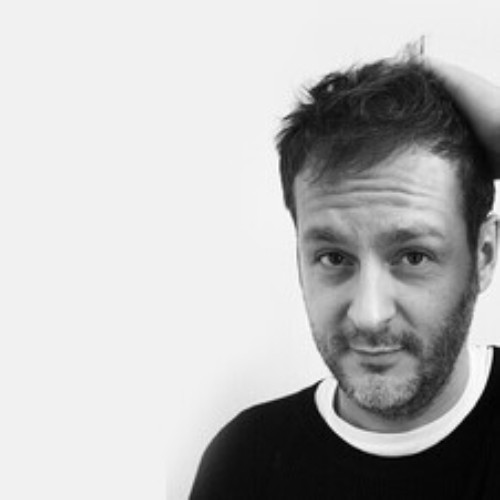
Michele Masneri (1974) è nato a Brescia e vive tra Roma e Milano. Scrive da un bel po’ sul Foglio. I suoi ultimi libri sono il romanzo “Paradiso” (Adelphi, 2024), “Steve Jobs non abita più qui”, una raccolta di reportage dalla Silicon Valley e dalla California nella prima èra Trump (Adelphi, 2020) e il saggio-biografia “Stile Alberto”, attorno alla figura di Alberto Arbasino, per Quodlibet (2021), da cui anche l’omonimo documentario.